
Danielle was a guest with Kerry Lutz on The Financial Survival Network, talking about recent developments in the world economy and markets.
You can listen to an audio clip of the segment here.
Follow






_________________________
Danielle was a guest with Kerry Lutz on The Financial Survival Network, talking about recent developments in the world economy and markets.
You can listen to an audio clip of the segment here.
As the world remains focused on all sorts of counter-productive information and behaviors, the most valuable commodity–widely wasted and taken for granted in much of North America--is rapidly becoming more scarce. It will command more of our attention in time.
Here’s why water across the US is turning brown pic.twitter.com/SoimJQjlKs
— Business Insider (@businessinsider) March 13, 2018
The Bank for International Settlements is a board comprised of 60 central bank heads around the world. As explained on their website here: at bimonthly meetings, normally held in Basel, Governors and other senior officials of BIS member central banks discuss current developments and the outlook for the world economy and financial markets. They also exchange views and experiences on issues of special and topical interest to central banks and issue reports on current conditions.
Most entertaining (for me at least), is the traditional Pythonesque dichotomy between the typically sanguine statements on financial conditions central bankers issue about their own economies at home, and the pull-no-punches-warnings in collective statements issued as part of the BIS board, once abroad.
In their latest March 11 review here, two of the four key measures they track for signs of stress in domestic banking systems–credit-to-GDP gap and its total debt-service ratio – came up code red for high risk of banking crisis in coming years in three countries: Canada, China and Hong Kong. This is shown here on their chart.
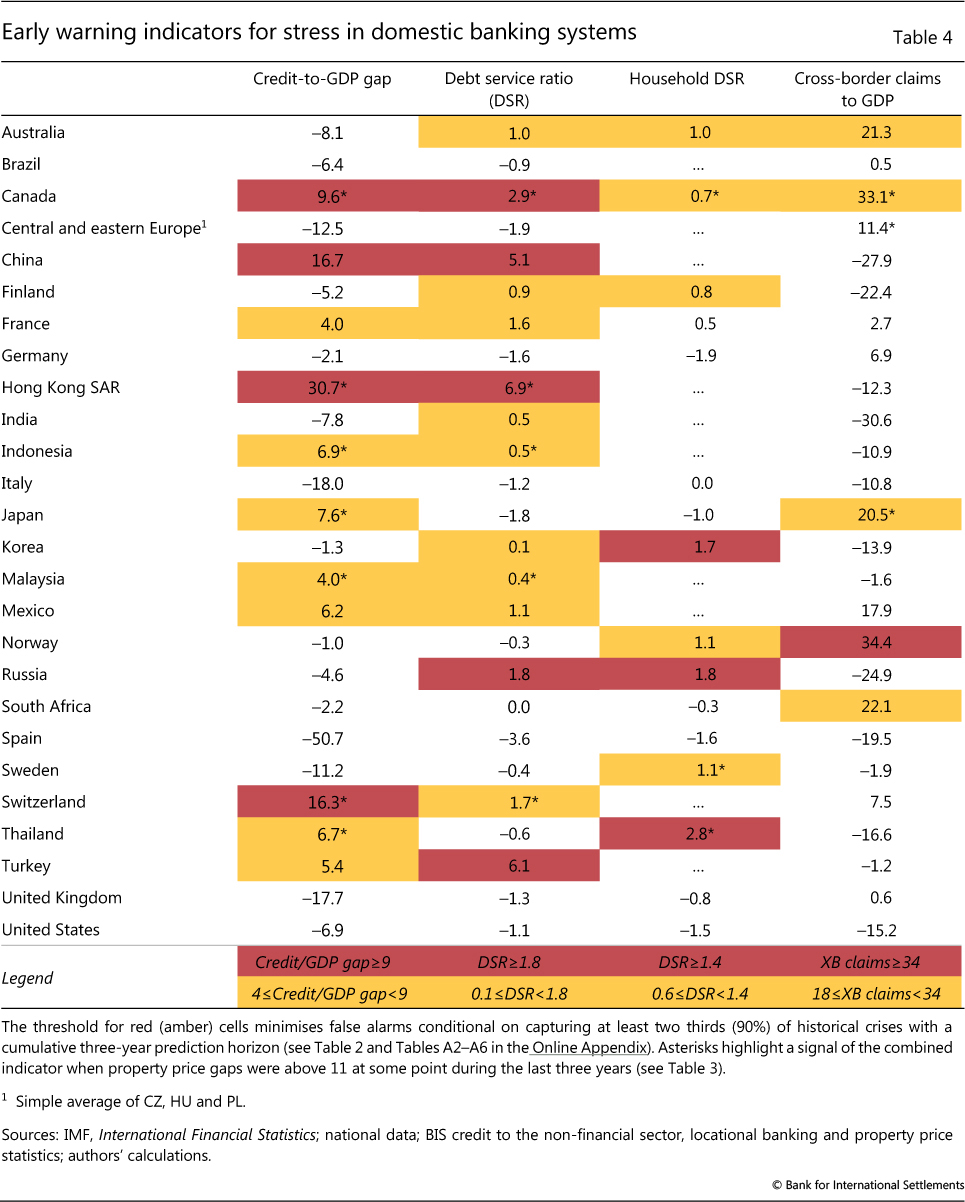
The BIS warning comes as Canada’s household-debt levels hit a record $1.8 trillion in Q4 2017, debt to household income measured 171% in the latest Statscan report (December) and housing prices in the highest population areas are the most overvalued, relative to rents and income, of anywhere in the world.
Not to worry, executives at Canadian banks reassured shareholders this week that the environment is benign and that their own lending books are relatively blemish-free.
Or as past Citigroup CEO Chuck Prince explained in July 2007,just before he retired and financial crisis slammed the world economy:
“When the music stops, in terms of liquidity, things will be complicated. But as long as the music is playing, you’ve got to get up and dance. We’re still dancing.”
For those who are not being paid bonuses to take reckless risks and look the other way, the Bank of International Settlements posted this handy little video primer on why Canada’s households, businesses and economy (along with other highly indebted countries) are now set up for a period of prolonged rough patch.
Here is a direct video link.



