“Unlucky” economy and taxpayers in Canadian debt mess

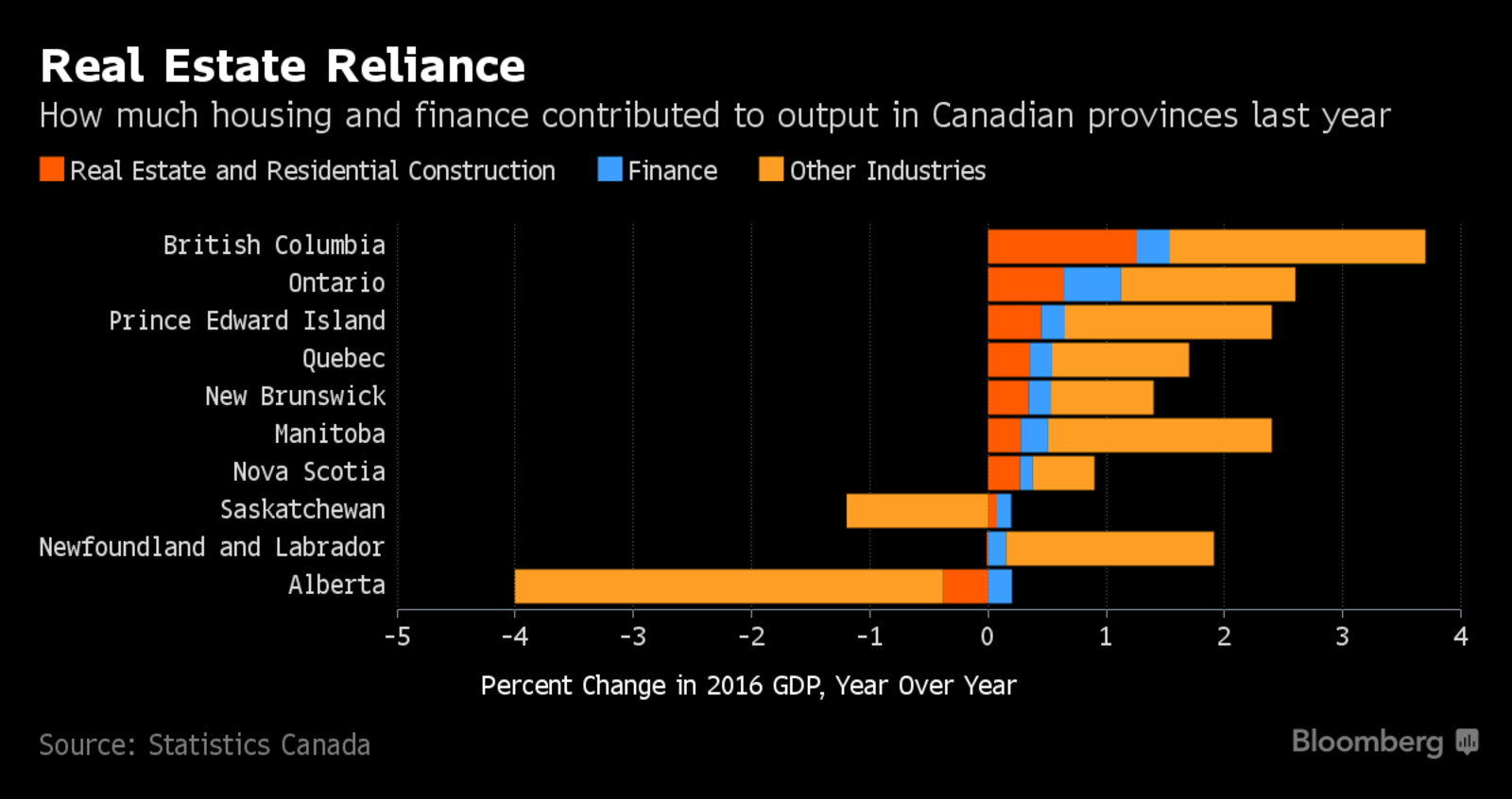
Housing with related finance and spending have driven some 84% of Canadian GDP over the past 7 years, as prices leapt and domestic buyers prostrated themselves on credit.  By province, the impacts were greatest in the largest growth centers–BC and Ontario–as shown here.  However as Alberta and Saskatchewan are now discovering, what debt fueled frenzies give, they also take back in the mean reversion period.  More payback is coming.
Meanwhile, as more information is revealed in the Home Capital story, there is more evidence of industry wide fraud, reckless practices and wilful blindness by institutions and regulators alike.  See In Home Capital’s Mortgage Mess: blame the “unlucky” brokers:

Between 2013 and 2016, suspected instances of fraud among mortgage brokers jumped 52 percent in 2016 from five years prior, according to Equifax, a consumer credit and research firm. Nearly two-thirds were from Ontario.

While insiders apparently call the brokers who got caught submitting fraudulent information not criminals but just “unlucky brokers”, in truth it is the Canadian economy and taxpayers who will end up paying for this dark chapter of rampant speculation and credit abuse.  While some are downplaying the risks by saying defaults are still low, we should consider that the country is not yet back in recession, and the stock market has not yet entered the next bear market.  Once that gets underway, as in 2008-09 and 2001-02, we will discover where all the debt bombs are buried.  Only Canada got off light in the last two global downturns, this time, we are unlikely to be so “lucky”.


 

Posted in Main Page | Comments Off on “Unlucky” economy and taxpayers in Canadian debt mess

More good news: humans committed to cleaning up the oceans

Many people are aware we need to clean up the oceans.  Some are moving ahead with doing so.   See: A billionaire is giving away his fortune to clean up the oceans.

And also: A 22 year old raised 30 million for ocean clean up project.

The Ocean Cleanup uses a boom to capture plastic and keep it in areas where a boat can come and periodically pick it up. The pipe moves with the waves and uses floating anchors. Critics are skeptical of the system’s compatibility with the extreme forces of the ocean and its potential impact on ocean life.

The system should be fully deployed in 2018. $30 million has been raised for the cleanup.  Here is a direct video link.

As soon as we acknowledge that billions are needed to clean up the mess, it focuses thinking on who should be bearing the costs for doing so.  The answer is those who make the profits producing and filling the packaging. This will realign all business models to account for the waste they produce and encourage smarter, cost-effective solutions.  As in the old days, if we use packaging to sell our products, we have to responsible for collecting, reusing and recycling it.  You produce it, you own it.  This will also naturally encourage biodegradable and minimal packaging solutions.  All smarter than the current approach.

Posted in Main Page | Comments Off on More good news: humans committed to cleaning up the oceans

Net zero buildings: here now

Who doesn’t want utility bills of zero?  Wasting less will help families, businesses and governments dig out of debt.

By 2020, the California Energy Commission plans to require every new residential building to meet a code called “zero net energy.” Under ZNE, over the course of a year a new house should consume no more energy than it generates from sources such as rooftop solar panels.

The state is still writing the rules that will define exactly how builders are supposed to meet the goal, and some warn the plan is so ambitious that regulators will be forced to roll back deadlines. But the Energy Commission insists it is sticking to its timetable. By 2030, the mandate is set to expand to all new commercial buildings as well. See:  The quest for utility bills of zero.    Here is a direct video link.

Posted in Main Page | Comments Off on Net zero buildings: here now