
Equity valuations are the most inflated since the infamous bubble tops in 2000 and 1929 before that, and far beyond the 2007 and 2022 cycle tops. This is evident below in one of the most historically insightful valuation metrics, the Shiller Price-to-Earnings Ratio (below since 1860).
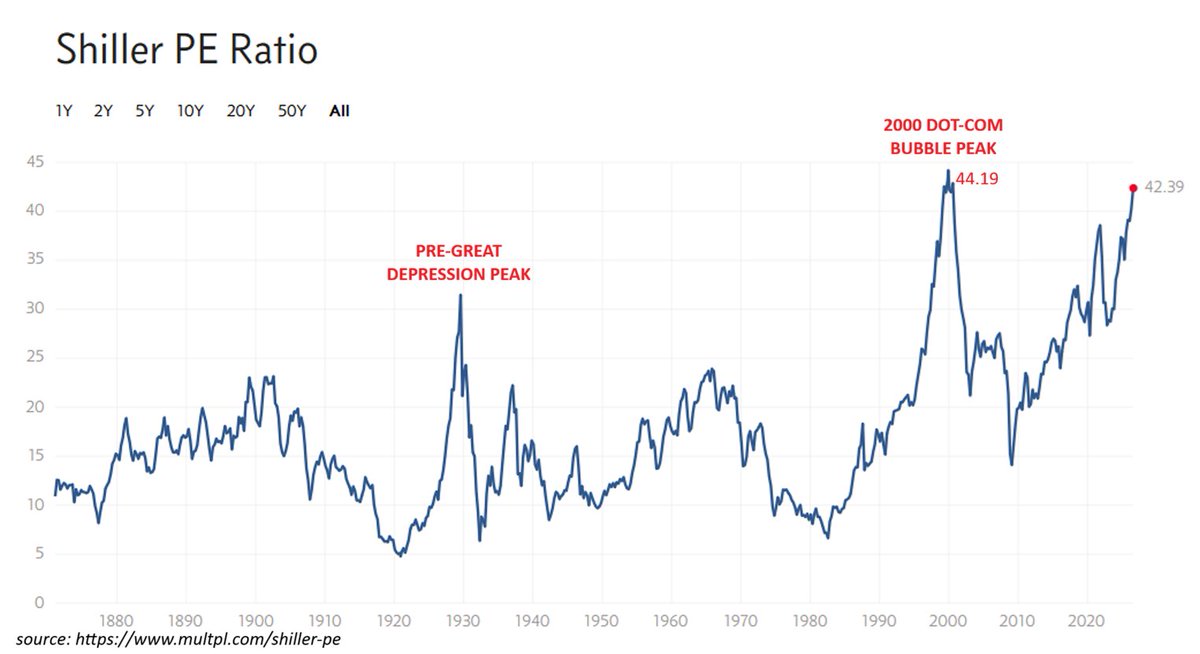 No one knows how long bubbles will last, and this one has gone on longer than most. But bubbles have always ended in a violent bust that evaporates years and even decades of prior market gains. It has been wisely noted that those who don’t learn from history tend to repeat it, and people at or nearing retirement have much shorter time horizons than widely imagined.
The question for every capital allocator today is: what did you learn from past bear cycles, and how are those insights incorporated into your capital management choices today? Those without evidence of how they have integrated past loss-cycle lessons into their approach are basically flying blind.
Today, retail investors have a record 73% of their financial assets in equities and a record low 7% in bonds. Few have meaningful levels of cash. When the masses are all in on one thesis, something else is bound to happen.
The discussion below is worth a listen, particularly the second half.
Remember, correlations between global equity and credit markets typically go to one during bear markets. They all go down together; it’s a question of how much each drops and how long they take to recover. Avoiding portfolio losses requires more than a bunch of different marketing wrappers around the same high-risk assets from different countries and sectors.
Richard Bernstein and David Rosenberg reunite to debate the Federal Reserve, inflation, the AI investment boom, market bubbles, gold and the case for international diversification. The former Merrill Lynch colleagues examine whether the Fed should raise rates, how AI CapEx is reshaping the U.S. economy, why credit markets may lead the AI trade, what is driving gold, and where investors may find opportunities outside the mega-cap U.S. market. Here is a direct video link.








