
The world is grappling with energy-driven inflation expectations reinforced by tariff wars.
In response, the European Central Bank (ECB) hiked the deposit rate by 25 basis points to 2.5%–its second increase in 2026. The ECB expects inflation to average 3% this year, well over its 2% target. The Bank of Japan is expected to hike the policy rate by 25 basis points this week to 1.25%, prompted by a weak yen and rising import costs.
The U.S. Fed has held its policy rate at 3.5-3.75% since December 2025, but its next rate announcement is tomorrow, and markets are now expecting a 25bps hike, taking the overnight rate to 3.75%–4.00%.
The Bank of Canada held its rate at 2.25% this month for the seventh consecutive meeting since October 2025. Consensus currently expects the BOC to stay on hold through the end of 2026, amid the elevated economic pain of tariff wars, deflating home prices, and rising credit stress in major markets across the country.
Bond markets have been hiking market rates ahead of central banks. The 2-year U.S. Treasury yield is 4.65% this morning, the highest since June 2024, and typically signals market expectations for where the fed funds rate will average over the next two years.
The U.S. 10-year yield at 5% this morning is at a 19-year high, last seen in April 2007 — just before the Great Financial Crisis tanked economies, financial markets, and interest rates.
Canada’s 10-year Treasury yield at 3.96% is the highest since October 2023 and October 2007.
Treasury yields matter because they underpin other market rates. The influential U.S. 30-year fixed mortgage rate is above 7% this week, the highest since October 2023. In Canada, 5-year fixed mortgage rates have topped 4.5%, and the benchmark prime rate is 4.45%.
Canadian rates are around long-term averages. The issue is that they are about 5x the all-time lows of 2021-22, when Canadians borrowed record amounts, leveraged by rapidly rising home prices. As those loans renew, the rate shock is severe, and the impact is dawning now.
As I explained in detail here, while Canadian home prices have been falling since February 2022, affordability in Canada remains untenable for the masses. Demand remains weak even as motivated sellers keep lowering prices.
For similar reasons, home prices are falling in many developed countries all at once.
After America’s last housing bust in 2007-12, prices did not recover to the 2005 bubble highs for years, even as interest rates remained at historic lows through 2022.
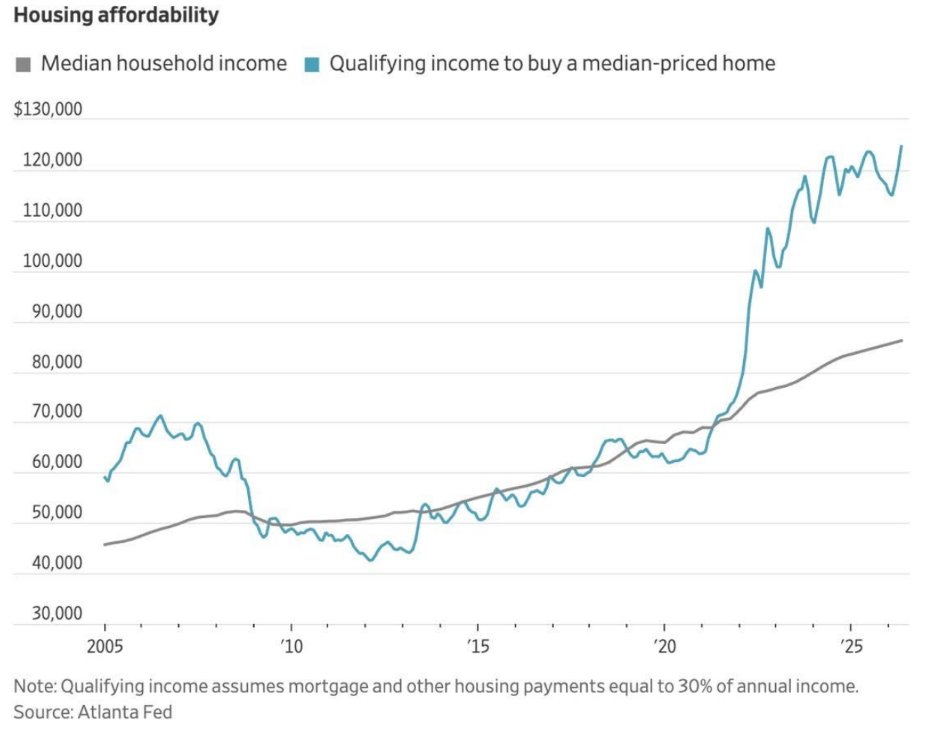
As shown below, since 2005, the median household income needed to qualify for the median-priced U.S. home fell from $70,000 in 2006 to less than $45,000 in 2012. Unfortunately, ‘easy money’ and risk-taking spiked home prices again in 2022-2025, and the median income needed rose above $120,000 in 2026. Recent data suggests that the median U.S. household income is about $86,000. US home demand is therefore weak in many key markets, and prices are trailing lower.
 Refi activity, which lets people cash out and spend notional home equity, is contracting as home prices stagnate and fall.
Stock bulls miss that rising Treasury yields don’t just hurt home prices and debtors’ ability to spend. Higher Treasury yields make equities relatively less attractive to investors while raising the cost of capital for corporations and speculators alike.
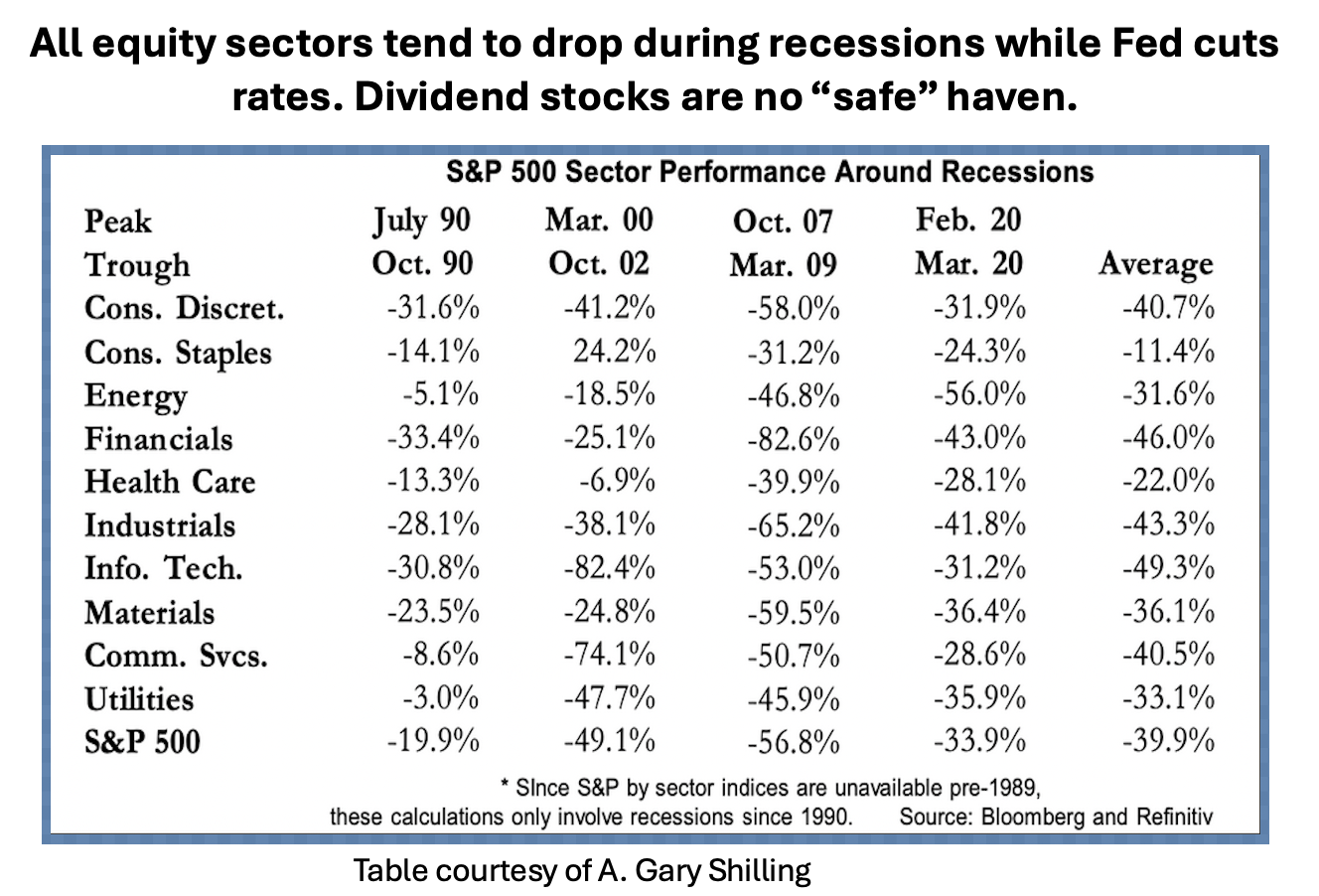
Past rate spikes have led to liquidation selling in equities (both growth and dividend-paying sectors, as shown below courtesy of A. Gary Shilling), corporate bonds, and commodities, while central bank cuts and rebounding Treasury prices ultimately bring yields/interest rates lower again.
The latest shock in interest rates and commodity prices is likely to drive a final nail into the extraordinary spending and speculation frenzy since 2020. As usual, the world of naked swimmers will ultimately be revealed. Bond Yields Could Come Down as Fast as They’ve Climbed:
A pullback in AI spending could bring long-term yields down by reducing bond supply and possibly slowing economic growth. An outright recession would bring them down fast.
In other words, despite what some deficit hawks have insisted in recent weeks, it won’t take an outbreak of fiscal responsibility in Washington to bring yields down from their recent highs. Many other things could do it.
This also doesn’t mean that 5% yields are a ceiling that should be a signal for bond buyers to stampede into Treasurys. But the prospect of lower yields in the relatively near future isn’t quite as remote as the worst-case scenarios would suggest.








