About those 4% US growth targets

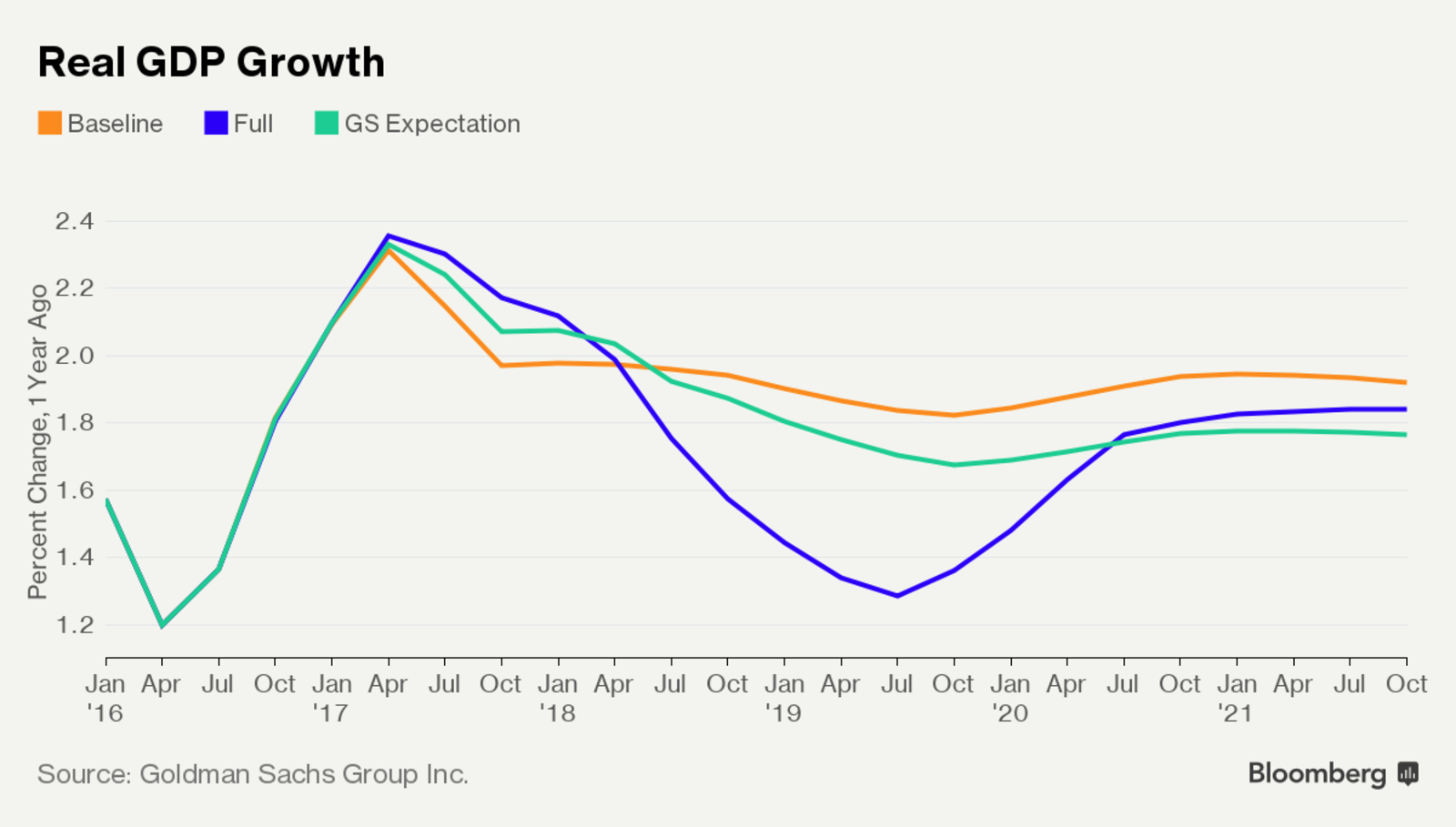
Stock and corporate bond markets have soared since the US election in November. Bulls say bidding up assets that were already richly overvalued is all good, because demographics and debt be damned, the new Trump admin are business wizards and will make the US economy double its growth rate stat (it’s averaged 2.1% since 2009) to 4% to 2020. In reality, the math is not lining up with the confident thesis. In fact, as Goldman Sachs and many others have pointed out, Trump policies are actually like to lower, not raise, the economy’s growth trajectory from here.

Morgan Stanley’s EM Head: Trump Can’t Get 4% Growth.

Here is a direct video link.

Here is a chart of Goldman’s most bullish, base and expected growth projections, from the proposed fiscal stimulus through 2021.

Posted in Main Page | Comments Off on About those 4% US growth targets

The problem with the fiduciary rule: it doesn’t go far enough–yet

Talk is cheap.  But anyone that is serious about actually remedying conditions adversely effecting working people and families today, will insist on a fiduciary standard from financial ‘advisors’. No exceptions or excuses.

The incoming fiduciary rule standard (presently being questioned, yet again, under Trump), is solely with regard to retirement accounts.  This is a start, but not far enough, as it does not cover non-registered investment savings accounts. Imagine how ludicrous where an adviser can say to clients:   “I have to put your best interests first on the registered accounts, but not on your other accounts, now here is what I recommend with your money.”

Even so, the financial business and Trump’s cabinet (many of whom hail from the financial sales business), are insisting that it is not possible to put the clients’ best interests first. That’s like “putting only healthy food on the menu” says ex-Goldman chief Gary Cohn, now Trump’s chief economic advisor (yes, believe it…a direct quote).

When you cut through the BS, the argument is that we have to allow financial advisors to abuse trust and put their own best interests ahead of the clients, or else the financial business (one of the most profitable in the world) will not make as much money.  The arguments are circular, mad, self-serving and indefensible.  For a good discussion see:  The fiduciary rule’s real shortcoming, that Trump should fix

Let’s tackle this by invoking Charles Munger’s idea — invert the fiduciary rule to see what would happen. This would mean brokers could take undisclosed kickbacks to push certain products, and place their interests ahead of their customers — recommending mutual funds and other products that earned them the highest fees, rather than served the interests of clients…

President Trump’s has asked for 180-day review of the Department of Labor’s fiduciary rule. It is, of course, reasonable to assume that this is the prelude to the new administration’s effort to kill the regulation.

If there is an actual shortcoming to the rule, it is this: The fiduciary rule shouldn’t apply just to retirement accounts; it should apply to all investment accounts, no matter the size and type. It’s probably doubtful that Trump’s review will come to this conclusion.

Yet this is what the SEC staff who reviewed this issue recommended in 2011.

Posted in Main Page | Comments Off on The problem with the fiduciary rule: it doesn’t go far enough–yet

About that Trump business genius

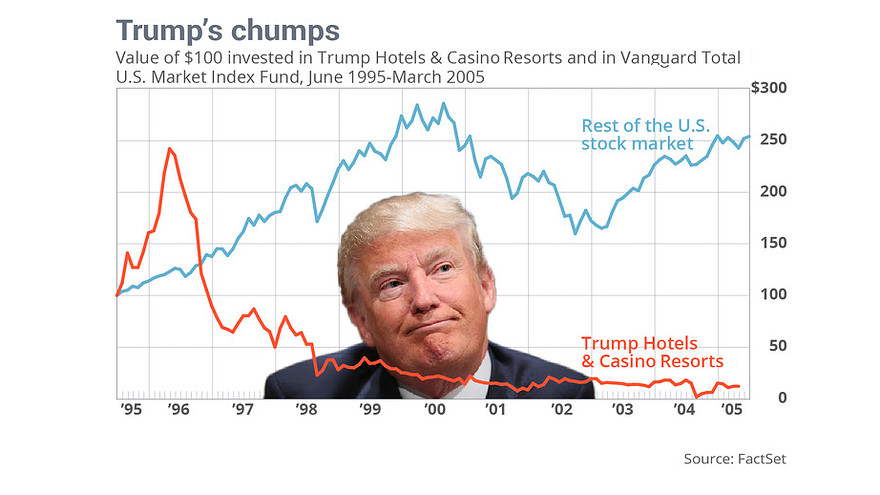
There is yet another important reminder to public market investors in the Trump business history: the stock and corporate bond market exist to cash out founders by distributing shares and debt to the public. Those who receive the cash win big, those left holding the securities often end up losing.  With all the hype and hope it is easy to forget this, but we do so at our financial peril.  If we are going to play this game, then avoiding when prices are high and buying only after they have plunged is key to survive and thrive.  See: Donald Trump was a stock market disaster:

It is already well-known that Trump’s businesses have passed through Chapter 11 four times over the past 25 years. Creditors have lost billions along the way. But as most of this has involved complex debt arrangements between Trump, his various business entities and dozens of banks, the details can easily get lost in the shuffle. Trump himself says he has merely been “smart” to use the corporate laws — including the bankruptcy code — to his advantage.

But the stock market is a little different. The losses are very public and very easy to follow — and the losers are ordinary investors who bought the stock directly or through mutual funds. Even worse, many of those investors are voters, too.

All in all, it’s a lucky thing for Trump that the public is so easily distracted … and have such short memories.

Also see this direct video link.

Posted in Main Page | Comments Off on About that Trump business genius