Market interest rates have been climbing as the Middle East conflict puts upward pressure on oil prices and inflation expectations.
The US Bureau of Labour Statistics reports that consumer prices rose 3.8% in April, accelerating from the 3.3% pace in March. The rise came mostly from an 89% year-to-date increase in the price of oil (WTIC), a price pressure that will affect other sectors in the coming months.
These trends meet fears that new Fed head Kevin Warsh may succumb to pressure from the White House and ease monetary policy at the expense of price stability. The Treasury market is not waiting around to find out.
Although the US and Canadian central banks have held their policy rates steady for the past 5 and 7 months, respectively, at 3.5% and 2.25%, the Treasury market is pushing fixed-term yields/rates higher.
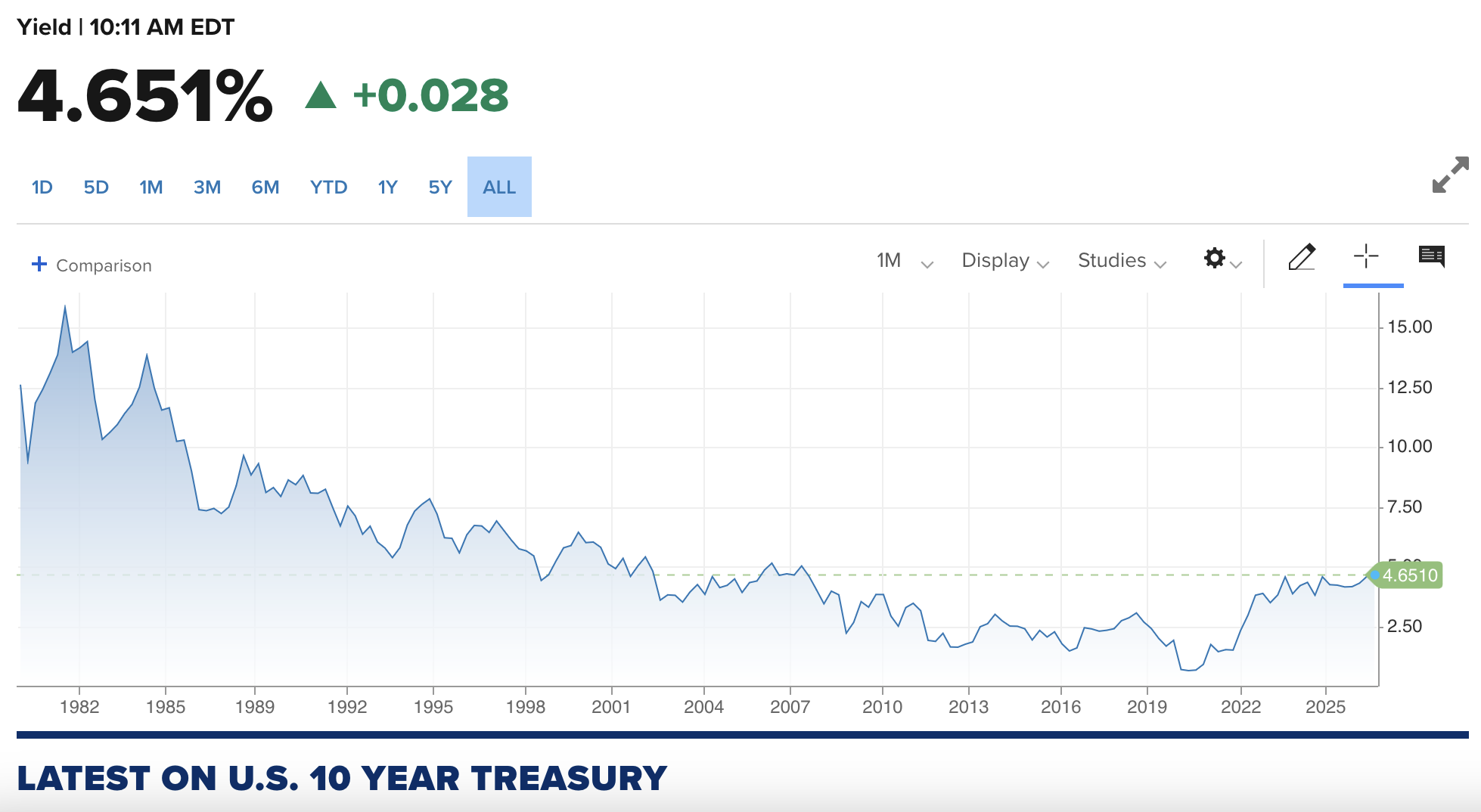
On Tuesday, the US 30-year yield breached 5.19%, above the 5.08% peak in October 2023 and the highest since April 2007, the month before the global financial crisis ignited, 19 years ago (below since 1988).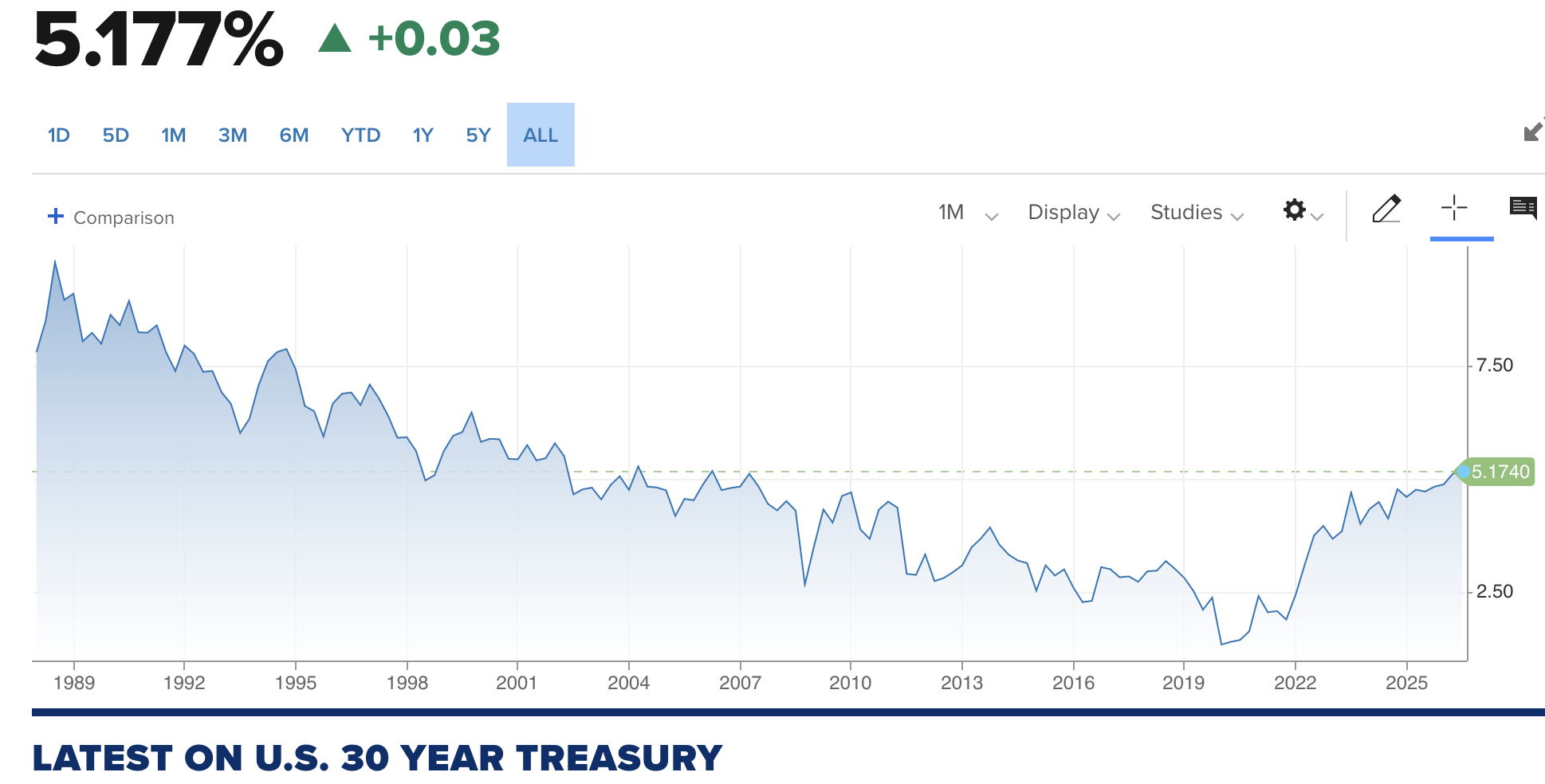 The US 10-year yield, which serves as a benchmark for fixed-term borrowing rates, pushed above 4.64%, the highest since January 2025 and April 2007. The 30-year fixed mortgage rate has risen half a percentage point over the last month to over 6.5%, and it looks to be dampening an already slow spring homebuying season (below since 1980).
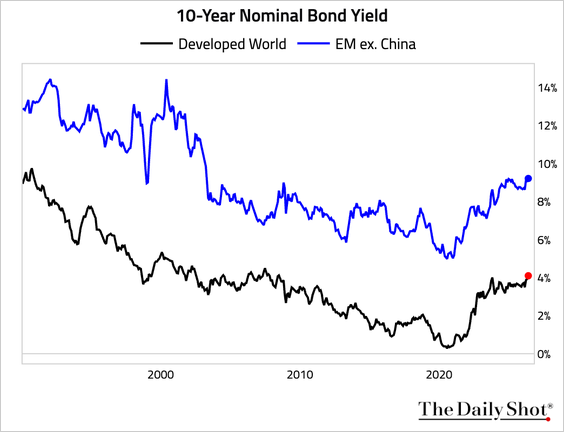
 Indeed, rising yields since 2021 are evident across most developed and emerging markets (shown below since 1990, courtesy of The Daily Shot).
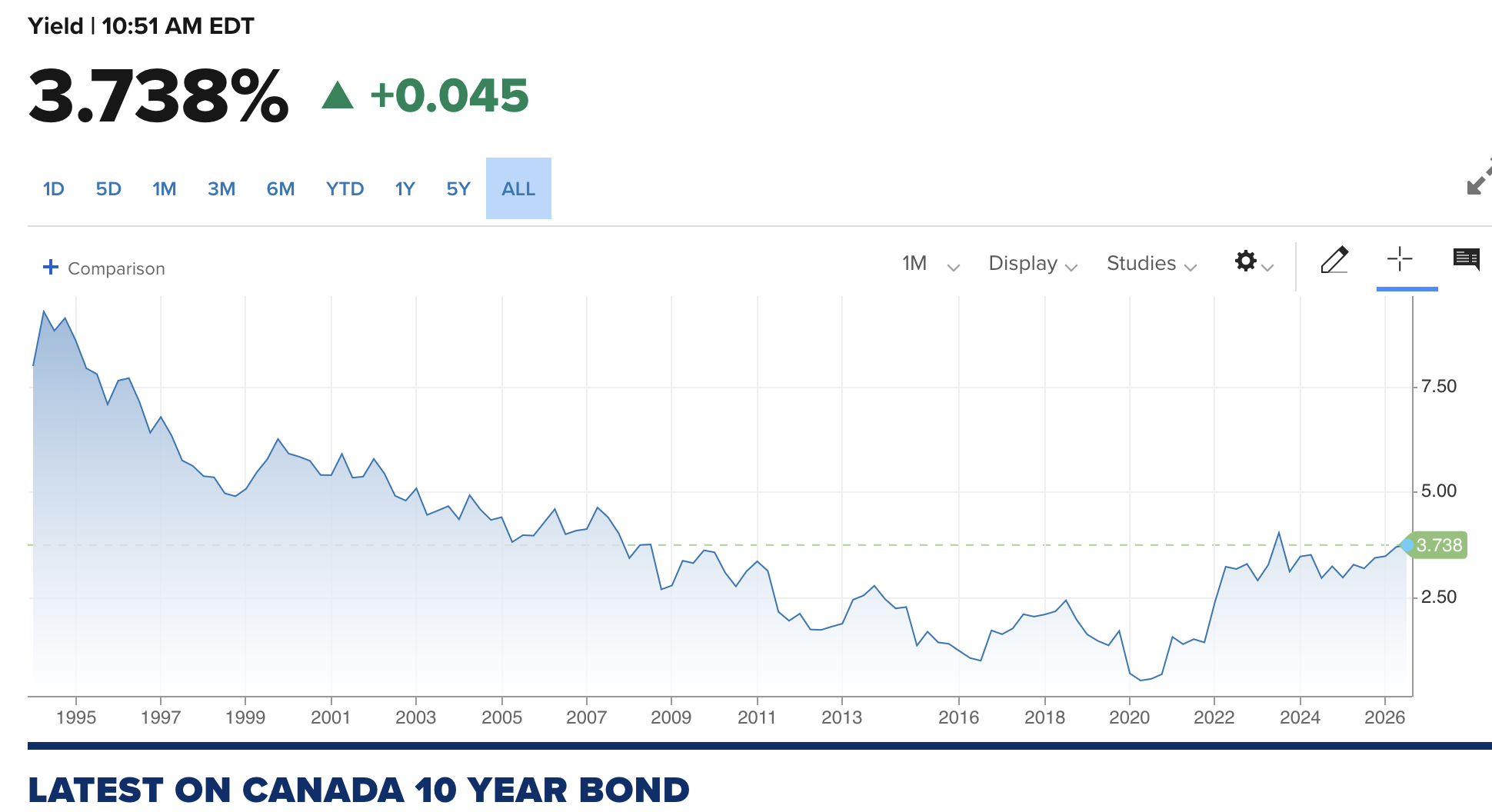
 Canada’s Treasury yields/interest rates are lower than those in America. Still, the Canadian 10-year yield rose above 3.70% — the highest since April 2024 and April 2008.
 Canada’s mortgage rates have more than doubled from their 2021 lows, with the best 5-year fixed rates now ranging from 4.0% to 4.6%, depending on the lender and whether the mortgage is insured.
Higher yields mean higher interest expense for borrowers of all stripes, from governments and businesses to consumers, and sharply higher energy prices compound financial strain. The fact that Treasury yields are back near the 2007 cycle highs deserves attention. Especially since most borrowers are more indebted now than in 2007, and global asset markets are much more leveraged.
Home Depot’s disappointing first-quarter results this week highlight a household sector squeezed by stagnant incomes and elevated borrowing costs. High mortgage rates, still elevated home prices, and sluggish housing turnover weigh on demand for big-ticket purchases and renovations. Home Depot shares are down 28% since last September and flat since November 2023.
The consumer engine of the economy is sputtering, and in the present circumstances, central banks have little ability to help that. Eventually, high rates and high prices will cure high rates and high prices. In the meantime, Treasury yields have taken the wheel, and the heavily indebted economy is set up for a rough ride.
Investors are ill-prepared. The latest Bank of America survey of global institutional investors shows a record equity net overweight of 50%, up from 13% in April and at a four-year high. At the same time, bond allocations have been reduced to a net underweight of 44% — the lowest since June 2022, and cash ratios have been shaved to a measly 3.9%, the lowest in two years. Private clients in the poll have cut their liquidity ratio to less than 10%, a record low since 2005.
Treasury bond prices fluctuate daily, but they have the least credit risk with fixed interest payments and defined maturity dates for when principal is returned to us; we should never forget that things like equities, commodities, crypto, and real estate come with no such promises.