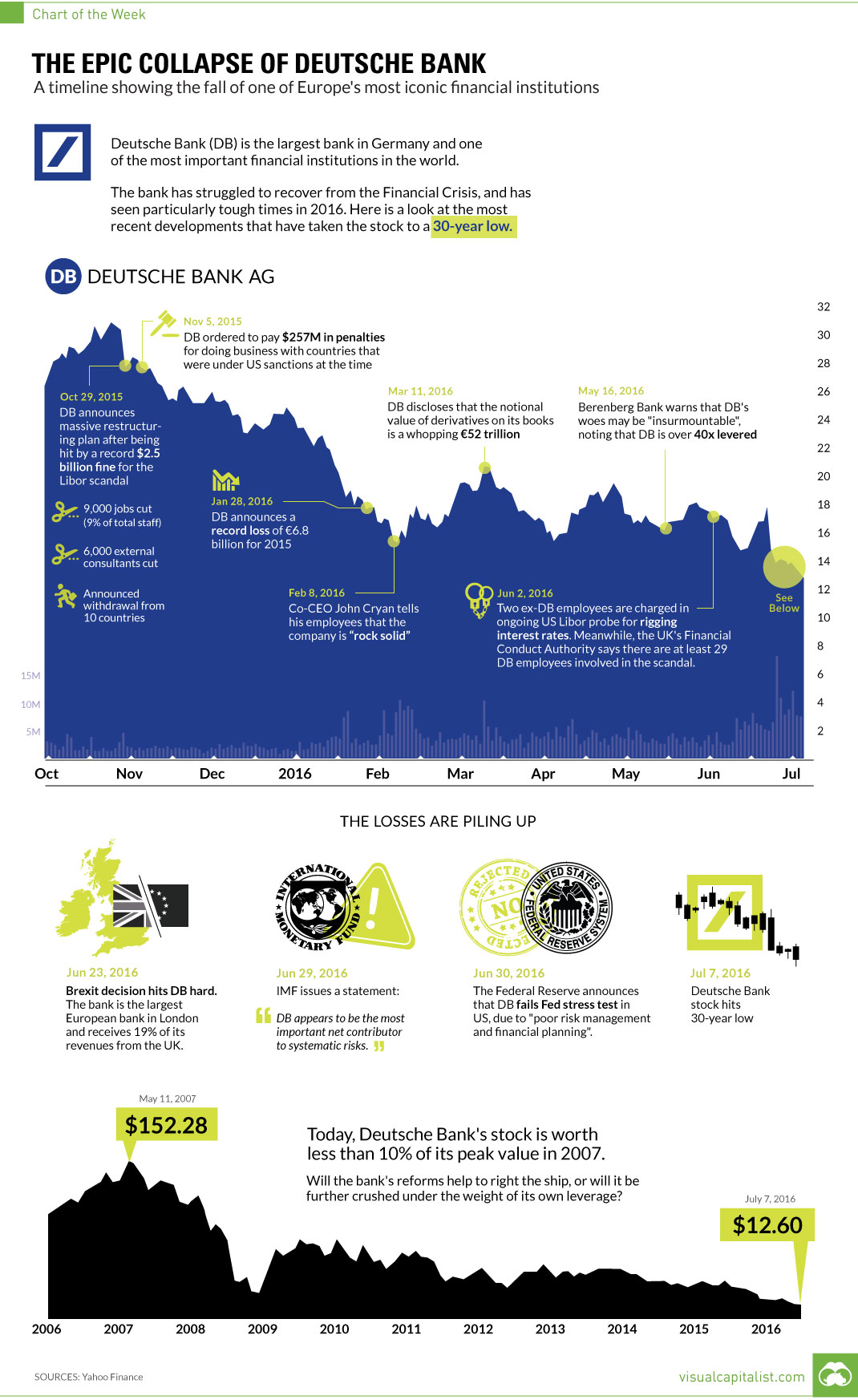
Excellent article from Robert Jenkins in the Financial Times yesterday that pushes back on the status quo nonsense about banks being healed and time for the rest of us to forgive and forget their crimes. Good grief, how can that be when the list of crimes continues to mount and none of the offenders have been deterred or punished? Worse, they are continuing to reap massive profits for their illicit activities while the rest of us and the real economy pay a devastating price. The same monkeys that caused the problems are still influencing and setting the policies. We have to get them out of their seats and into retirement or jail, before a meaningful recovery can unfold. See: A longer spell on the ‘naughty step’ will benefit banks.
There was a time when one had to wait at least 20 years between big banking crises. Perhaps this was because the generation that had learnt the hard way had to retire before the next crop could repeat the mistakes of their elders. This is no longer the case.
Business leaders who were present at the most recent crash seem determined to ignore its lessons — even before the damage has been repaired. The latest example comes courtesy of Carolyn Fairbairn, head of the CBI, the UK employers’ organisation. Among her suggestions: scrap the bank surcharge tax and ensure that regulators give priority to the sector’s competitiveness. “It’s time,” she says, “for banks to be taken off the naughty step. This is about sending a signal that a chapter [of crisis] is over.”
Really? The crisis is not over. The damage done has yet to be repaired fully. Eight years after the collapse of Lehman Brothers, interest rates are at historic lows; government deficits are high; and two of Britain’s biggest banks remain in state hands. Low rates are driving pension deficits higher. Plugging these deficits diverts funds from companies — funds that might otherwise have gone into building up their businesses.
The financial system remains fragile. Regulators have tried but failed to strengthen the system adequately…
Prioritising competitiveness is precisely what led to lax regulation. This in turn set the stage for recklessness on a stupendous scale. So before taking the banks off the “naughty step” it would perhaps be worth recalling what put them there in the first place. Finance Watch, a non-partisan advocate for sound financial reform, maintains an expanding list of banking “misdeeds”. The number of entries has just topped 100. It makes for sobering reading.
It is important to connect the dots. The crash and its aftermath have cost the economy, business, UK Treasury and bank shareholders far more than any benefits gleaned from soft-touch regulation. The competitiveness gained proved both illusory and short lived.