
Earnings recession spreads as buyback well dries up

The number of companies with the worst credit ratings and most negative outlooks jumped to 195 in December. Thirty-four of them were in the oil and gas sector, but 33 were financial companies, underlining the close nexus between energy and other sectors.  See:  Debt distress at highest level since recession.

The bond markets are starting to factor in the dangerous combination of rising interest rates as well as profit weakness in several sectors. The U.S. distress ratio – a measure of the amount of risk the market has priced into bonds – hit 20.1% in November, which is the highest level since hitting 23.5% in September 2009, says S&P. That’s an onerous indicator since September 2009 takes investors back to the last recession.

There is very good reason for distress in the corporate sector, debt levels have positively exploded over the past 7 years as companies have borrowed to jimmy rig earnings growth via buybacks, mergers and acquisitions. Think this trend is sustainable?
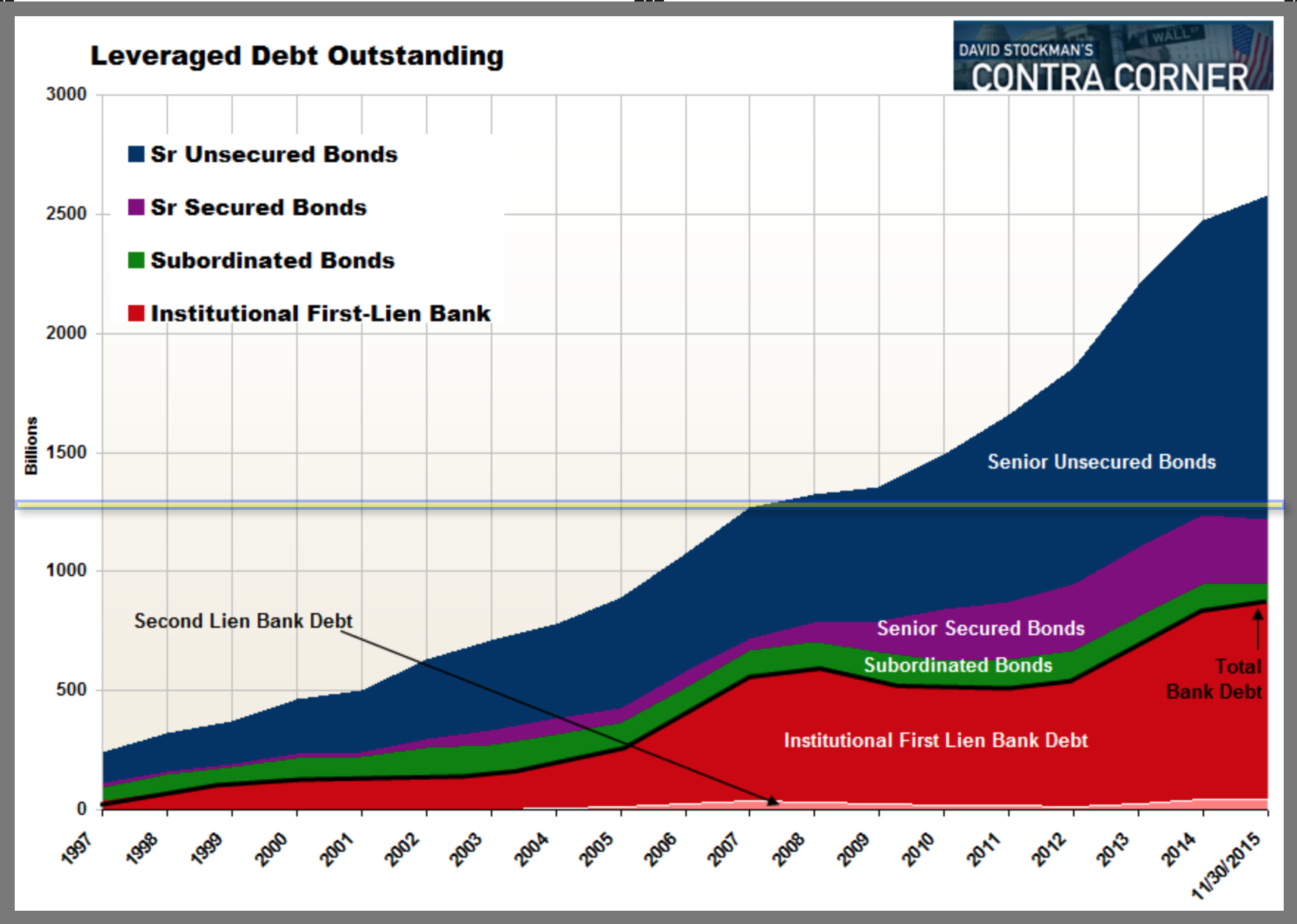
buyback debt taken onDespite the buybacks, net income has been weakening for over a year and it’s not just energy.  Third quarter 2015 reported earnings for the last 12 months, came in at $90.66/share down 15% from the $106 reported in Q3 2014. This puts S&P 500 earnings back at the same level reported in Q2 2013, when the S&P was 1600–some 22% below current levels. See:  Safe on the sidelines

The trouble with hopes that continued buy backs will reverse negative earnings trends in 2016 is that the source of record buybacks the past 3 years–cheap corporate debt–has ended.  Corporate bonds have plunged and yields have soared across the spectrum.  CCC credits that were borrowing at 8% in 2014 are now having to pay 18%.  The math of leverage has officially turned brutal.

Screen Shot 2015-12-29 at 9.25.27 AM
And its not just junk credits that are blowing out.  As shown below, flows are moving out of investment grade corporates (LQD in blue) too.

outflows from corp debt

Posted in Main Page | Comments Off on Earnings recession spreads as buyback well dries up

The world is going electric–because it’s better

Great article reminding us of the real reason the world is moving to stored electric power increasingly generated by a host of renewable energies–because it’s just far better:

“From cars to scooters to boats to locomotives to industrial equipment, we are in the midst of a transition that will electrify everything previously driven by combustion.

There are two simple reasons we’ll make this change sooner than most people think. First, electrically powered things just work better. And people want things that work better…

Cutting-edge electric cars today are better than their gas-powered counterparts. They are both safer and easier to maintain than conventional cars. No trips to the gas station, no oil changes; the bulk of upkeep lies in tires and windshield wiper fluid. They also perform on the road, with better acceleration, torque and responsiveness than their conventional counterparts.”

And it’s not just vehicles, it’s literally everything.  See:  The coming electrtification of everything:

“Today’s first graders will get to college and shake their heads when we talk about the good old days of using repeated explosions under the hood of the car to get around.”

Posted in Main Page | Comments Off on The world is going electric–because it’s better

Reduce, reuse, recycle in 2016

This holiday season and everyday, reducing consumption is an over-arching goal for thoughtful people.  Plastic and trash washing up on beaches all over the world are a pressing reminder that nowhere is an island when it comes to humans and our wasteful destruction.

When we do consume we must devise ways to use less packaging. When we create waste we must carefully separate our garbage into compost and recyclables.  Once this is the family’s habit, it feels grotesque and dumb to toss everything into one receptacle.  Most places in the world are still tossing everything in together.  We can be so much wiser than this.  But to change, we the people, have to care and insist on policies and programs that require everyone to do their part, from cities and towns, to corporations and families.  When we lead through example and mandate, others will develop smarter habits of their own.

For castoffs that we no longer need, knowing where they can be recycled is part of the solution. David Suzuki Foundation has published a helpful list of resources in Canada (organized by location) to help us do just that:  See: Recycle your unwanted stuff.

Let’s get smarter and more disciplined in 2016.  Yes we can.


Posted in Main Page | Comments Off on Reduce, reuse, recycle in 2016





