
How about on demand printing of solar cells? See: Paper thin printed solar cells could provide power to 1.3 billion people.
 “The cost of solar power has declined dramatically over the past few decades, from $40 per watt in 1977 to $0.74 per watt in 2013. This trend is expected to accelerate as improvements in efficiency and new technologies come online. This is good news for citizens of developed countries who want to make the switch to a cleaner and increasingly cheaper energy source. The shift to solar may be most dramatic for those living in developing countries. Thanks to inexpensive printed solar cells, 1.3 billion people currently without electricity may be able to plug in for the first time.”
No wonder commodity prices are plunging. Not only is the indebted, global economy slowing, but the world is using less and less energy to do more and more all the time. Technology innovation is allowing the developing world to leapfrog conventional systems and infrastructure and go straight to the sun. Power to people, while cutting out traditional fees to brokers, producers and transporters. This is a world changer.
There are thousands of entrepreneurs and scientists working passionately on these solutions every single day. Here is another:
All Solar Lights CEO Paul Hitchens discusses bringing solar lighting solutions to some of the poorest and most remote communities on earth. Here is a direct video link.
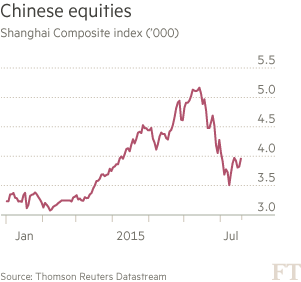
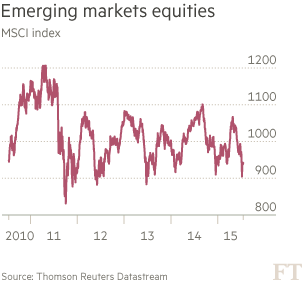 m. Over the past 5 years as financial strength has weakened, emerging markets have swung about in wild waves of speculative fury, accomplishing nothing but losses (chart on left). See:







