Deflation dominating, dividing returns by volatility is key

The concept of risk-adjusted returns is so rarely mentioned by finance types and yet the concept is so critical to real life assessments. Holding on to over-valued, over-bought risk assets in a world of unprecedented leverage is like trying to ride a bucking broncho to work. With a lot of luck, there is a small chance you might get there in one piece, but the more likely result is that you will suffer serious, perhaps permanent injury. Given the grave stakes at risk with one’s life savings, even if one in a million riders manages to hang on through an extremely volatile ride, the question remains, is it a wise method to chose for rational people?

Bob Janjuah, co-head of cross-asset allocation strategy at Nomura, says he expects Italian and Spanish 10-year bond yields to fall to 1 percent, adding that fixed income is “the place to be” rather than equities” in a world dominated by deflation.

Here is a direct video link.

Posted in Main Page | Comments Off on Deflation dominating, dividing returns by volatility is key

Vancouver Investment Conference this weekend

I will be traveling to Vancouver this weekend to speak at the 20th annual Vancouver Resource Investment Conference.   Always fun to be on the west coast.  You can see more about the show, or register to attend, here on line.

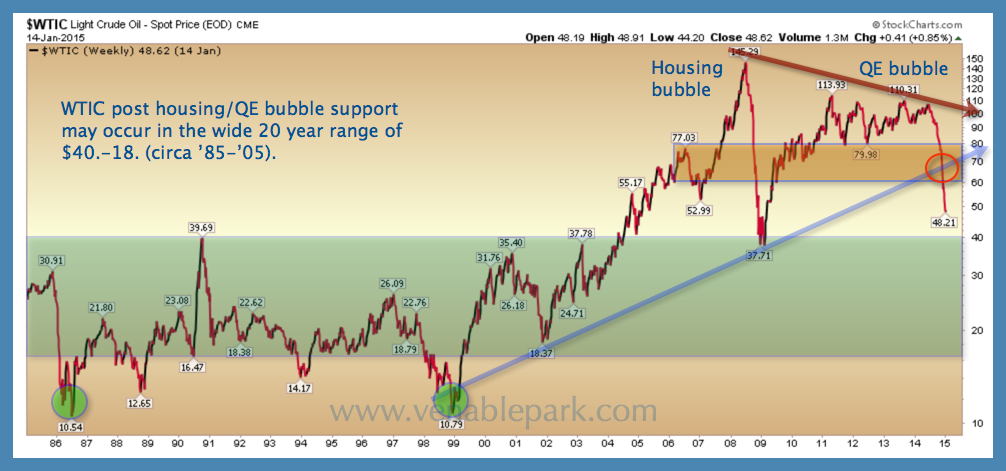
Recent moves in oil and gold are certain to be the topics du jour.  My partner Cory’s charts offer a bird’s eye view of recent moves.  Here is WTIC since 1985.

WTIC Jan 14 2015

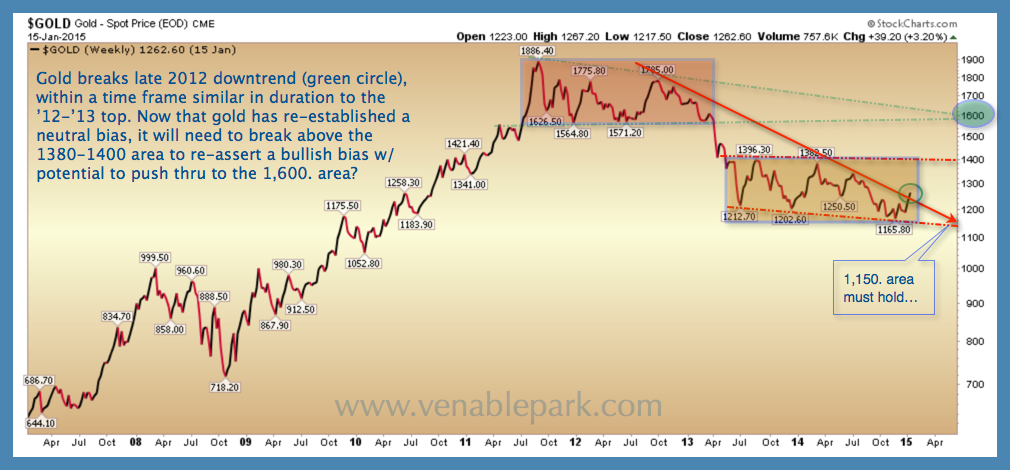
And here is the barbarous relic itself since 2007…
Gold Jan 15 2015
Today we are seeing fresh highs on the US dollar and inflows to gold. Clearly a world of over-valued assets, contracting economies, increasing deficits and weak currencies are all making ‘safe havens’ in short supply. Inflationary pressures are weak but gold may benefit from a renewed thirst for currency alternatives…

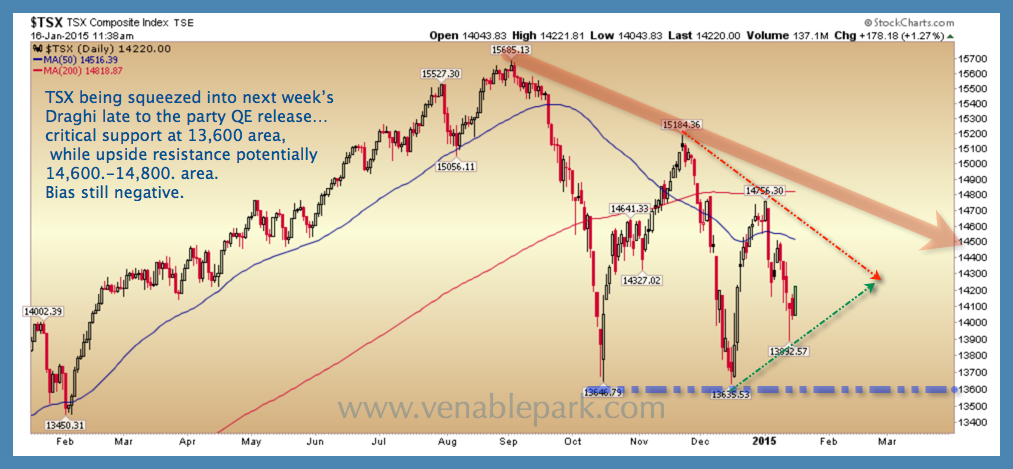
The Canadian TSX Composite meanwhile is convulsing higher today even as the loonie falls some more. It’s quite a mess out there. This chart of the TSX captures the mayhem since September.  Nasty, negative bias still in play…
TSX Jan 16 2015

Posted in Main Page | Comments Off on Vancouver Investment Conference this weekend

What policymakers miss

What the finance wizards have forgotten or intentionally overlooked in all their learned theories, is the below chart. The bonanza of babies born after the Second World War in all the world’s most advanced, wealthiest economies (red bars below):

Bommers worldwideChart source:  www.glogster.com

Today this cohort controls the bulk of the world’s wealth. Global boomers were the leading edge driving world demand, inflation and interest rates up between 1964 and 1982 (chart below) as they came of age, but now these former consumption superstars are all between age 50 and 69.
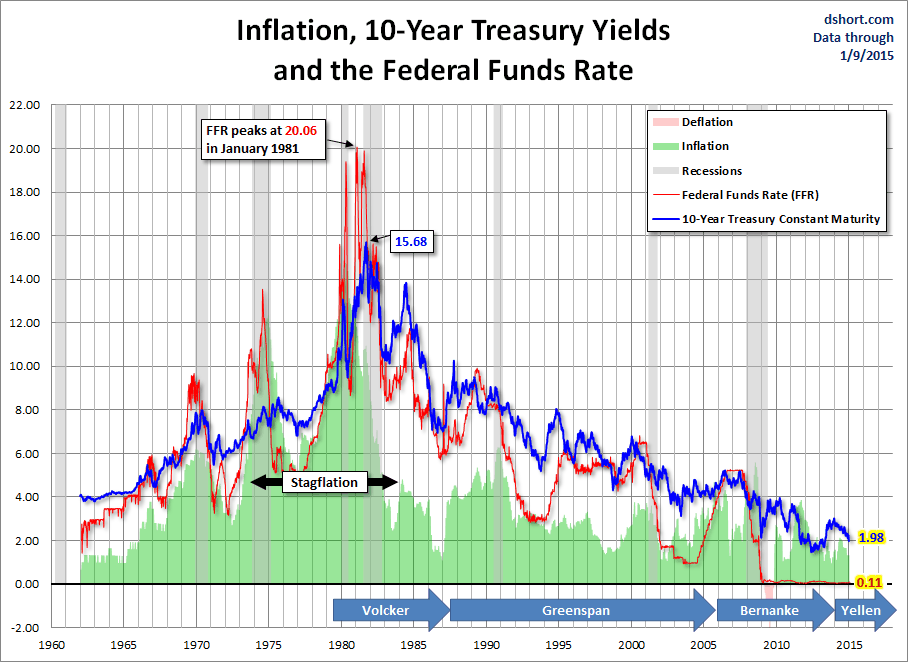
treasuries-FFR-since-1962
Well past their peak spending years (which is age 47 on average), at this stage, the natural inclination is to downsize possessions and cut expenses. This would be the case even if so many age 50+ were not also still in debt today thanks to bad choices made during the credit bubble. The weight of debt only magnifies the natural contraction in consumption as we age.

The real rub is this: where the ‘magic’ of falling interest rates between 1980 and 2005 helped boomers to borrow and spend beyond their means for years, the opposite effect is now in charge: low rates are helping to crush consumption.

Millions of boomers are leaving the work force year after year and trying to fund their spending from savings and the income it can produce. Most have not saved enough, and with asset prices from bonds, to stocks, to real estate being propped by financial intermediaries and central planners around the globe, the resulting low yields are proving the final blow to kill the golden goose of previous consumption rates.

This is the primary reason that QE and all the other antics from bankers to restart previous demand patterns are all doomed to fail. Nay, worse, will only make deflationary trends even more pronounced with each manic episode.

When it comes to higher demand and economic growth, only time, higher savings and lower asset values, can ultimately heal balance sheets and restore purchasing power to a world now awash in excess goods and disinterested, income-starved, shoppers.

The ‘add-debt-and stir ‘ ‘genius’ led by bankers, is falling deservedly on its own grotesque sword.

Posted in Main Page | Comments Off on What policymakers miss