BIS warns on rare simultaneous bubble in stocks and gold

The Bank for International Settlements (BIS), the central bank of central banks globally, warns in its December 2025 Quarterly Review that a rare, simultaneous bubble in the price of stocks and gold has increased financial risks and the prospect of a significant correction and negative or subdued future returns:

A widely used statistical test to detect the explosiveness of a price process suggests that both the S&P 500 and the price of gold have entered explosive territory in recent months. Historically, the prices of US equities and gold have breached the explosive behaviour threshold at different times (Graph C1.A, on lower left).

This was often followed by a significant correction, such as in 1980 for gold (after having surged during the Great Inflation) and the burst of the dotcom bubble for US equities… Also note that the past few quarters represent the only time in at least the last 50 years in which gold and equities have entered this territory simultaneously.

Following its explosive phase, a bubble typically bursts with a sharp and swift correction. Graph C1.B (lower right) suggests that high values of the test statistics – hinting at an ongoing bubble – are typically followed by periods of negative or subdued returns.

In other words, we are living through a pandemic of financial fever, and those who believe they are protected by holding a ‘diversified’ portfolio of corporate securities and precious metals are at high risk of being disappointed.

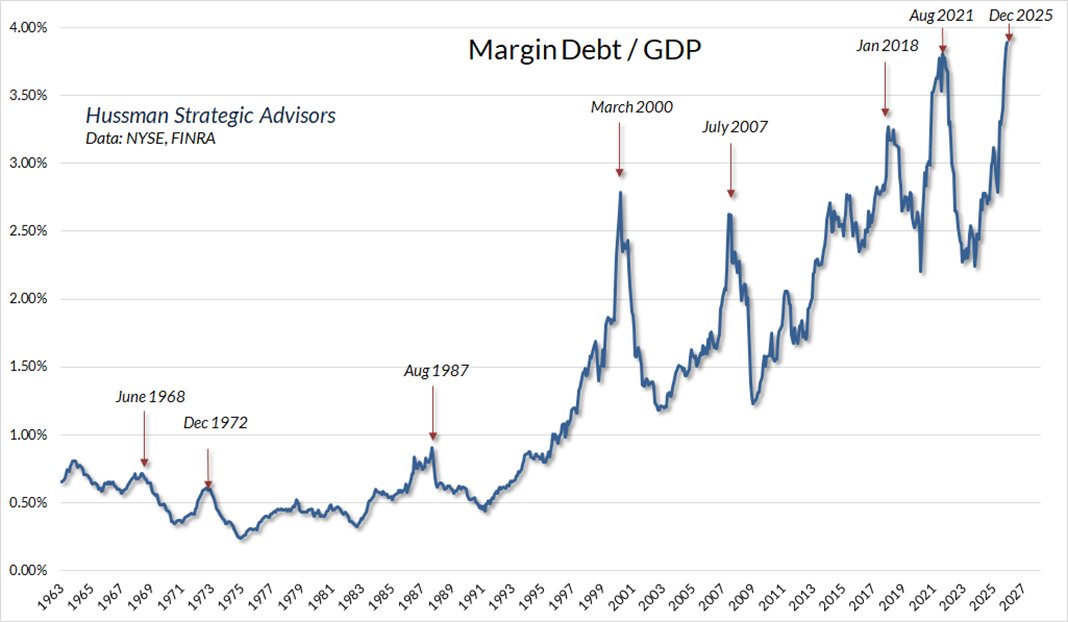
Moreover, retail exuberance is a classic bubble symptom, and we are there:

A typical symptom of a developing bubble is the growing influence of retail investors trying to chase price trends. At times of media hype and surging prices, retail investors can be lured to riskier assets that they would normally shun, compounded by herd-like behaviour, social interactions and fear of missing out. Indeed, measures of retail investors’ interest in markets, such as internet searches, tend to surge at times of frothiness (Graph C2.A, on lower left).

This time around, there is also evidence that retail investor exuberance and appetite for seemingly easy capital gains have spilled over to a traditional safe haven such as gold. Since the beginning of 2025, gold exchange-traded fund (ETF) prices have been consistently trading at a premium relative to their net asset value (NAV) amid growing retail investor interest (Graph C2.B, blue line, middle, below). ETF prices exceeding their NAV signal strong buying pressure coupled with impediments to arbitrage.

Fund flow data reveal it was mostly retail investors who recently poured money into US equities and gold funds. Furthermore, retail investors have increasingly taken trading positions that run counter to those of their institutional counterparts: the latter were taking money out of US equities or maintaining flat positions in gold, while retail investors recorded inflows (Graph C2.C, lower right).


Although the influx of retail investors has mitigated the
impact of institutional investor outflows, their growing prominence could threaten market stability down the road, given their propensity to engage in herd-like behaviour, amplifying price gyrations should fire sales occur.


Posted in Main Page | Comments Off on BIS warns on rare simultaneous bubble in stocks and gold

Rethinking value add

Lots of disturbing news this morning, fortunately, there are also positive developments.

As endless video content and computing devour more and more power, renewable sources and battery storage to balance demand are an obvious evolution.

Interestingly, people often cite payback periods in rejecting investment in power production and storage, while freely spending on aesthetic items like upgraded countertops and landscaping that have no hope of ever lowering operating costs.

For a long time, rising home prices made non-productive capital-allocation decisions seem justified. Now that home prices and revenue are falling in many areas, interest in reducing expenses and waste is back on the agenda.

Home battery storage systems are becoming an essential key to a successful energy transition. Australia has understood this and has acted promptly to embrace the technology. Spain’s recent blackout suggests European countries have a lot of catching up to do. So can we do it? Here is a direct video link.

Posted in Main Page | Comments Off on Rethinking value add

Financial conditions tighten into year end

Happy Friday from the snowy north. Another interesting week!

The US Fed lowered its policy rate target 25 basis points (now 3.50 to 3.75%), and announced it would buy $40 billion of TBills monthly as part of a reserve and liquidity management tool. Intoxicated stock markets have continued to party, further easing financial conditions for publicly traded companies.

The trouble is that most of the private sector is struggling, and so far, Fed efforts have not translated into ease for households and businesses that borrow through the banking system.

The Fed has cut overnight rates by 1.75 percentage points over 15 months amid above-target inflation and deteriorating labour market conditions. Fed Chair Powell indicated that they may not have to lower the policy rate further, but employment conditions will be the test. The threat of further inflationary pressures from future fiscal stimulants is a wild card in the mix. See, Fed Cuts Rates Again, Signals It May Be Done for Now.

The fed funds rate influences short-term borrowing costs at a lag, including credit card and auto loan rates. But longer-term interest rates, which matter most for mortgages and business investment, have trended up since October.

The 10-year Treasury yield, which dropped to 4.01% ahead of the Fed’s cut in September, opened at 4.18% this morning — driving borrowing costs higher, not lower.

After lowering 2.75 percentage points from 5% in June 2024 to 2.25% on October 29, 2025, the Bank of Canada (BoC) held steady with no rate cut this month.

Between a rock and a hard place, inflation has been rising more slowly, but still grossly inflated shelter and service costs make it hard for the BoC to justify further cuts at this time.

Interest rates have moved higher in Canada, with the 5-year Treasury yield rising from 2.62% on October 20 to 3.013% this morning, and the Canada 10-year yield at 3.44%, up from 3.04% on October 28. Fixed mortgage rates are moving up.

The idea of firmer-for-longer policy rates also prompted the Canadian dollar to rebound against the US dollar, now up 2.5% since November 6.

Gains in Treasury yields and the loonie are tightening financial conditions at a time when employment is deteriorating, exports are weak, oil surpluses are mounting, and home prices have been falling nationally; in America, too: see Home prices go negative for the first time in over 2 years — and may stay that way for a while.

Historically, the most stubborn economic downturns have been led by contractions in the housing market.

The burden of too-high debt and inflated costs is a real and crushing legacy of ultra-easy fiscal and monetary policies through 2022. Now, the tab has come due, and quick, pain-free fixes do not exist.

Posted in Main Page | Comments Off on Financial conditions tighten into year end