Fat pitches and market cycles

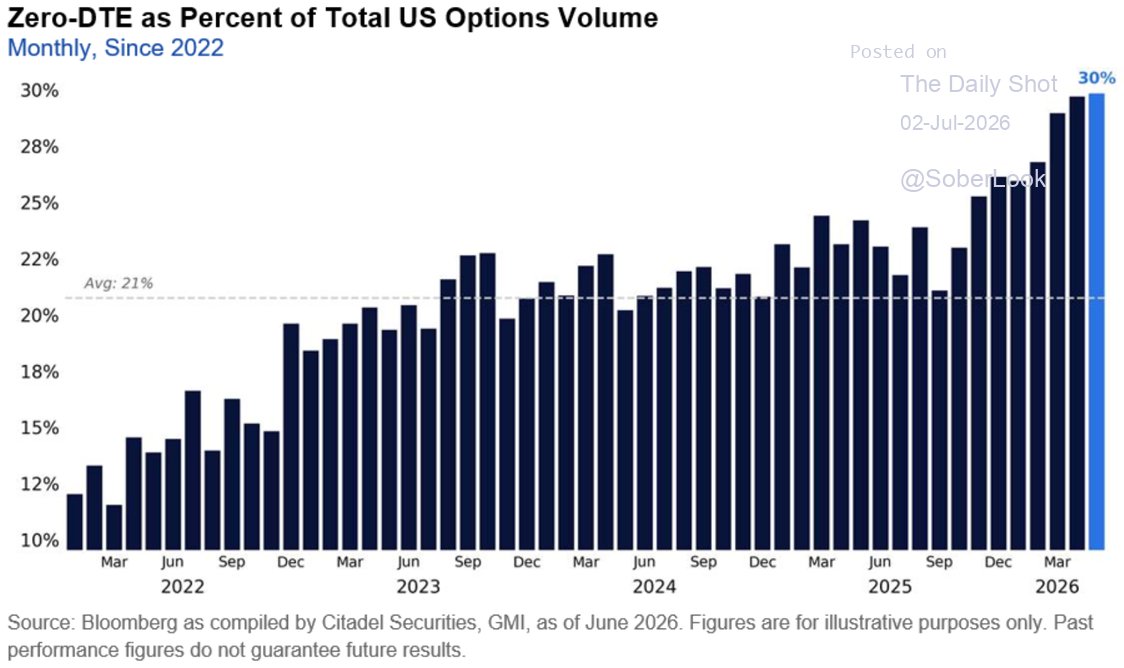
Near-zero interest rates and trillions of asset buying by central banks (QE) enabled twelve years of increasingly deranged financial behaviour between 2011 and 2023. In the process, gambling became an international preoccupation, and investable assets were traded to uneconomically high valuations.

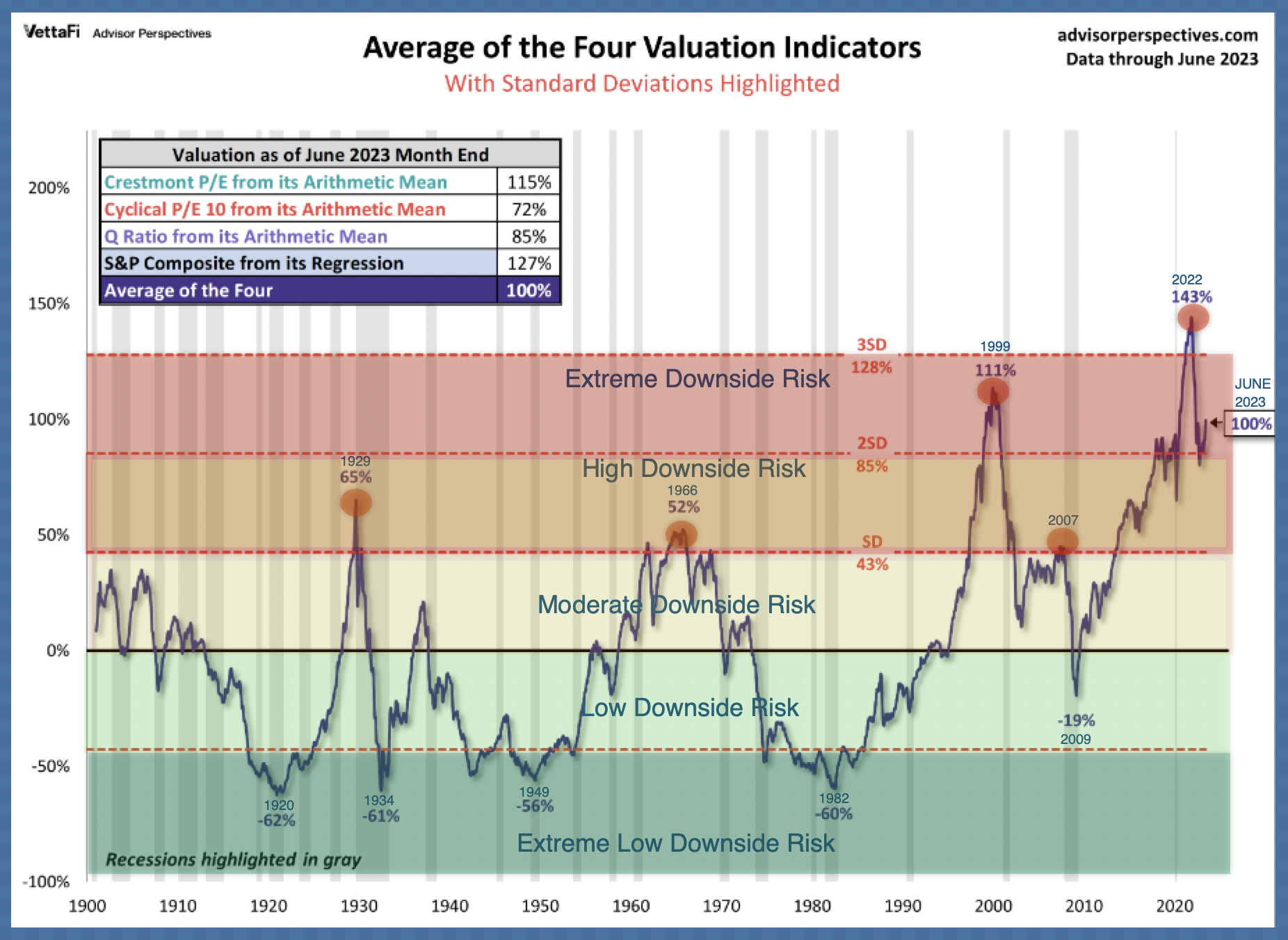
A global standout, at the market peak in 2022, the S&P 500 index (shown below since 1900) traded at 143% of a historical valuation mean composite (above three standard deviations) and surpassed the 111% top seen in the 2000 cycle and the 65% zenith reached in 1929. You can read more about the components here.
As in the 2007 and 2000 cycle tops, the US and Canadian central banks are now holding base rates in the banking system at around 5%. Different this time, they are contracting liquidity even more by rolling billions off their balance sheets (QT) monthly.

While mean reversion began in 2022, so far, equity valuations remain 100% (more than two standard deviations) above the historical mean and still within the extreme capital risk zone (red band above)—don’t take it from me; look at the chart with your own eyes. While the pandemic-inspired freefall in March 2020 was dramatic, it was too short and shallow to crush speculative mania and restore longer-term investment prospects.

From past valuation extremes, normalized interest rates sparked protracted market loss cycles that finally resulted in buying opportunities with income yields above 8% and capital risk low/extremely low on the historical scale (yellow and green bands above).

To repeat: it’s not just that avoiding bubbles and buying near cycle lows locks in rich-income yields for years after that; it also dramatically reduces the likelihood of capital losses and years of gut-grind trying to recover.

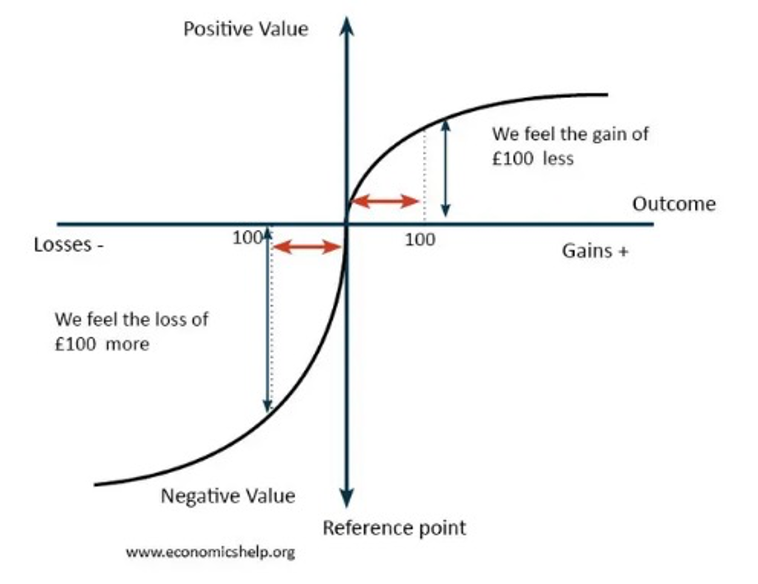
It’s essential to realize that psychological studies and life experience confirm we humans feel the pain of loss much more acutely than the joy of a fleeting gain. Most of us will bail after extended losses and never make them back.
Buying extremely-overvalued assets is too expensive in every way. Fat pitches take time to materialize, but not waiting for them makes no sense.
Posted in Main Page | Comments Off on Fat pitches and market cycles

The elevator pitch for capital preservation

The challenge is to explain complex systems in simple enough terms that people can comprehend. I attempt to do this every day in finance. But people can be hard to help. We have to want to learn and remember why capital preservation is our dominant goal.

Financial enlightenment is made harder because most “experts” in the space make their living by selling risk to others. The higher the level of risk sold, the richer the compensation that workers in the sector receive. No wonder investor outcomes end badly every cycle.

Accountants can also make matters worse by advising that people are best off holding dividend-paying rather than interest-bearing securities. and avoid selling assets if doing so will trigger taxable gains. Capital gains not actualized have a long-standing history of evaporating in bear markets. Remember Nortel, anyone!? Tax planning is part of prudent financial management but a notoriously horrible driver of capital allocation decisions.

I discussed these timeless dynamics in Juggling Dynamite (2007) sixteen years ago, and it bears repeating:

Reaching for higher income, many investors unwittingly place too many of their hard-saved dollars in the higher-risk plays…Retirement years should focus first and foremost on capital preservation and only second on the tax-efficient income that it provides. But the low-rate environment served to turn these objectives on their head. Instead, investors focused on the highest tax efficient income first and at all cost.

…The financial sales industry is always happy to sell people equity-based investments and they have run long on the pitch on these products. I am reminded of past peaks in other markets where the uptrend has been so strong for so long that people become complacent about risk to captial. The focus shifts to “get me in before I miss out.”

In a world of click-bait and sell-side propaganda, attention spans are hard to hold on the big-picture factors that matter most. RIA analyst Michael Lebowitz quickly cuts to the chase in his recent article Our Elevator Pitch for Bonds:

Instead of writing another 1,500-to-2,000-word diatribe on why we like bonds, we present a “readable,” sub-500-word elevator pitch for U.S. Treasury Bonds.

Our view of the attractiveness of bonds can be honed into an elevator pitch. It essentially boils down to a straightforward question – Is this time different?

…More specifically, are slowing productivity growth, weakening demographics, and rising debt levels about to reverse their prior trends and become a tailwind for economic growth.

If you think, as we do, that the last three years are an economic, fiscal, and monetary anomaly, then the opportunity to earn 4% or more on a longer-term bond is a gift. We think yields will revert to extremely low levels when the pre-pandemic economic and inflation trends reemerge. Negative interest rates are not out of the question.

Posted in Main Page | Comments Off on The elevator pitch for capital preservation

Those who overlook history

Like today, soft-landing hopes were all the rage in the summer of 2007 too.

The US Fed tightened its overnight rate from 1% in May 2004 to 5.25% by June 2006 and then paused there for 15 months. As the economy slowed and credit stress mounted, the Fed administered a first cut (50bps) in September 2007, and the stock market leapt. On October 7, 2007, the Wall Street Journal (Hat-tip Michael Kantro) bubbled with optimism:

“…worries seem to be taking a back seat to renewed enthusiasm about the health of the economy and the credit markets.  The market is relatively happy that the economy continues to grow, and there are a lot of people who don’t want to be on the sidelines is the market is going to move higher. The tech sector has been surging lately, as investors see those companies as less vulnerable to credit-market problems and better able to benefit from global growth.”

As usual, bullish propaganda from financial firms dominated the media. RBC’s June 2007 steady economic outlook was typical fare:

Canada’s economy gathered steam in the first quarter with an annualized growth pace of 3.7%, supported by a strong domestic economy,” said Craig Wright, vice-president and chief economist, RBC. “While overall economic growth will remain robust, the trade sector will continue to weigh on growth as the strong Canadian dollar boosts imports and restrains exports.”

On a national level, the economy should grow by 2.6% over 2007, Wright says, with 2008 expected to turn in a rate of 2.9% growth.

In reality, the great recession officially started in December 2007, and Canada’s GDP contracted by 1.06% in 2008 and 3.94% in 2009.

Although central banks slashed benchmark rates to zero by December 2008 and pumped unprecedented liquidity (QE), financial markets tanked until March 2009.

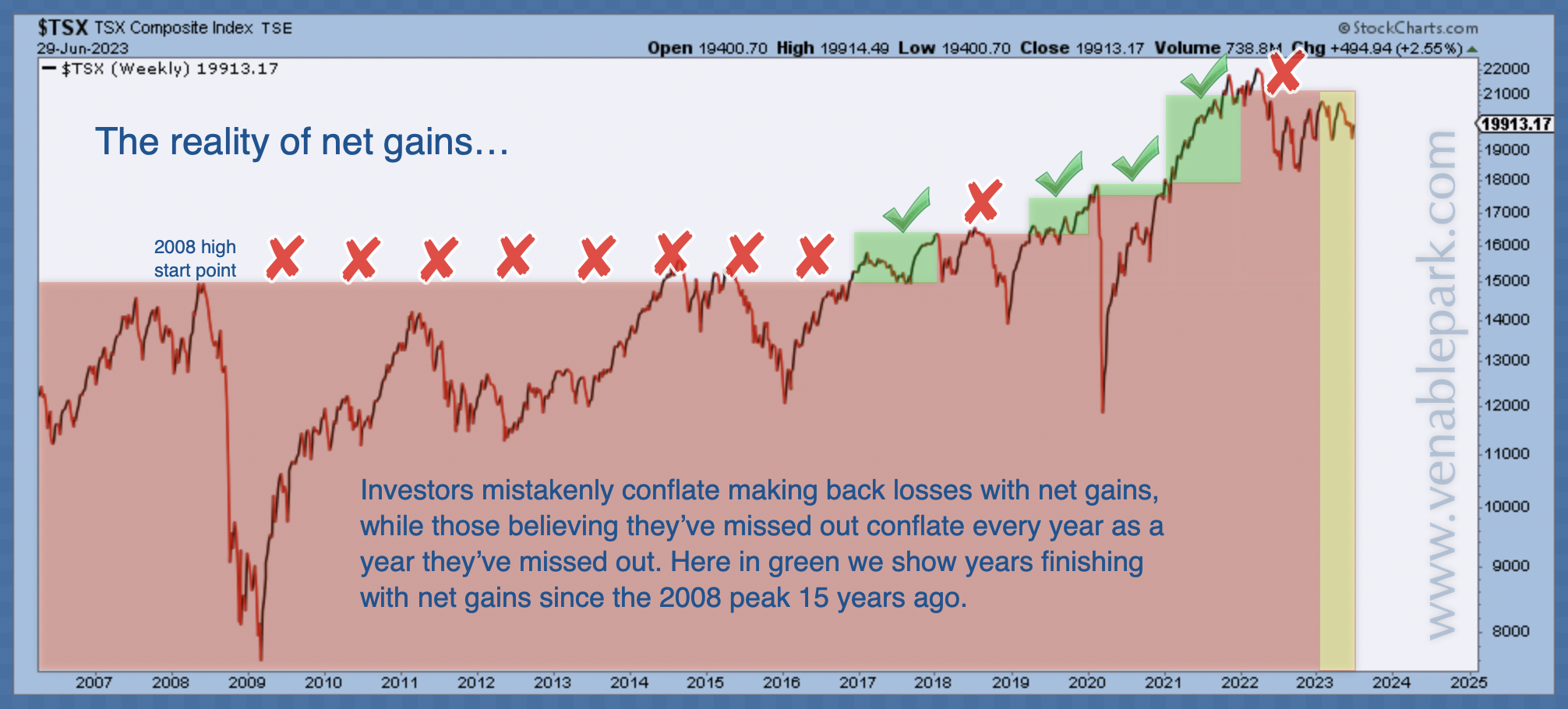
The Canadian stock market halved from its high in June 2008 (shown in my partner Cory Venable’s chart below). It could not sustain a break out above its 2008 peak until 2021’s pandemic stimuli boosted asset prices into 2022. It’s rolled over again since.

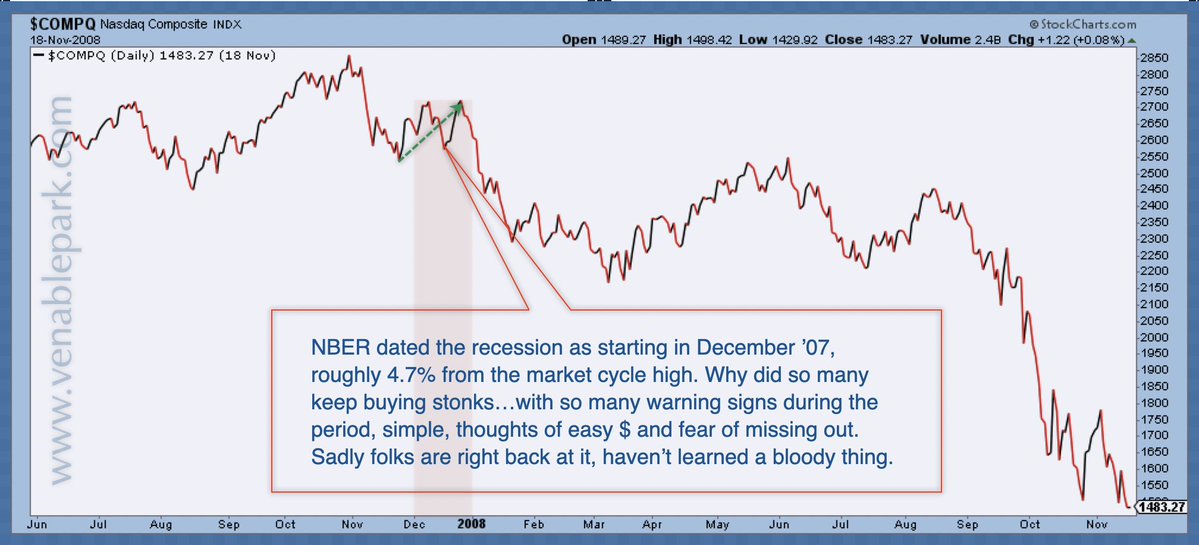
The tech-rich Nasdaq 100 index (below from June 2007 through November 2008) followed a similar pattern with a 43% decline. On the upside, the 2007-09 Nasdaq decline was mild compared with its 83% loss in the 2000-02 “correction” cycle.

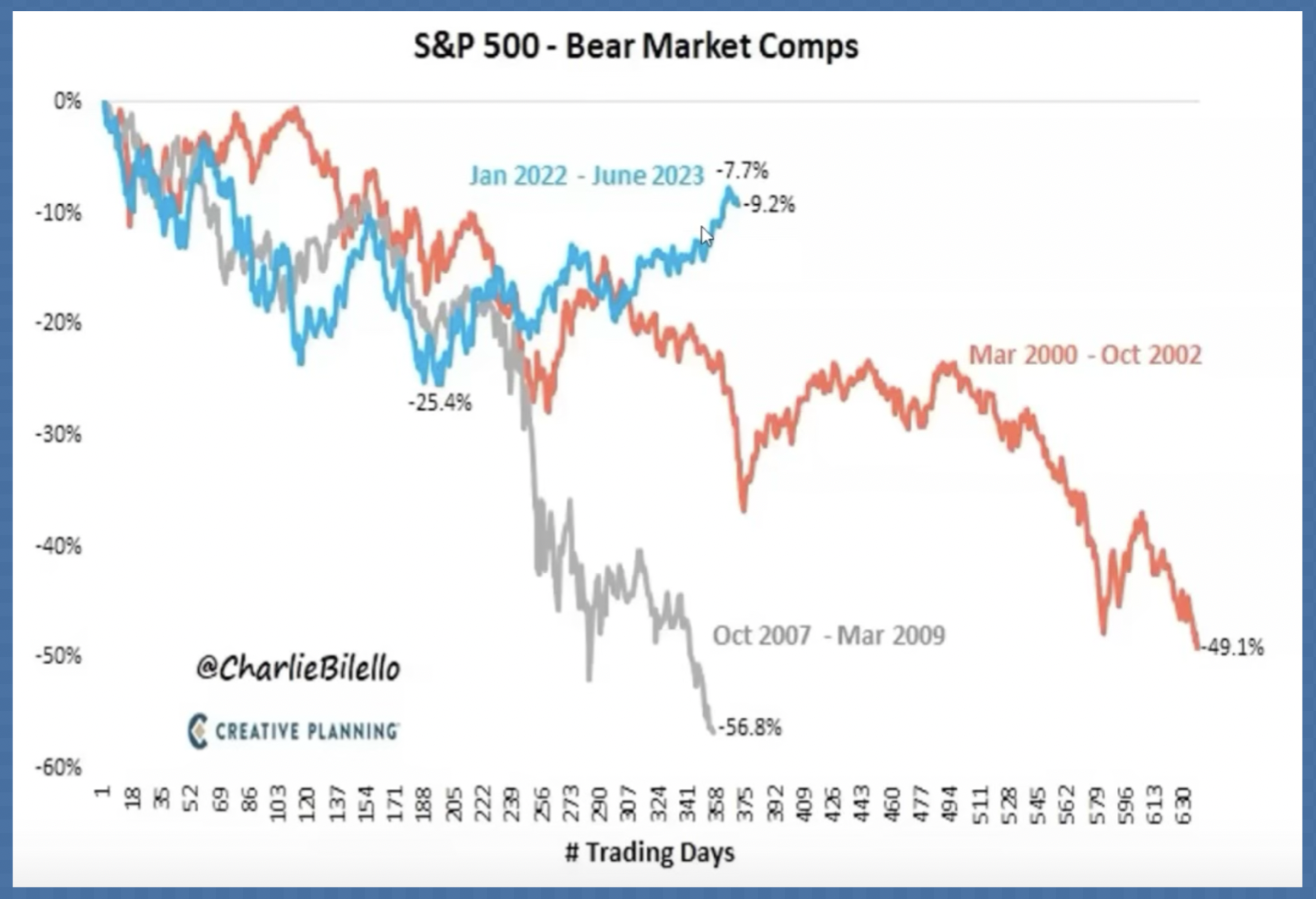
After rebounding between May and September 2007, the S&P 500 also tumbled with a peak-to-trough drop of 56% by March 2009 (shown in grey below courtesy of Charlie Bilello). A similar pattern materialized in the March 2000 to October 2002 (in orange) bear market. The blue line shows the S&P’s price action from January 2022 to June 2023 for comparison. #earlydays

The US Fed will likely pause its tightening efforts soon. But the economic cycle and stock markets have never bottomed before the pause. Bottoms come after rates have been slashed to cycle lows, unemployment is leaping, and the unprepared are liquidating in losses. Best to be aware.

Posted in Main Page | Comments Off on Those who overlook history