The challenge is to explain complex systems in simple enough terms that people can comprehend. I attempt to do this every day in finance. But people can be hard to help. We have to want to learn and remember why capital preservation is our dominant goal.
Financial enlightenment is made harder because most “experts” in the space make their living by selling risk to others. The higher the level of risk sold, the richer the compensation that workers in the sector receive. No wonder investor outcomes end badly every cycle.
Accountants can also make matters worse by advising that people are best off holding dividend-paying rather than interest-bearing securities. and avoid selling assets if doing so will trigger taxable gains. Capital gains not actualized have a long-standing history of evaporating in bear markets. Remember Nortel, anyone!? Tax planning is part of prudent financial management but a notoriously horrible driver of capital allocation decisions.
I discussed these timeless dynamics in Juggling Dynamite (2007) sixteen years ago, and it bears repeating:
Reaching for higher income, many investors unwittingly place too many of their hard-saved dollars in the higher-risk plays…Retirement years should focus first and foremost on capital preservation and only second on the tax-efficient income that it provides. But the low-rate environment served to turn these objectives on their head. Instead, investors focused on the highest tax efficient income first and at all cost.
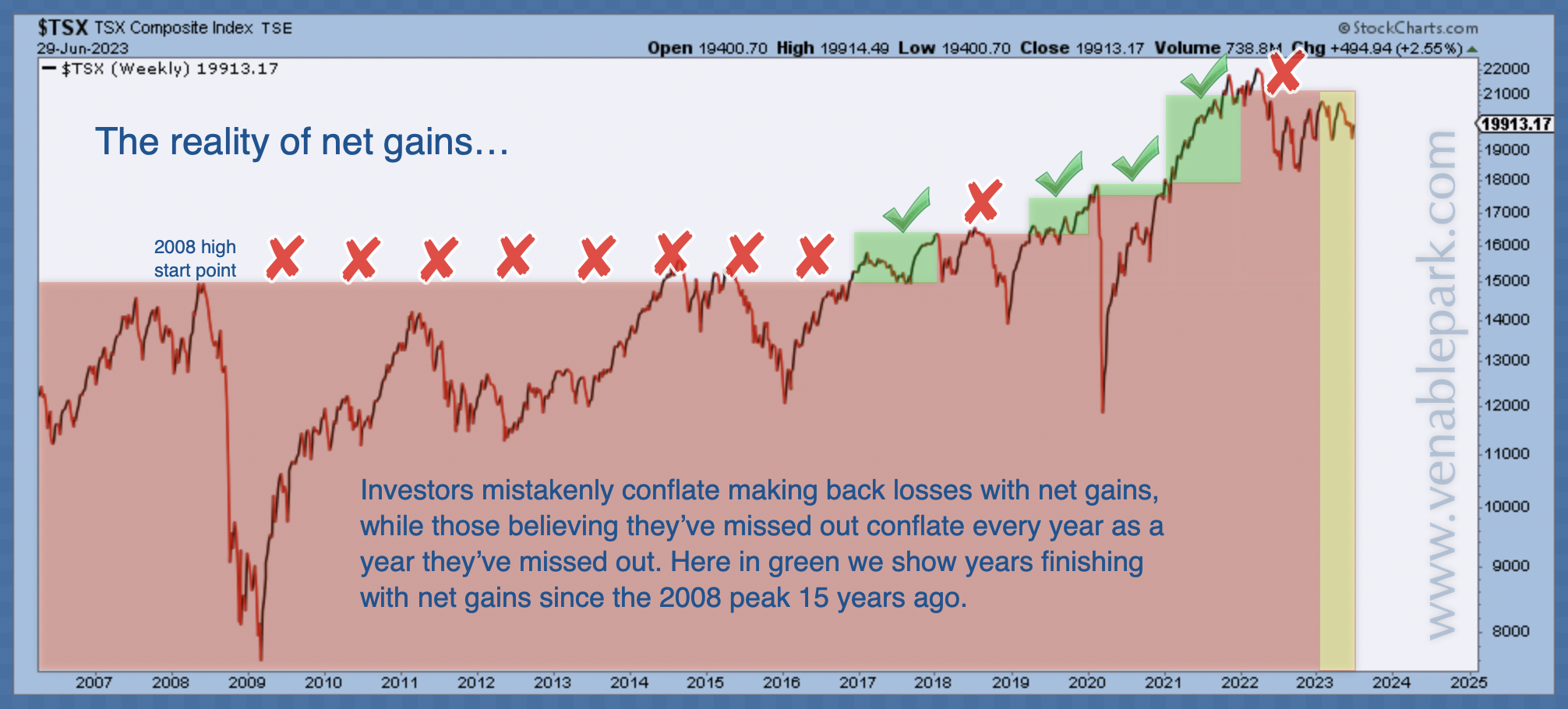
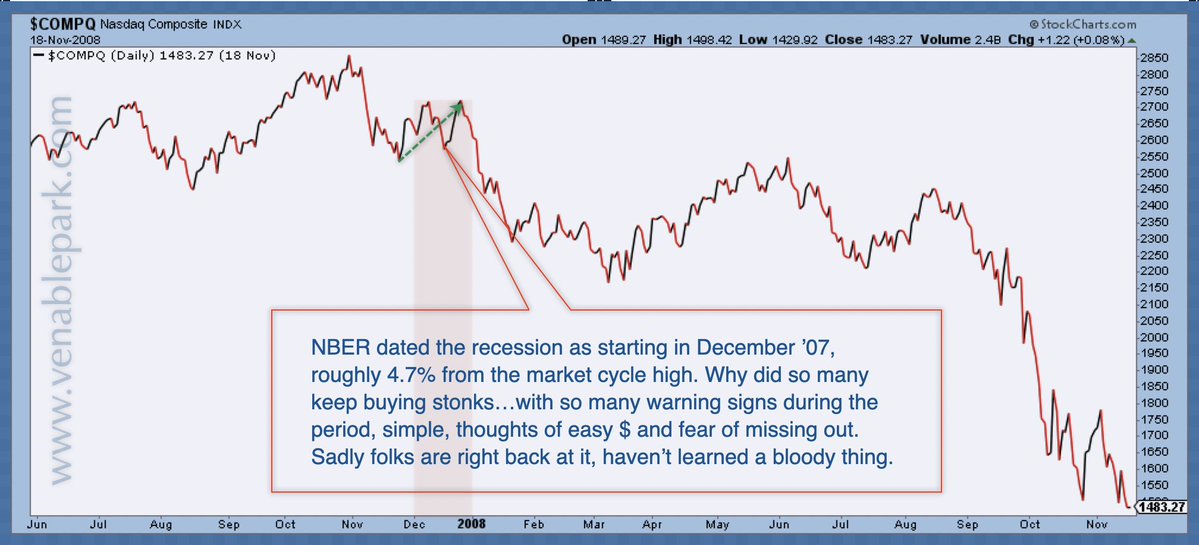
…The financial sales industry is always happy to sell people equity-based investments and they have run long on the pitch on these products. I am reminded of past peaks in other markets where the uptrend has been so strong for so long that people become complacent about risk to captial. The focus shifts to “get me in before I miss out.”
In a world of click-bait and sell-side propaganda, attention spans are hard to hold on the big-picture factors that matter most. RIA analyst Michael Lebowitz quickly cuts to the chase in his recent article Our Elevator Pitch for Bonds:
Instead of writing another 1,500-to-2,000-word diatribe on why we like bonds, we present a “readable,” sub-500-word elevator pitch for U.S. Treasury Bonds.
Our view of the attractiveness of bonds can be honed into an elevator pitch. It essentially boils down to a straightforward question – Is this time different?
…More specifically, are slowing productivity growth, weakening demographics, and rising debt levels about to reverse their prior trends and become a tailwind for economic growth.
If you think, as we do, that the last three years are an economic, fiscal, and monetary anomaly, then the opportunity to earn 4% or more on a longer-term bond is a gift. We think yields will revert to extremely low levels when the pre-pandemic economic and inflation trends reemerge. Negative interest rates are not out of the question.