Lived experience tends to influence thinking, especially regarding financial decisions. Whether the latest memories are smooth sailing or adversity, it’s typical to expect more of the same, discounting the undulation of cycles.
The March 2020 market freefall was highly unusual in its brevity. As the world economy unexpectedly shut down, many found a windfall of free time and government handouts coupled with an internet full of speculative suggestions. As unusual inflows spiked prices, many erroneously believed that the escalation into 2022 was ‘normal.’ Others with more experience should have known better but forgot or decided that this time was different.
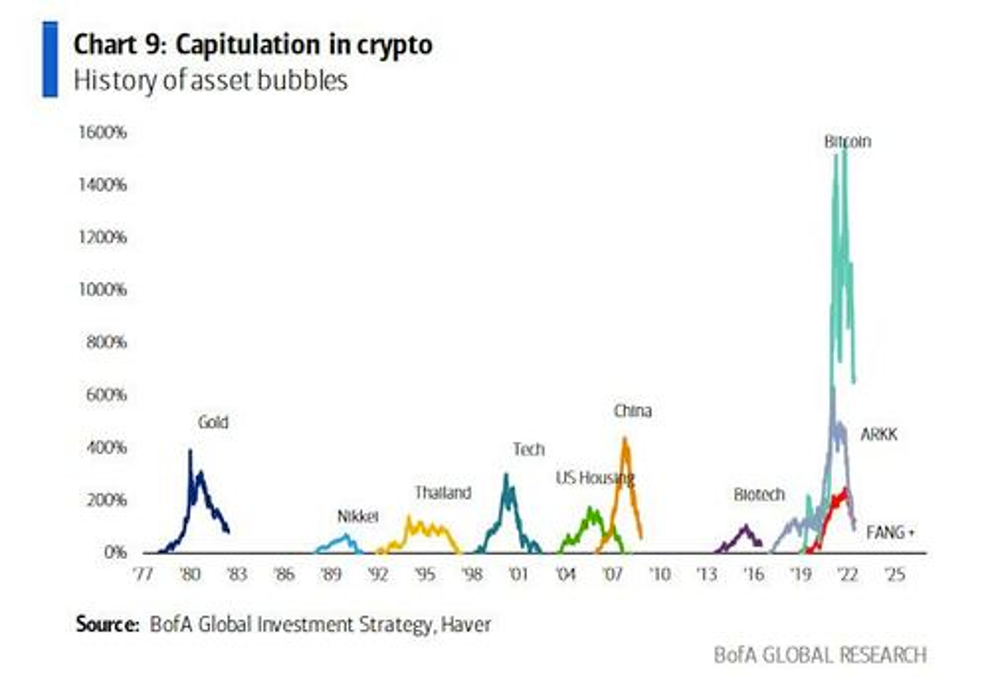
It’s well-documented that the masses over-confidently funnel most into assets near cycle tops (often borrowing to do so) and the least near cycle bottoms. Indiscriminate buying can look smart in bull markets where pullbacks are fleeting. But once cyclical downturns arrive to grind prices down over months, and even years, early dip-buying is a time-worn path to psychological and financial frailty.
Exhausted retail buyers finally morphing into panicked liquidators helps catalyze bear market bottoms and the most valuable investment opportunities for those at the ready. We aren’t there yet.
Stocks and stock funds made up a whopping 70% of retail holdings at the end of May, and while the average portfolio loss is down more than 30% year to date, net retail flows have not yet turned negative. History and understanding of human nature promise that they will. At that point, strong hands will once more be buying from the weak. See ‘Buy the dip’ faith has a last bastion: individual investors:
Both official flow-of-funds data and ASCII surveys show that the share of their portfolios U.S. households allocate to stocks jumped during the Covid-19 crisis to hover around historic highs, and has only come off slightly this year.
However, investors of any stripe can only tolerate so much pain. As of Tuesday, the average retail portfolio measured by VandaTrack was down 32% from its previous peak. And this hasn’t been a lightning-fast correction like in early 2020, but painfully drawn-out across six months.
…But if the selloff resumes and they stop believing that the market can fly, they might also remove one of the few forces keeping it in the air.