
Big bounces par for bear market course

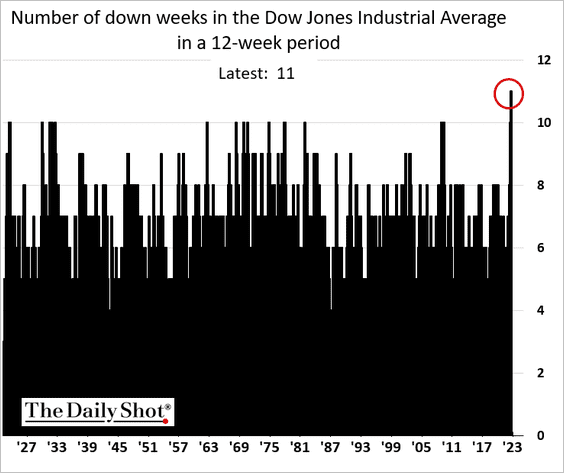
Cryptocurrencies are bid this morning, and US markets are reopening with a bounce following the steepest losses since March 2020 (the S&P fell 5.8% last week, -10% this month so far). As shown below, courtesy of The Daily Shot, the Dow Jones Industrial Average (supposed to be more ‘conservative’) has fallen 11 of the past 12 weeks for the first time since at least 1926.
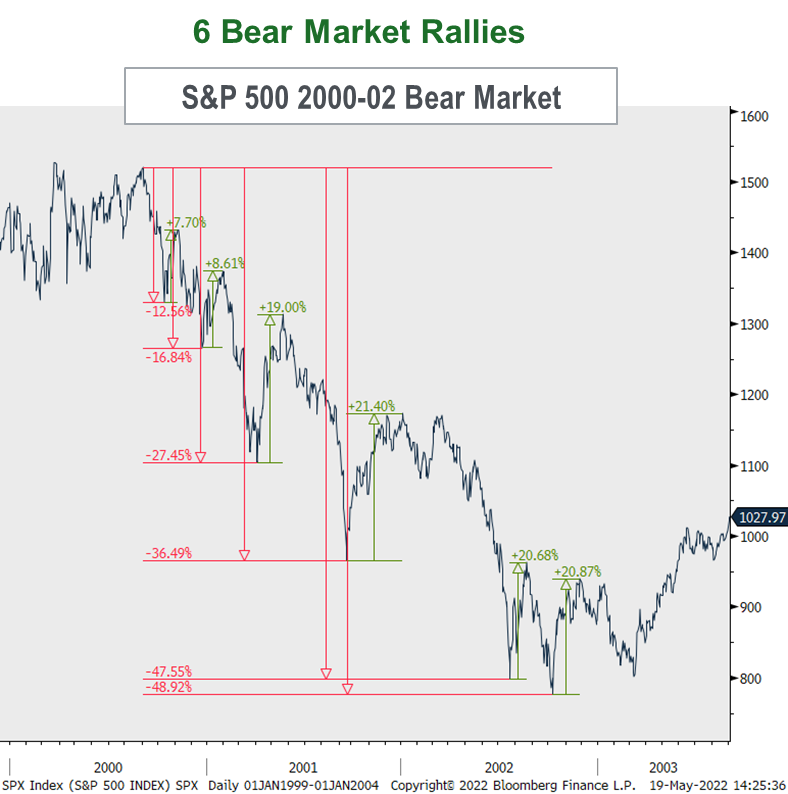
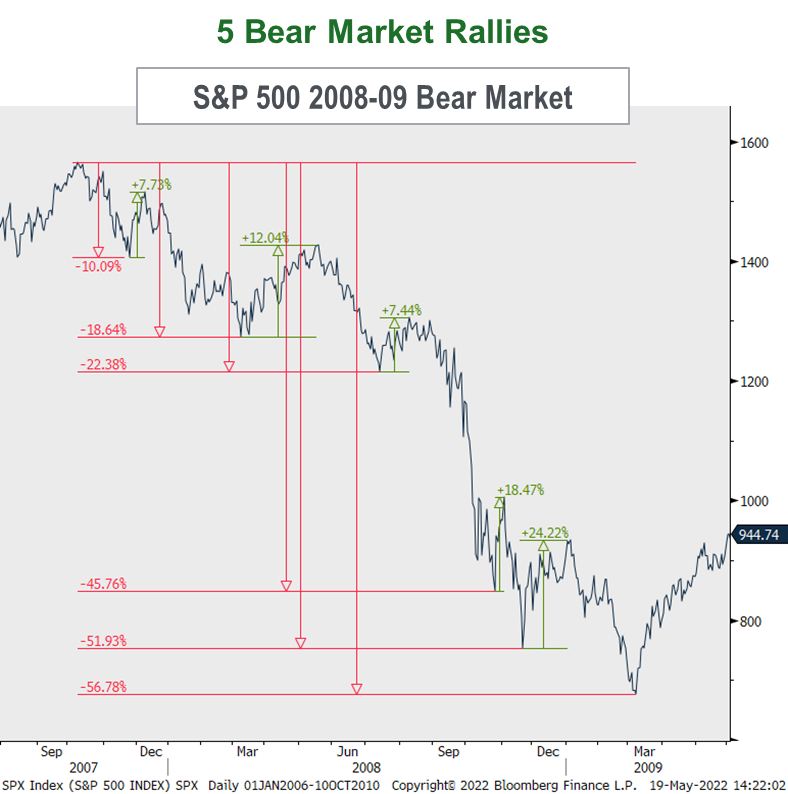
Short interest bets have now piled on, which can set the stage for a sharp rebound. It’s important to remember that interim rallies tend to get more extreme as bear markets proceed to lower lows. As shown below, courtesy of Michael Kantro, the 2000-02 bear had six counter-trend rallies (the final three being more than 20%), while the 2007-09 bear had five (the last two being more than 18%).
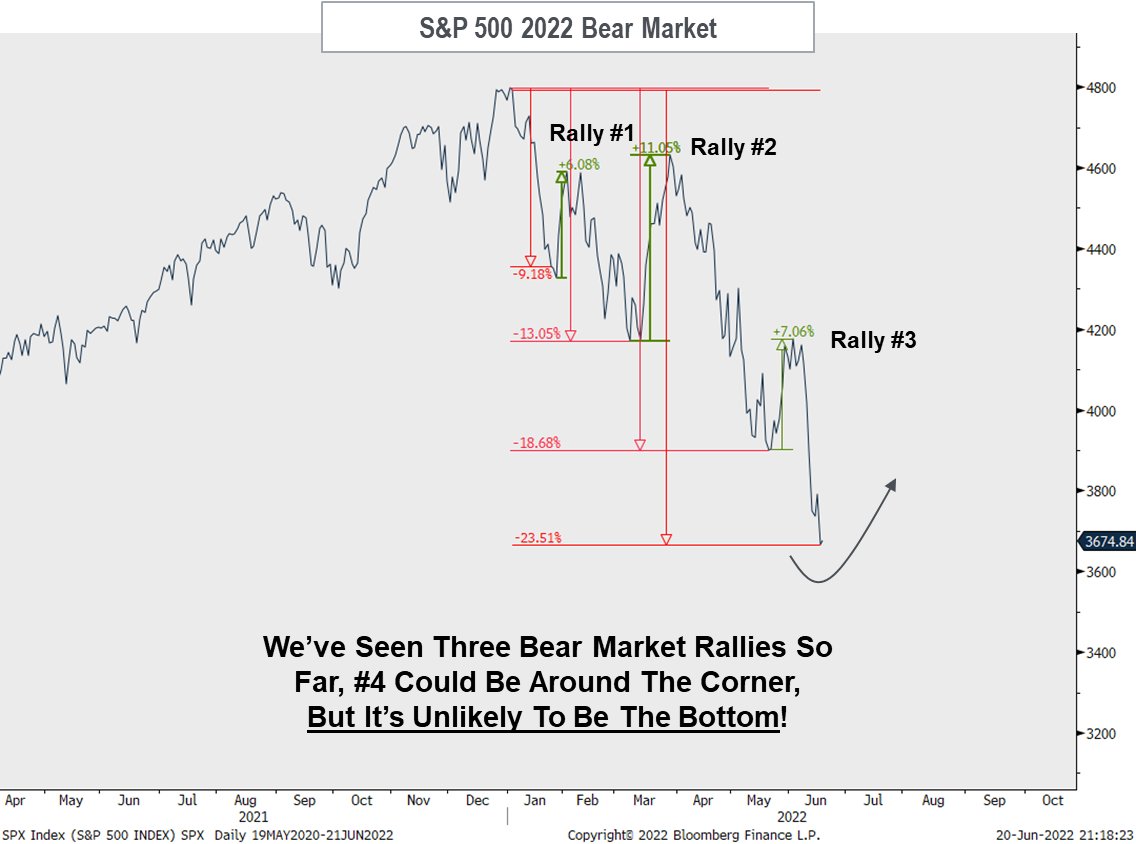
So far, the 2022 bear has had three rallies, as shown here.
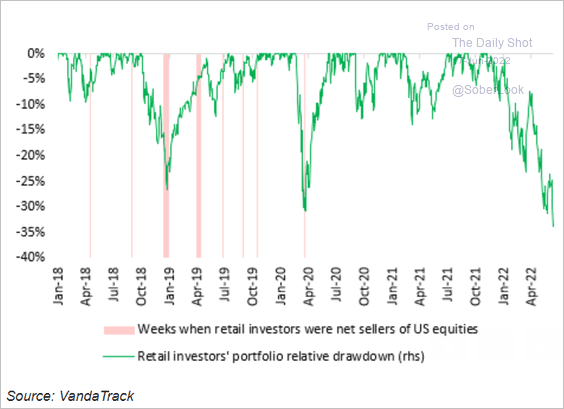
As noted yesterday in Bear Market Update, rebounds will likely be fleeting as long as central banks remain in monetary tightening mode (not yet loosening), a recession is just beginning (not 2/3rds through), and retail investors are not yet liquidating. As shown below, courtesy of the Daily Shot, while the average retail investor is sitting with a 35% drawdown in their portfolios year-over-year, they have not yet become net sellers of equities (like they were during the pink bar periods below since 2018).

Lastly, risk assets remain far from historically cheap even with the recent declines, and the consensus is still expecting economic expansion and S&P companies to report double-digit earnings growth through 2022 (source: FactSet). So, negative surprises are set to hit hard.

Posted in Main Page | Comments Off on Big bounces par for bear market course

Bear market update

Starting a new week with US markets unplugged today offers a moment to review the bear market progress to date. From their most recent highs:

    • S&P 500 -23%
    • Nasdaq -32%
    • Russell 2000 small caps -32%
    • TSX -14%
    • Cdn $/USD -7.8%
    • Canadian financials -17%
    • Canadian oil and gas stocks -15%
    • US oil and gas stocks 20%
    • US Banks: 32%
    • Asset manglers managers 37%
    • Consumer finance 29%
    • Canadian REITs -22%
    • industrial REITs -33%
    • office REITs: 35%
    • retail REITs 27%
    • home furnishings: 44%
    • autos 46%
    • airlines 44%
    • gambling 57%
    • retailers 37%
    • consumer electronics: 47%
    • hotels/cruise lines/resorts 34%
    • trucking 32%
    • rails 24%
    • software/services 32%
    • tech hardware 28%
    • restaurants 24%
    • Bitcoin -70%
    • copper –19%
    • aluminum 36%
    • nickel47%
    • silver -21%
    • gold -11%
    • gold miners -27%
    • food price index –9%
    • oil (WTI) -12%
    • lumber –60%
    • steel rebar 25%
    • consumer staples –15%
    • utilities -15%
    • homebuilder stocks42%
    • hi yield bonds (JNK) -16%
    • Cdn preferred shares -13%
    • Cdn investment-grade bond index -18%
    • US 20-year bond index -33%

Theoretically, 60% equity and 40% bond benchmark accounts are -20% year to date (assuming 100% reinvestment of all income with no fees or withdrawals). In reality, many portfolios are faring worse because they came into this bear market with equity weights greater than 60%, leverage, little cash, and things like perpetual preferred shares and low-quality debt and funds (with no maturity dates) as fixed income (aka reaching for yield).

It’s worth noting that the S&P 500 has never been down this much over five months without a recession recognized within 6 to 12 months of the market peak (which was January 2022).

Recessions have always killed inflation and commodity prices. Stocks typically don’t bottom until sometime in the final third of the economic decline, when central banks are back to easing monetary conditions, the masses are liquidating in losses, and government bonds are rising sharply.

Today, a recession is not yet confirmed, most central banks are trying to tighten aggressively, cash balances are low, risk allocations are still near historic highs, and government bonds are not yet rebounding.

Remember, the average S&P 500 decline accompanying a recession has been 42% over 16 months, and the TSX has roughly tracked along for the ride. In their peak to trough decline this cycle, US stocks and corporate debt might be halfway, Canadian stocks may be a third, while government bonds are due for a renewed period of strength.

Patience, cash and investment discipline will define full-cycle outcomes, as always.

Posted in Main Page | Comments Off on Bear market update

Home prices dropping–as they should

There’s now much talk of home prices “crashing,” but few were ringing alarm bells as they leapt 50% over the prior two years. Housing has always been a cycle driven primarily by credit. Because the latest boom went on longer than average, most people stopped thinking of housing as a cycle, which was an error. We are now in the much-deserved (and needed) correction phase, and historical precedents suggest downsizing the bloated sector, and prices should continue for years, not months.

Here is a direct video link.

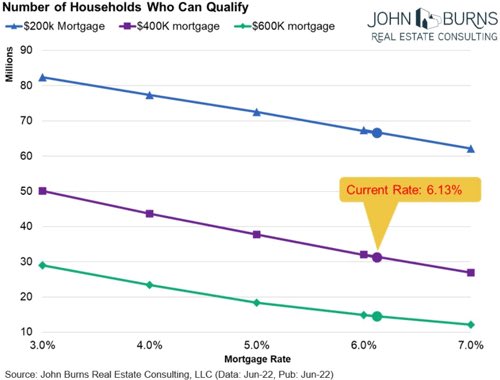
The chart below, courtesy of John Burns, captures the impact of rising mortgage rates well. With the US 30-year mortgage rate rising from 3% to 6% year-to-date, some 18 million US households can no longer qualify for a $400,000 mortgage–a 36% reduction in demand. Similar impacts are felt in Canada, where the median mortgage balance nationally at the end of 2021 was more than 358K, closer to 500k in Ontario and BC.


Sorry folks, but the dream that a hoped-for 431,645 new Canadian immigrants this year can somehow pick up the economic and housing market slack for millions of Canadians who have to curtail spending is unrealistic.

Posted in Main Page | Comments Off on Home prices dropping–as they should




