Liquidity risk and capital allocation mistakes

Useful insight in this discussion on consumer spending, ETF/mutual fund liquidity risks, common allocation mistakes in housing and investment portfolios, and the value-add lacking in mainstream financial advisory services. Worth listening.

Ted Oakley interviews Danielle DiMartino Booth about her outlook on global economics, inflation, U.S. housing, Federal Reserve policy, and how it will affect investors. Ted Oakley interviews Danielle DiMartino Booth about her outlook on global economics, inflation, U.S. housing, Federal Reserve policy, and how it will affect investors. Here is a direct video link.

The chart below since 2005 (courtesy of Isabelnet.com) shows that the value of equities has been dropping for the last six months, but their weight in broker-advised accounts remains near all-time highs at 62% of assets under management. Sentiment may be bearish, but the broker/advisory crowd still keeps client funds in the equity fire (where fees are most lucrative for the firms). So far, clients are still holding the exploding dynamite; this too shall pass. Capitulation selling is yet to come.

Posted in Main Page | Comments Off on Liquidity risk and capital allocation mistakes

Zombies and Ponzi operators losing the cover of dumb money

When money is cheap/low-yielding, the masses tend to borrow and overspend while investment capital is ploughed into dumb, counter-productive things.

With money virtually free for a decade, a historic era of financial madness has ensued.

Zombie companies and Ponzi schemes are similar in that neither generates enough cash flow to meet their commitments. They can only continue so long as they can attract more feckless lenders and investors. As rates rise and asset bubbles burst, feckless funds run low, and the unsustainable finally comes to a crashing halt. See:  Missed payments, rising interest rates, put ‘buy now, pay later, to the test.’

What’s refreshing about the implosion phase is that math, prudence and self-discipline come back into vogue, and more people are willing to call out naked Emporers. It’s started. Private equity is one area that’s particularly ripe for sober review, see Parts of Private Equity look like a Ponzi, Amundi CIO:

Some parts of the private-equity market are beginning to resemble a Ponzi scheme, according to Amundi SA’s chief investment officer.

Vincent Mortier said in a virtual press briefing Wednesday that the volume of money raised in recent years by private-equity houses had driven up valuations and incentivized firms to buy assets from one another at inflated prices…

“The vast majority of deals are currently done between private equity players, “ Mortier said. “One private equity player will sell to another one who is happy to pay a high price because they have attracted a lot of investors.”

“That ability to sell to peers has enabled firms to avoid marking down the value of the assets they own despite a broader selloff in public markets.“When you know you are able to exit your stake to another private equity house for a multiple of, let’s say, 20, 25 or 30 times earnings, of course you won’t mark down your book,” Mortier said. “That’s why I’m talking about a Ponzi because it’s a circular thing.”

Also, see SPACS are warning they may go bust WSJ May 27, 2022:

“The SPAC boom brought a wave of companies to the public markets, promising years of rapid growth and profits to investors. Two years since the boom began, many of these companies are already warning they may go bust.”

Credit strategist Mike Green explains in the segment below that 25% (about 700) of the Russell 3000 companies are zombies that cannot keep afloat without a constant supply of new cheap credit–something that’s increasingly scarce as rates rise and credit conditions tighten.
Posted in Main Page | Comments Off on Zombies and Ponzi operators losing the cover of dumb money

NASDAQ warns of larger than average loss cycle

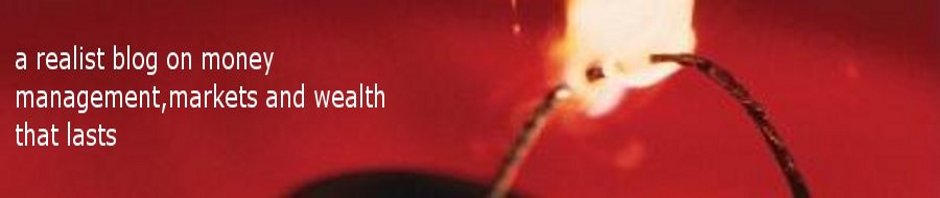
Yesterday’s month-end close for the NASDAQ Composite Index of 12,081 officially breached its 26-month moving average by more than 1%.

My partner Cory Venable’s chart below highlights that this was the 5th such breach on a monthly close since 1987. The previous four occurrences marked recessions and major bear markets. The last two, 2000-02 and 2007-09, saw the tech-heavy index lose 77% and 54%, respectively, while the economy and broader markets tumbled for the ride.

Over the last six months, the NASDAQ is -25%, the S&P 500 -14%,  and Canada’s TSX just -5.8%.

Since 1929, when the economy was not in recession, the average bear market decline for the S&P 500 was 29% over 12 months. When the economy was in recession, the average decline was 42% over 16 months (hat tip: Charlie Bilello).

As in 2000 and 2007, extreme leverage and speculative activity over the last few years have increased the likelihood of a deeper than average loss cycle and recession.

Buy the dip habits remain deeply engrained and have not yet given way to the capitulation selling of bear market bottoms.

Speculative interest (CBOT), so far, remains net short bonds and net long equities. Retail equity outflows from mutual funds have amounted to just 0.3% of assets under management compared with an average of 2.6% during previous bear markets (Barclays data). Panicked liquidation is not yet happening, but it will.

Posted in Main Page | Comments Off on NASDAQ warns of larger than average loss cycle