Less credit is the housing bubble solution

Better Dwelling housing analyst Stephen Punwasi addressed the Canadian House of Commons Standing Committee on Finance this week. His comments elucidate why the number of Canadians expecting to buy a home has fallen by a third in 2022 and why the solution to unaffordable housing is less credit, not more supply.  Read:  Better Dwellings Opening Statement Before the Senate Standing Committee on Finance.  Here’s a taste:

A few months ago, the Bank of Canada set out to prove low rates lowered the cost of housing, and whoops, not what happens. They found consumers adjust their budget to incorporate the excess credit available, thus inflating the price of homes for everyone. Buyers didn’t see lower carrying costs, but they paid a larger principal. For the past 30 years, central banks thought they were making housing more affordable with lower rates. It turns out no one did the math until recently.

Why are these points important? In October, Canadian inflation was at 4.7 points — more than double the target rate. Remember the QE program mentioned earlier? The one with the single purpose of creating more inflation? It was still running at this point, as Canada’s banks literally wrote to clients to say the central bank was recklessly ignoring its own research.

It’s like the Bank of Canada is stepping on the gas and saying the car won’t slow down due to external factors. There is a supply shortage failing to meet demand, is the narrative.

Let’s talk about that demand quickly. This isn’t regular demand, but demand stimulated by low interest rates. BMO estimates a third of existing home sales are “excess” due to low rate stimulus. Sales are just off the record high, not an economically repressed level that needs stimulus. Low rates don’t stimulate selling, though. It only creates more competition to inflate prices.

As with every other housing bubble in history, a whole generation is destined to learn that home prices can and do drop, and yes, you can lose a lot when you buy (or refinance) high.  Homebuilders and homebuilder investors too; with North American new homes under construction at 50-year highs, publicly-traded homebuilder stocks have already fallen 25% since December.  Much more downside yet to come as the latest housing mania unravels.
Posted in Main Page | Comments Off on Less credit is the housing bubble solution

Higher borrowing costs already biting hard

Citing Fed Chair Powell’s recent inflation alarm, Goldman Sachs is predicting the U.S. central bank will hike policy rates half a percent at both its May and June meetings. The last time the U.S. Fed hiked by half a percent was May 2000, and the recession began ten months later. By the May 2000 hike, the Dow Jones Index had already topped in December 1999, the tech-heavy NASDAQ in March 2000. S&P 500 and resource-concentrated TSX peaks followed in August before all tumbled 47%+ over the next two years. The Fed was back to slashing rates with an emergency .50% cut by January 2001.

As usual, the bond market has pre-empted the Fed this cycle too. Treasury prices have already dropped to price in the seven planned rate hikes over the next nine months. In the process, financial conditions have tightened sharply, and a highly levered world is taking the rate of change hard.

Even though the highest risk corporate bonds have so far fallen less than Treasuries, their yields (borrowing costs for the companies) jumped above 6% yesterday from 3.5% in January 2021. See U.S. companies forced to pay up to borrow through debt markets.

With bank credit contracting for many months, public companies have relied on indiscriminate investor flows for financing. Now it’s not just more loans that are harder to find. The ongoing bear market in stocks has dampened equity investor appetite too, so far, by wiping 31% off the average company share in the Russell 3000 index — one of the broadest U.S. stock market gauges. Refinitiv data confirms that cash raised by companies through equity sales has fallen 88% year over year–the slowest start to a year since 2009 during the great financial crisis. A cash crunch is spreading, and this cycle, there are more zombie companies–who must borrow to stay afloat–than ever.

Higher rates and safe-haven appeal boost the U.S. dollar, and emerging markets are wobbling as their currencies fall, borrowing costs rise, and slower global growth cuts demand for their exports. See:  Will the Fed sink emerging markets (again)?

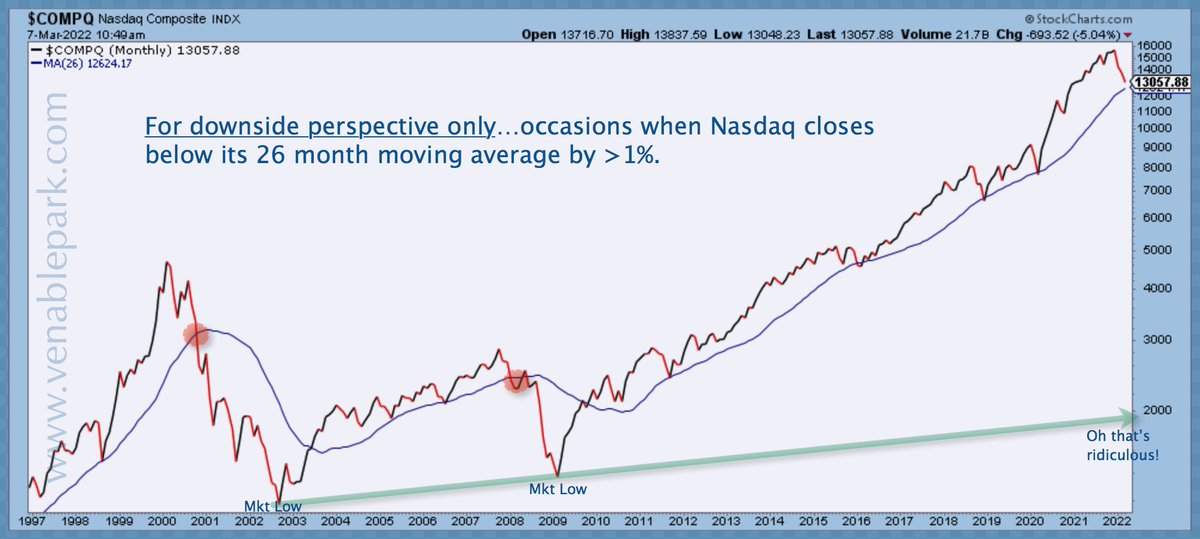
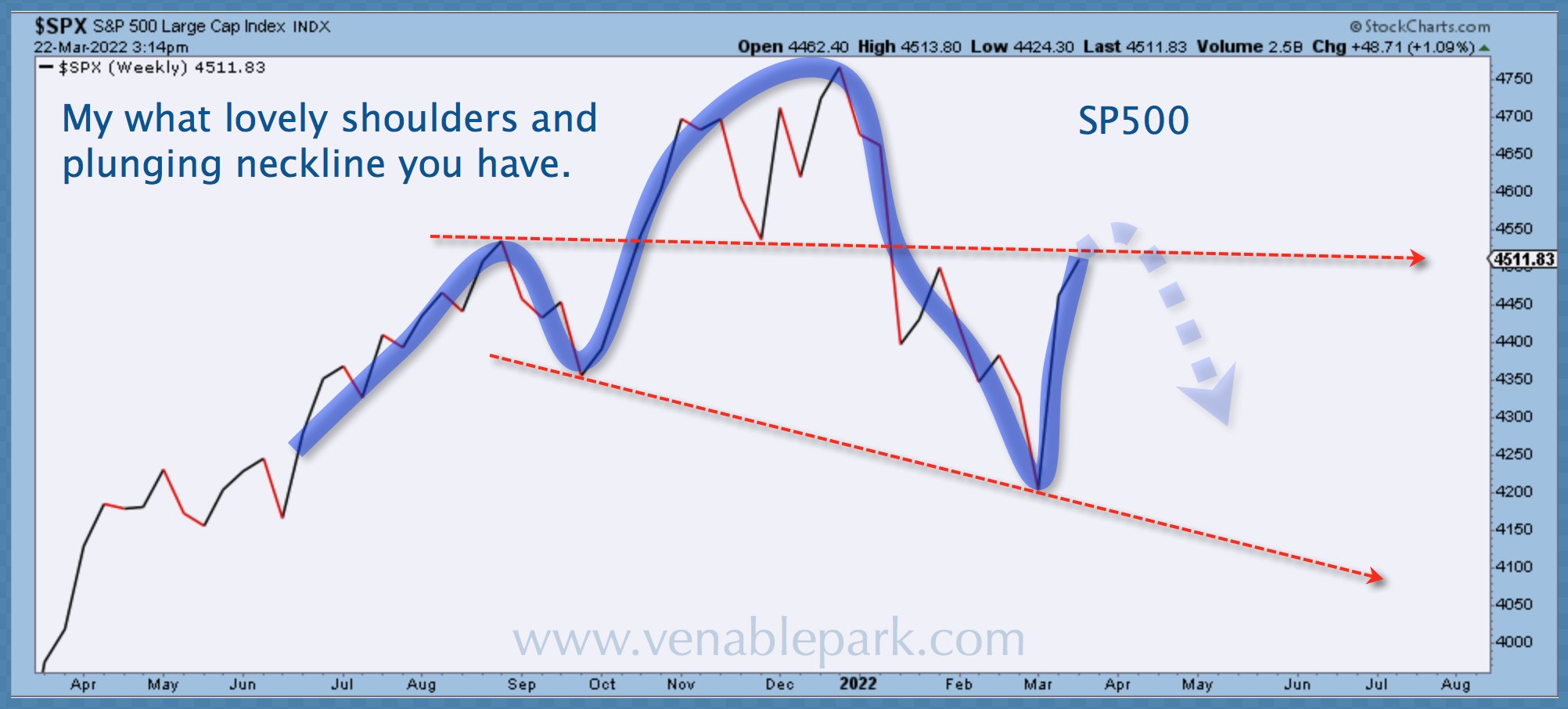
The yield on the 10year Treasury bond is now an enticing full percent more than the S&P 500 dividend yield. Unlike bonds, stocks offer no return of principal nor guaranteed income stream. And after the latest bear market bounce, the downside for stocks continues to be breathtaking.  Here’s a top-down view of the S&P 500 over the past year, followed by the NASDAQ composite beneath it since 1997 (both courtesy of my partner Cory Venable).


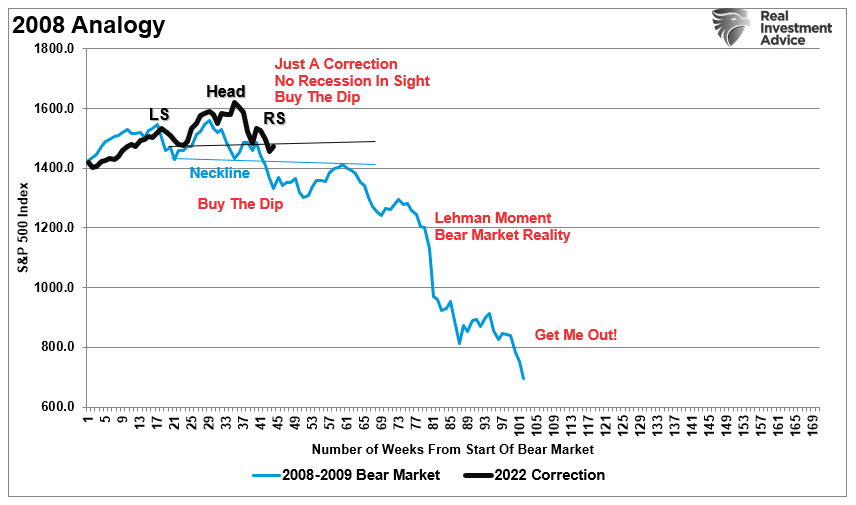
And lastly, here’s a little noodle burner comparison from Lance Roberts of the S&P 500 in 2008 (in blue) versus the 2022 correction to date (in black).  What’s your risk management plan?

Posted in Main Page | Comments Off on Higher borrowing costs already biting hard

Shifting global foundations: China’s property sink hole

China’s credit-fuelled property boom was responsible for an estimated third of its economic growth over the last decade. It was also a significant driver of commodity demand, economic momentum and property market inflows globally. Its bust has contagion implications globally too.

The rapid expansion of China’s property sector was powered by a great migration from the farms to the cities – and built on cheap credit. The FT tells the story of Evergrande, the most indebted property developer in the world, which now stands on the brink of collapse. It’s a story that changes the outlook for China’s position as the locomotive of global economic growth. But is this China’s Lehman Brothers moment? Read more at https://on.ft.com/3tNHO0j  Here is a direct video link.

Evergrande is a canary in the broader financial coal mine, see Evergrande’s hidden debt sinkhole keeps growing:

The Evergrande saga has gone on for months, but investors are still none the wiser on how much value, if any, the company still has. And worryingly, several other important developers may have similar problems—if not quite as large. China’s real estate debt woes are far from over.

Posted in Main Page | Comments Off on Shifting global foundations: China’s property sink hole