
Retail inflows confirm market bottom nowhere nigh

With a global market cap loss of some $9 trillion this month, stock markets have their worst January on record.  Under the surface of market averages, 49% of S&P 500 companies, 76% of NASDAQ, and 82% of the economically sensitive small-cap Russell 2000 stocks are now off more than 20% from recent highs (courtesy of Liz Ann Sonders.)
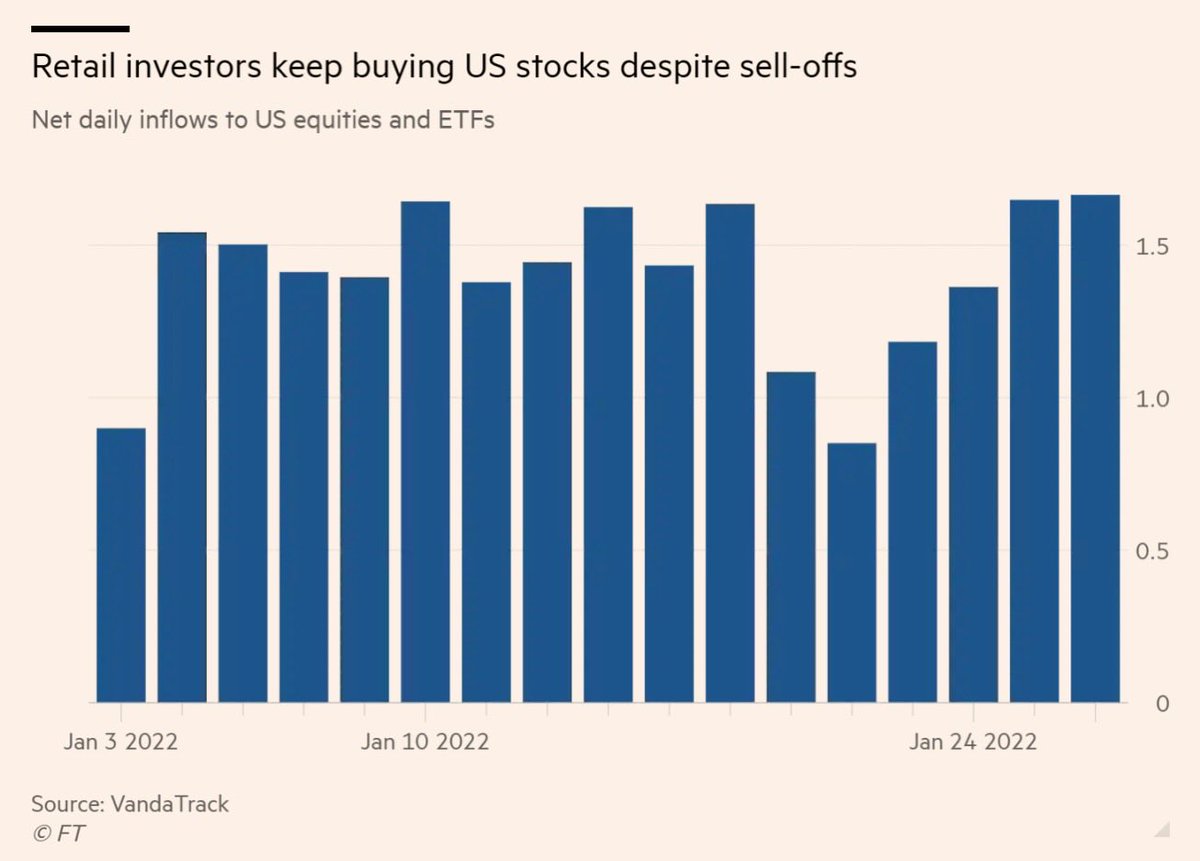
In a sign that retail sentiment is nowhere near the terror of cycle bottoms yet, individuals and their long-always advisors and managers have continued to funnel savings into equities throughout the month (as shown on the left).

Meanwhile, household equity has never been so concentrated in the stock market.  Recent Fidelity data showed that 40% of retirement accounts for 60 to 69-year-olds were a reckless 67% in stocks at the highest valuations in history.

High-risk allocations mean that this bear market is going to hurt more than even the 2008 collapse.  Sadly, many people at or near retirement today will need to work longer than they presently imagine as their retirement accounts implode again.  It doesn’t have to be this way, but effective risk management requires independent analysis, thought and personal discipline–the opposite of mindless trend following.

David Rosenberg touched on some of these facts in his latest CNBC appearance.

Posted in Main Page | Comments Off on Retail inflows confirm market bottom nowhere nigh

Grantham: Super bubbles now breaking

The full 37-minute interview is now available and worth the listen.

For almost a half-century, value-investing icon Jeremy Grantham has been calling market bubbles. Now, he says U.S. stocks are in a “super bubble,” and poised to collapse.

Here is a direct video link.

While Grantham believes inflation will be higher in the future than the has been over the last two decades, it’s worth noting that if global asset bubbles are imploding, the effects will be profoundly deflationary first.

Posted in Main Page | Comments Off on Grantham: Super bubbles now breaking

Serious question: how did you fare in past bear markets?

As two years of emergency fiscal and monetary support retreat, global growth, inflation and speculative frenzy are as well.

Individuals holding equity funds and portfolios at the most extreme valuations in a hundred years have an opportunity to consider:  How did you feel and react in the 2000-2003 and 2007-09 bear markets?

Now consider that you are that much older and have less ability to wait years trying to make back losses again.   Jason Zweig offers some lucid thoughts in Why you should sit out of the mayhem, Jan 25, 2022

“…the best guide to how you will behave in the next crash is how you acted in the last one. If you can’t take the pain, you should feel no shame about staying on—or moving to—the sidelines…Market panics are the indispensable hygiene of markets, the natural way overvalued assets come back into line, making future returns more attractive.

Every investor should be thankful that stocks do go down, for two reasons.

First, if stocks always went up, they would be riskless—and their returns would end up being paltry. The short-term pain of loss is the price we pay for the potential for meaningful long-term gain.

Second, if you have plenty of cash and courage to withstand further declines, other people’s fear could be your cue to act. As I wrote in 2009: “It is sometimes said that to be an intelligent investor, you must be unemotional. That isn’t true; instead, you should be inversely emotional.”

That means market declines don’t have to be a cause of consternation. They can be an opportunity.”

Upside from bear markets can be huge but only for those who preserve their capital, cash and mental strength so they can buy when others liquidate.

Posted in Main Page | Comments Off on Serious question: how did you fare in past bear markets?





