Hoisington Q4 2021 Review and Outlook

Hoisington Investment Management’s fourth-quarter 2021 Review and Outlook is now available on their website here.   Always worth a mull.

Bottom line:  Global growth is slowing in 2022 under record debt, poor demographics, negative real yields and wages that undermine spending and productivity-enhancing investment.  China is looking a lot like Japan did in the 1980s. With emerging economies under increasing stress, Treasuries and U.S. dollars remain relative safe havens that should attract global inflows in 2022:

“Due to poor economic conditions in major overseas economies, 10- and 30-year government bond yields in Japan, Germany, France and many other European countries are much lower than in the United States.  Foreign investors will continue to be attracted to long-term U.S Treasury bond yields. Investment in Treasury bonds should also have further appeal to domestic investors, as economic growth disappoints and inflation recedes in 2022.”

Posted in Main Page | Comments Off on Hoisington Q4 2021 Review and Outlook

Rate expectations higher than asset markets can bear

Since December, a global jump in rate hiking expectations has caused bonds to sell-off. Both U.S and Canadian ten-year treasury yields are above 1.87 this morning, the highest since before the pandemic began in 2019.

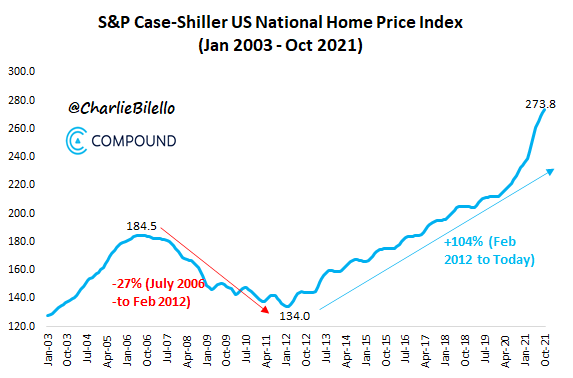
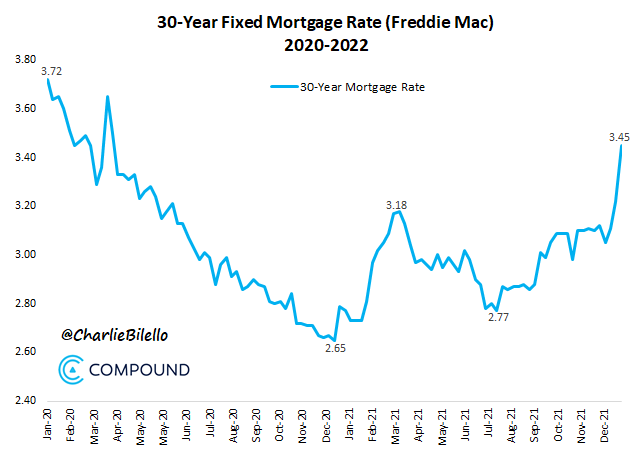
The 30-year U.S. Treasury yield on which widely referenced 30-year U.S. mortgage rates are based is above 2.26 and the highest since last October. As shown below, courtesy of Charlie Bilello, U.S. mortgage rates have already increased more than bond yields and, at 3.7% today, are the highest since early 2020. Housing affordability, meanwhile, has deteriorated significantly since 2020 because average home prices are now about 30% higher nationally. The S&P Case-Shiller U.S. National Home Price Index is below since 2003.

Variable mortgage rates rise when central banks hike base rates, and half of the mortgages taken on in Canada last year were variable. Already, just the expectation of coming rate hikes has caused the 5-year Treasury yield (on which 5-year fixed Canadian mortgage rates are based) to rise to 1.72% and 5-year mortgage rates have increased 43% from 1.39 on January 1 to 2% today. Five-year rates were last this high in December 2019, but again, average home prices were 30% cheaper back then.

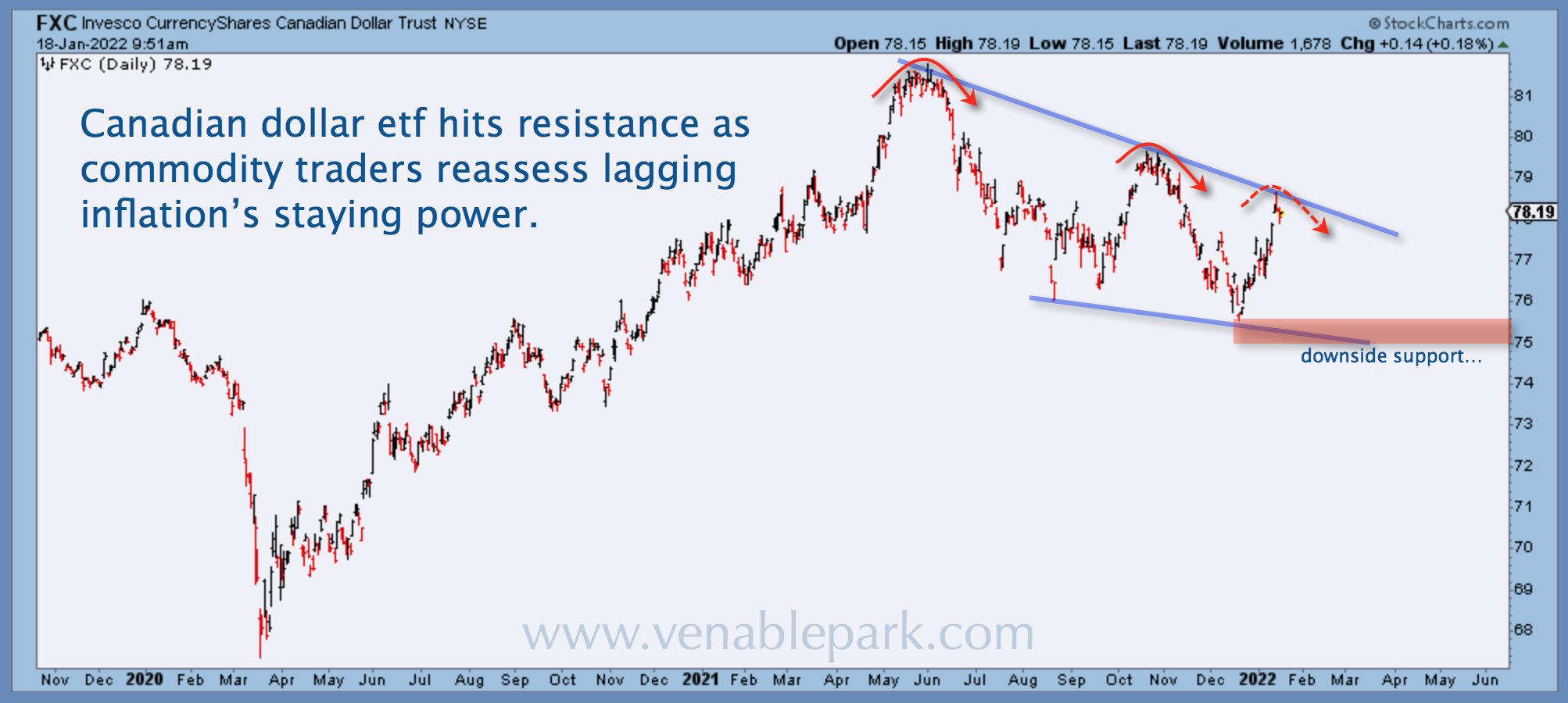
While the Aussie and New Zealand dollars have weakened over the past year on slowing demand for commodities and weakness emanating from China, the Canadian dollar (FXC index), below from my partner Cory Venable since 2019, has rallied over the past month on a jump in oil prices and posturing about rate hikes.  Higher oil and rates slow spending.


Bonds have now priced in six Bank of Canada (BOC) hikes over the next year, with a 75% probability of the first announced at next week’s January 26 BOC meeting. See Rate hike in play after hawkish bank of Canada survey.

Lest anyone forget, housing has been the dominant driver of Canadian GDP growth for several years now, just as it has been in China. The slowing of able buyers has negative implications overall.

Stagnation or a retreat in home prices–while better for longer-term stability–will magnify the strain on highly leveraged households, developers and lenders in several countries. This is one of the main reasons that we doubt central banks will tighten as much as presently priced into bonds and the Loonie.  We expect treasuries to rebound again and the Loonie, commodities and equities to weaken, as financial fragility dawns.

Posted in Main Page | Comments Off on Rate expectations higher than asset markets can bear

Remember: protecting savings is job number one

The most critical function of savings is to cover future needs, wants and opportunities.

For this reason, savings should be as protected and uncorrelated as possible with our other income sources. For example, it’s not diversified for tech workers to keep the bulk of their savings in tech shares, nor for property sector workers to keep most of their savings in real estate/construction-related businesses and securities.

During economic downturns, it’s typical for receivables to rise, revenues to fall and incomes and cash flows to dip. Workers and business owners do not want the value of their savings to plummet just as they need it for liquidity and income support. This is especially true for retirees who rely on their savings to live.

Today’s challenge is that asset markets have become one big levered global ‘trade,’ which makes meaningful diversification, i.e., safe places to store savings, the most limited in decades. Enticed into high-risk ‘plays’ by a decade of minuscule yields, most do not appreciate that their present holdings–like realty, commodities, cryptocurrencies, equities and other corporate securities–are highly correlated, and weakness in one is pretty sure to infect the rest.

For meaningful diversification, cash, guaranteed bank deposits and low-yielding government bonds (for guaranteed interest and return of principal) remain the best opportunities on offer. And yet, tragically, most have been convinced that they can’t afford to own ‘safety.’  This has the makings of a financial firestorm that will see panicked liquidation and losses across most asset classes all at once.

Some individuals and institutions understand the setup and are willing to take proactive steps, but few have the courage or independence to warn others. The International Monetary Fund dipped their toe in the water this week with a warning on the interconnectedness of Crypto and stock market allocations; see, Crypto and stocks look increasingly correlated. That has raised risk fears:
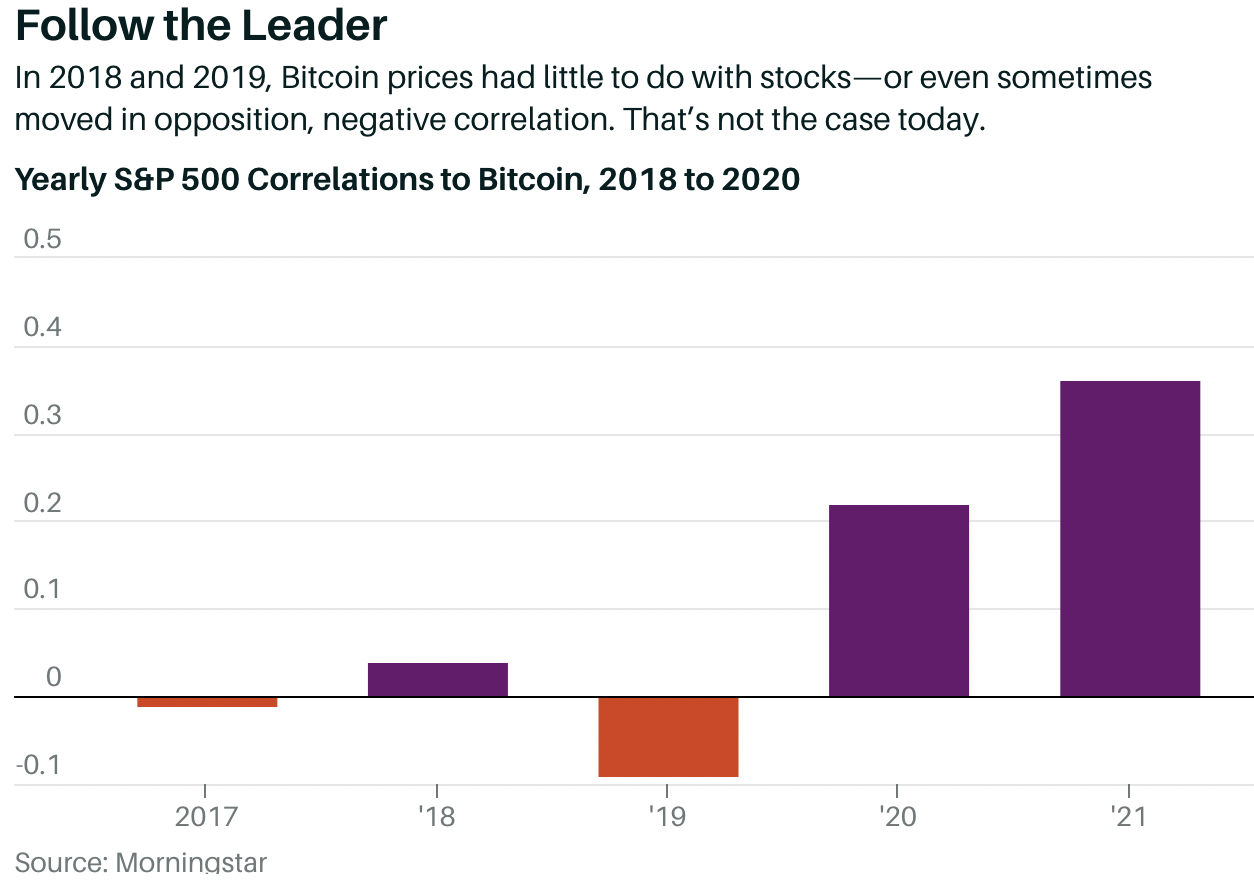
Bitcoin and the broader crypto world aren’t likely to offer protection against downturns in equities. Crypto’s volatility is also spilling into equity markets, and vice versa, implying that “sentiment in one market is transmitted to the other in a nontrivial way.” The IMF views this as a risk to financial stability, particularly in markets where Crypto is taking off.

The reality is that participants in interconnected asset bubbles and highly levered economies are all in harm’s way, whether we recognize it or not.

Posted in Main Page | Comments Off on Remember: protecting savings is job number one