Climate challenges for the economy much larger than COVID

Some have the fantasy that consumer spending and corporate profits are constrained only by the rate of credit growth…COVID is like a taster plate for the natural world challenges now unfolding for humanity and our economic system. Solutions come in accepting the behavioural changes needed, without further delay.  Water is the most valuable asset everywhere and must be treated as such.  See “Climate change has become real:” extreme weather sinks prime US tourism site:

While climate change has exacerbated wildfires, heatwaves and flash floods this summer, it is also taking a heavy toll on the tourism industry that’s dependent on Lake Powell. Last week the water line reached a historic low of 3,554ft, a level that has not been seen since 1969, when the reservoir was first filled. The giant reservoir is currently three-quarters empty and will keep dropping at least through next spring due to record low snowpack levels in the Colorado River basin…

“We sent out plenty of advisories to stakeholders about the possibility of very low lake levels this year and no one took it seriously,” said Billy Shott, superintendent of the Glen Canyon National Recreation Area, which manages Lake Powell. He compares the park’s regular drought notices to routine avalanche alerts in the mountains. “Well, now the avalanche has actually happened. Climate change has become real at Lake Powell.”

Posted in Main Page | Comments Off on Climate challenges for the economy much larger than COVID

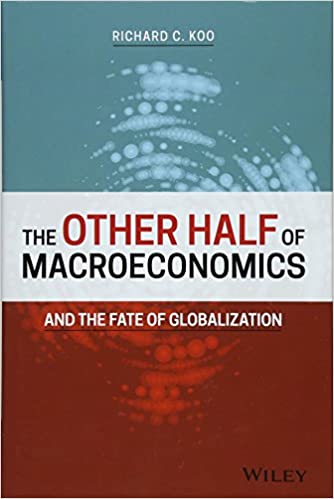
Recommended book: The Other Half of Macroeconomics

Nomura Research Institute Chief Economist Richard Koo’s 2018 book The Other Half of Macroeconomics is one of the most worthwhile reads I have had in some time.  Written for general consumption, Koo explains what most experts and laypeople misunderstand about debt, deflation/inflation, and why central bank liquidity cannot drive business investment, wages and economic growth once the private sector is heavily indebted and needing to deleverage.  Koo explains the lessons we should take from epic asset bubbles that burst in 1929, 1989 in Japan, 2008 and how these experiences inform us on what comes next.

The failure of the vast majority of economists in government, academia and the private sector to predict either the post-2008 Great Recession or the degree of its severity has raised serious credibility issues for the profession. The repeated failures of central banks and other policymakers in all advanced countries to meet their inflation or growth targets in spite of astronomical monetary easing, have left the public rightfully suspicious of the establishment and its economists…Once the other half of macroeconomics is understood both as a post-bubble phenomenon and as a phase of post-industrial economies, it should be possible for policymakers to devise appropriate measures to overcome difficulties advanced countries are facing today such as stagnation and income inequality.

Posted in Main Page | Comments Off on Recommended book: The Other Half of Macroeconomics

Danielle’s bi-weekly market update

Danielle was a guest with Jim Goddard on Talk Digital Network talking about recent developments in the world economy and markets.  You can listen to an audio clip of the segment here.

Posted in Main Page | Comments Off on Danielle’s bi-weekly market update