Worthwhile discussion.
Join Ted Oakley’s interview with Danielle Dimartino Booth as they discuss the effects that central bank policy is having on stocks, interest rates, housing, and more. Here is a direct video link.
Worthwhile discussion.
Join Ted Oakley’s interview with Danielle Dimartino Booth as they discuss the effects that central bank policy is having on stocks, interest rates, housing, and more. Here is a direct video link.
Being a risk-conscious financial manager has rarely, if ever, been as difficult as today.
So long as recklessness reigns supreme, historical perspective, valuation discipline and patience remain the most undervalued commodities. This, too, shall pass. In the meantime, those of us with life-savings to lose are wise to be horrified at the opportunity set presently on offer. And yet, we still need to hold money somewhere.
As central banks and governments have thrown trillions at inflating asset prices and household incomes over the past year, both have risen sharply, and the parasitic financial sector has made off like bandits once more.
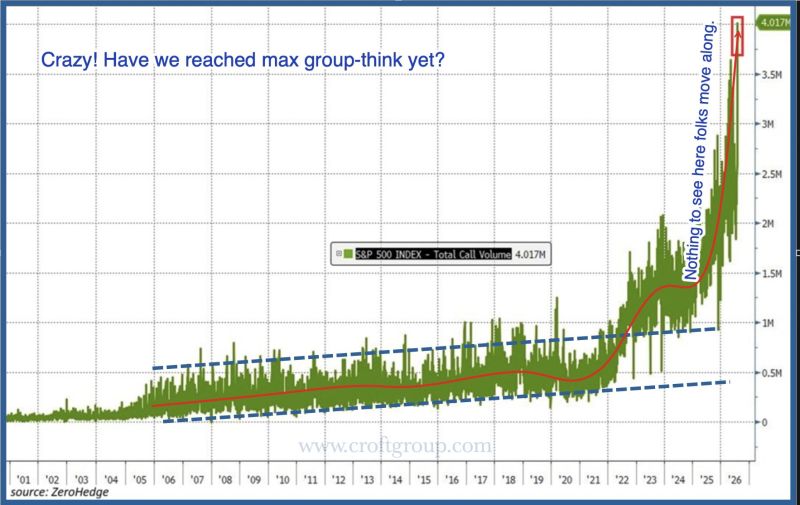
Even as stocks, corporate debt and many commodities have returned to historic valuation highs in record time, the financial consensus predicts only more upside. It warns about inflation coming to erode our purchasing power.
Lest anyone forget, inflation expectations are the bias in their business model. To wit, if savers are not threatened by the fear of inflation eroding our purchasing power, then we have much less incentive to buy the risky securities and strategies that central banks, financial firms and public corporations are always working to sell us in exchange for our ‘worthless’ cash. Make no mistake–cash will always be in high demand. At extraordinary times like these, yes, even zero-yielding cash is valuable for its principal stability and liquid optionality.
In addition, as I’ve noted many times, not all bonds are created equal. While corporate debt trades up and down with the equity cycle and some issuers do go bankrupt, bonds issued by North American governments are one of the few asset classes that offer a set maturity date, contractually prescribed income stream and inverse price moves when risky assets plunge.
Over the past six months, as inflation expectations have risen off low-base comparisons with the deflationary first half of 2020, 5 to 20-year government bonds have sold off. While the market price of existing issues has fallen, the yields available for new purchases have tripled in the process. Meanwhile, the inflationary ‘trade’ is likely to run out of steam. As economist Lacy Hunt explained this month:
“…overheating in the economy and a secular upturn in inflation is not at hand because of the debilitating impact of excessive debt and the losses experienced by individuals and small businesses as a result of the pandemic. Since inflation is the major driver of yields on long-term government bonds, the recent uptick will level off or fall back.”
The recent correction in the safest bonds brings another opportunity to increase this fixed-income holding to wait out the next phase of this cycle. As the economy and inflation expectations slow in the months ahead, cash, government bonds and the US dollar offer refuge as other markets resume the bear market interrupted in 2020.
Once present equity bulls have been crushed and forecast only further downside and deflation, inflation and equities will likely enter another cyclical upswing, rising from a depressed base. Getting from here to there in one piece should be the focus of all our allocation choices now. At the moment, asset deflation remains the greatest threat.
Mean reversion is a historic constant…delayed but never avoided. Good summary here.
David Rosenberg, chief economist and strategist at Rosenberg Research, joins BNN Bloomberg to provide his thoughts on the bubble forming in the housing market. He says that we are in a very unstable situation in Canada, and that residential real estate valuations are out of whack. Here is a direct video link.