As the EU cuts its growth forecast this morning for 2019 and 2020 to barely over 1%, it is good to hear an ECB official admitting that the old add-debt-for-present-consumption model is at a close and the new paradigm has to be about investing in future productivity.
European Central Bank official Robert Holzmann signalled that monetary policy has reached its limit, and argued it’s time for fiscal stimulus to step in…
“What you need is public expenditure that helps youngsters,” he said, adding that investment in artificial intelligence and information technology is needed. Here is a direct video link.
Posted inMain Page|Comments Off on ECB Holzmann: monetary policy at limit, time for productive investment
Now playing on Netflix. Worth the time, especially given that conventional diets are increasingly undermining the health, longevity, productivity, and economic sustainability of young and old. See: Millennials’ escalating health problems raise economic concerns.
With all the talk about ‘health care’, few seem to appreciate that ‘food care’ is the most defining aspect of our health. The current big food system is ripe for massive disruption.
We are living through the final scenes of one of the most financially-destructive chapters in human history.
I was an investment analyst in the 2000 dot.com bubble and the 2007 China/commodities/subprime bubble and, yes, they were mad times too. But unprecedented ‘free’ money over the last seven years has managed to magnify the destructive behaviours that ought to have asphyxiated in the last two busts. Like homeowners threatened by raging fires, self-preservation demands that we stay clear of structures destined to collapse, but this takes self-discipline and constant mental effort.
Indiscriminate buyers funnel capital into the market inferno every day, while those insisting on value for capital risked, find a meagre opportunity set at hand.
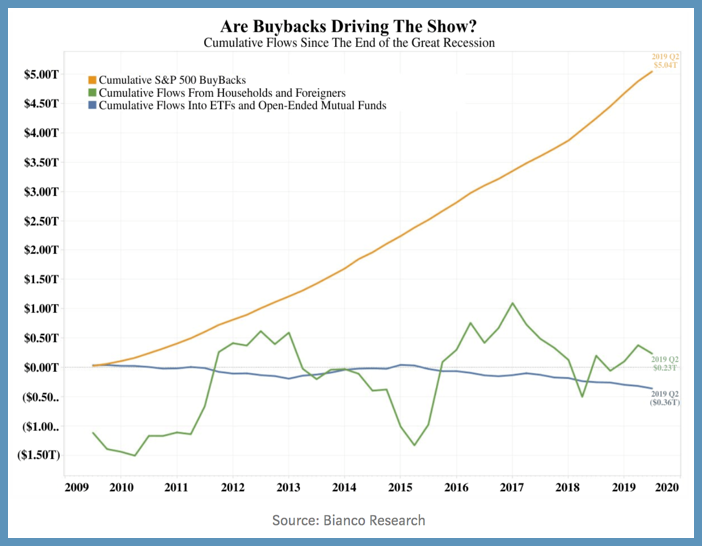
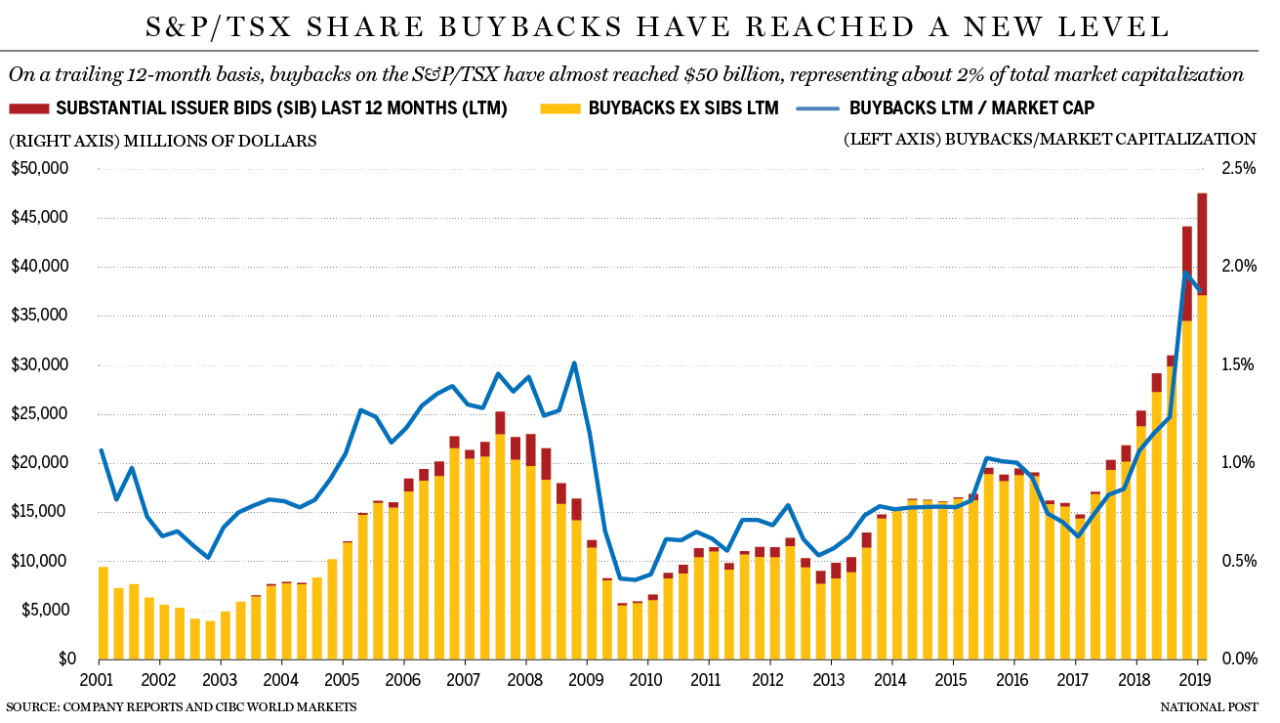
As shown in Jim Bianco’s chart below, large companies have kept the Ponzi afloat to date by using their cash flow and record borrowing to buy their own shares (in orange since 2009), while the relative flows from households and foreigners (in green), ETFs and mutual funds (in blue) have stagnated. Buybacks of common and preferred shares by the largest TSX 60 Canadian companies are also up, more than doubling from 2015 to 2018 as shown below, led by Royal Bank, TD Bank and Thomson-Reuters Corp. See: ‘The American disease’: Canadian companies pouring cash into stock buybacks as backlash grows abroad.
In the process, corporate debt has tripled along with a 50% increase in total debt globally to $247 trillion by Q1 2019 (companies, governments and households), and has undermined financial resilience and increased downside risks.
We saw a similar playbook in the 1920s and 30s, and the next reckoning period threatens to be similarly harsh. This video explains the history of buybacks and how they became a destructive force over the last decade, as well as some necessary changes from here.
For a long time, it was off-limits for a corporation to buy back its own stock. Not anymore. Here is a direct video link.
Posted inMain Page|Comments Off on Indiscriminate fund flows fuel financially-destructive times
“An explosive critique about the investment industry: provocative and well worth reading.”
Financial Post
“Juggling Dynamite, #1 pick for best new books about money and markets.”
Money Sense
“Park manages to not only explain finances well for the average person, she also manages to entertain and educate while cutting through the clutter of information she knows every investor faces.”
Toronto Sun