Spread of renewables and storage faster and cheaper than predicted

As indebted, aging consumers naturally pull in consumption and look for ways to lower living expenses (see The American Consumer needs some help), GDP and job growth is booming in the renewable energy sector.

Importantly, a report by the International Renewable Energy Agency (IRENA) finds that unsubsidized renewable energy is now most frequently the cheapest source of energy generation and expected to propel the mass adoption of renewables much faster than previously forecast. This is a tipping point, see Renewable Energy is now the cheapest option–even without subsidies:

“…renewable energy is increasingly cost-effective compared to other sources, even when renewables must compete with the heavily-subsidized fossil fuel industry. Promising signs in the IRENA report show that more an increasing number of corporates are entering the renewable energy industry as the number of Power Purchase Agreements (PPAs) rise, meanwhile more than 10 million people are now employed in the global renewable energy industry.”

Also see this CNBC video report on the rise of solar and new storage options.

Solar power is on the rise. You can see the evidence both on people’s rooftops and in the desert…[There] are real problems that the industry needs to tackle if solar is going to reach its potential. But if the recent past is any indication, solar might help usher in a carbon-free future faster than we all expected.  Here is a direct video link.

The rise of the solar power from CNBC.
Posted in Main Page | Comments Off on Spread of renewables and storage faster and cheaper than predicted

Shilling’s cycle update, and some observations on ‘average’ loss cycles

Gary Shilling, president of A. Gary Shilling & Company, explains why he thinks we’re close to a global recession and investors should start to short the S&P 500. Here is a direct video link.

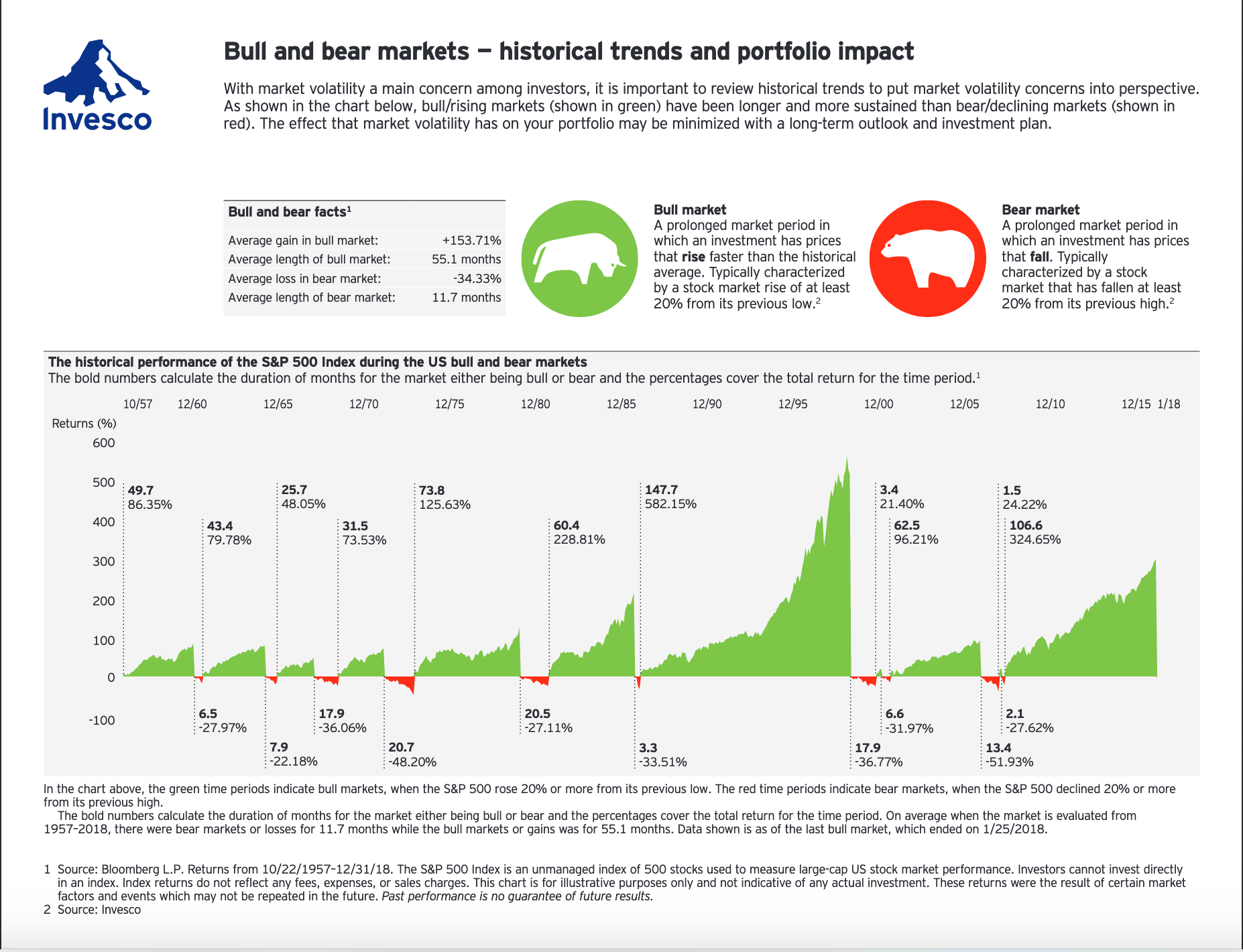
Good economic overview in this segment.  Take away re cycle tops: “when it’s obvious, it’s over.”  On the if this market cycle ‘is average’ guesstimate, a few points are noteworthy.  First, the S&P 500’s expansion over the past decade has lasted and gained twice as much as the average cycle since 1956, as you can see in Invesco’s graphic here.

The average bear market during this 62-year period has been -34% not -20%.

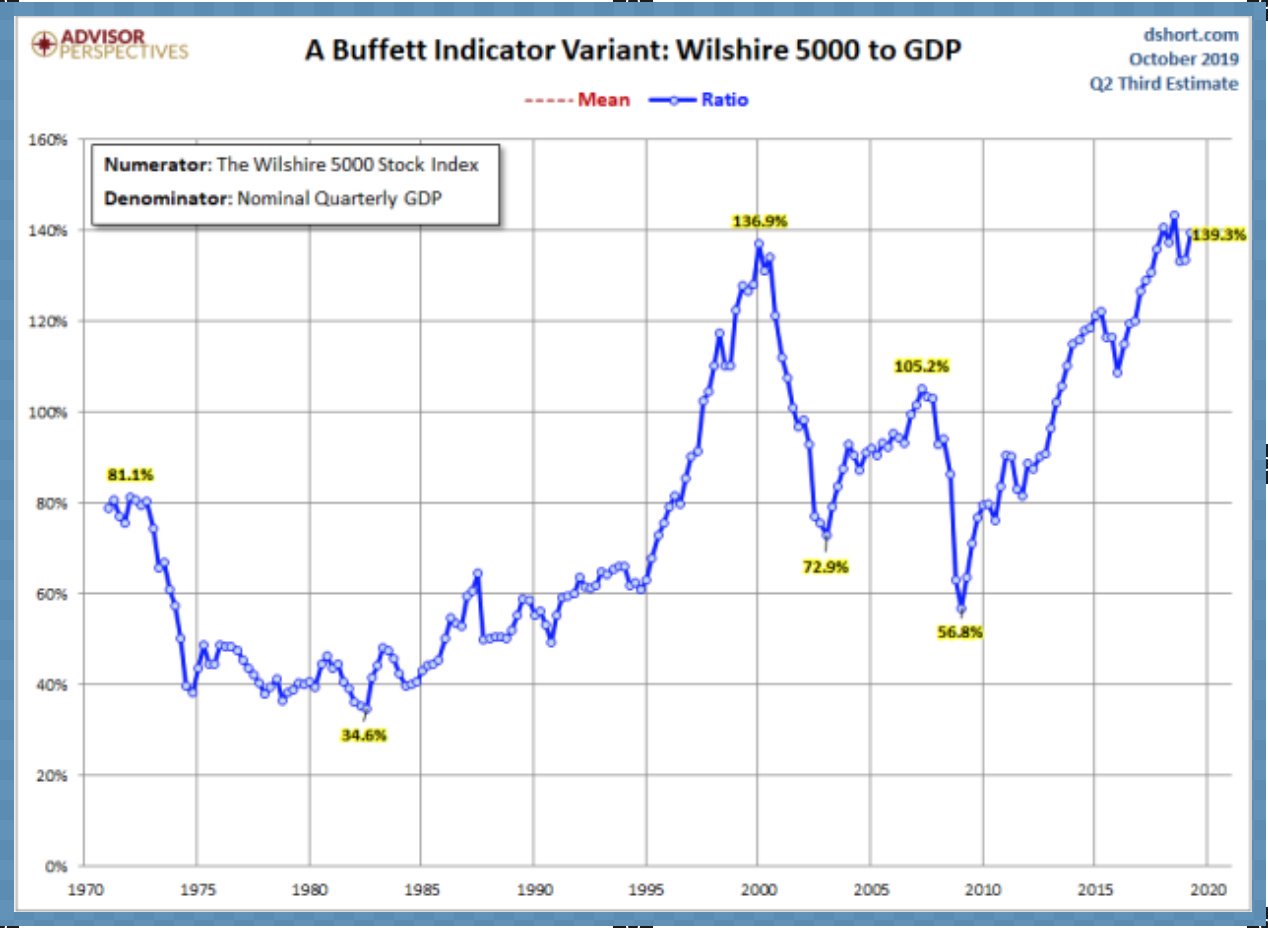
Secondly, over the last 20 years, stock prices (2000, 2007 and 2018) have reached the most extreme valuation highs in history.  Below is just one reliable measure in the so-called ‘Buffett’ indicator (shown since 1970) of stock prices divided by nominal US GDP.  At 139%, the present ratio is even marginally higher than the 2000 tech-wreck bubble top.

As a result of extreme valuation tops, the ‘average’ market decline in the last two bear markets has not been -34%, but more than 50%.  For these reasons (and many more), it is likely that the next bear market will be significantly more than ‘average’.

Posted in Main Page | Comments Off on Shilling’s cycle update, and some observations on ‘average’ loss cycles

IMF cuts global growth outlook to lowest since financial crisis, urges green investment

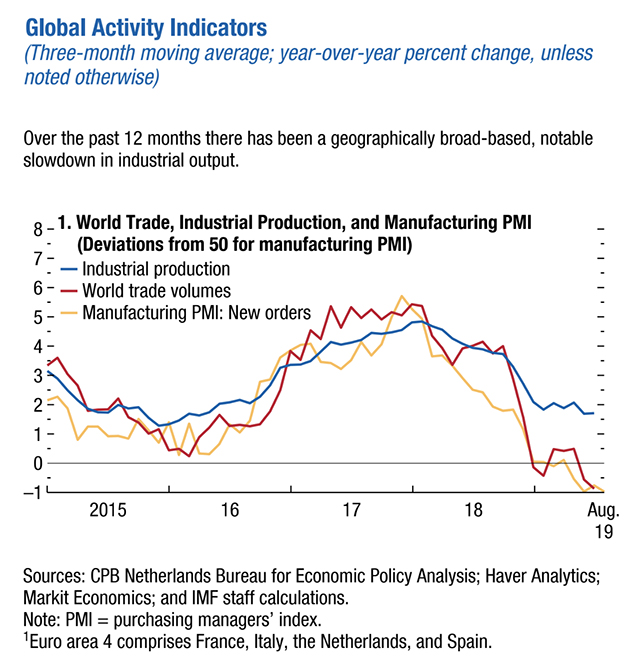
The International Monetary Fund now predicts that 2019 growth is likely to be just 3%, the same as in the onset of the 2008 recession.  This compares with 5.6% at the 2007 cycle peak, and -0.1% in the 2009 recession bottom.

The chart on the left shows world trade volumes, industrial production and manufacturing since 2014. See: Global recession could well materialize, IMF warns.

With very limited monetary policy options, the IMF urges the time is ripe for revolutionary incentives and investment in energy and infrastructure. No surprise there.  Here is a direct video link.

Posted in Main Page | Comments Off on IMF cuts global growth outlook to lowest since financial crisis, urges green investment