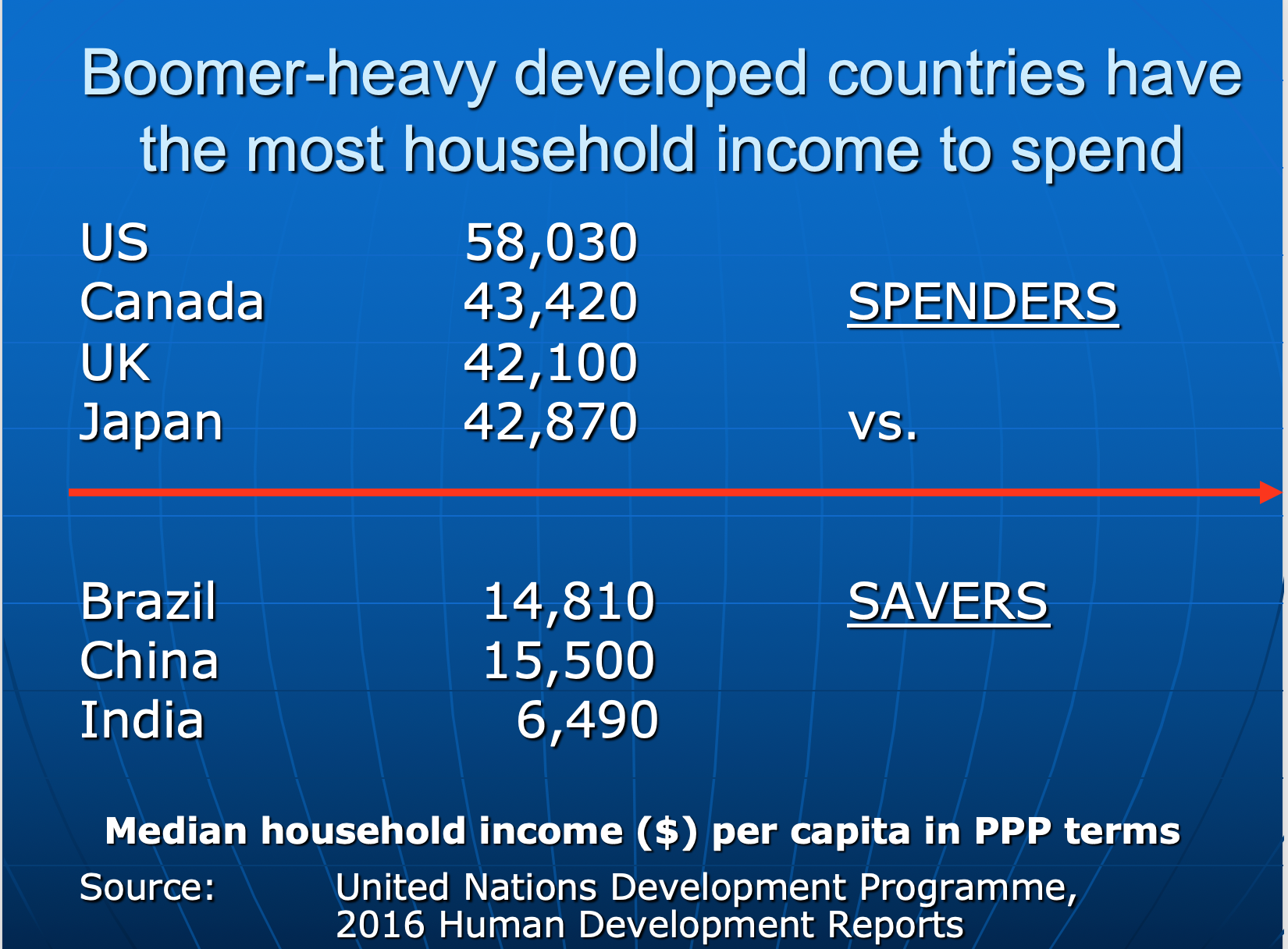
Two decades of easy credit and hyper-consumption from North American households have encouraged a massive overbuild in the retail sector and commercial real estate.
In the process, retail–which includes on-line giants like Amazon, eBay, big-box chains, and smaller brick and mortar entities–became the largest North American employer accounting for 12% of Canadian, and 10% of total US employment (source: World Atlas) and 6% of US GDP. According to the National Retail Federation (NRF), retail supports one in four U.S. jobs or 42 million working Americans.
However, as US household debt peaked in 2006, an aging population and migration to on-line shopping have all worked to reduce store traffic over the last 12 years. With the credit cycle now contracting afresh, empty retail space is continuing to mount.
In some urban areas, Amazon has been re-purposing the space (that it helped to vacate) into warehouses. At first blush, this sounds like good recycling of superfluous space and much-needed jobs. Warehousing employment has risen by nearly 50% since 2008, highly correlated with Amazon’s job growth. The Wall Street Journal explains further in this direct video link.
By some industry accounts, fulfillment centers pay 26% more than general retail jobs, and warehouse wages are currently growing twice as fast as the national average. That figure, however, doesn’t jive with independent data reports from the Bureau of Labor Statistics which puts Amazon wages 15% below the average wage in 11 metro areas, at $11.96 an hour–roughly equivalent to the average retail wage. Analysis by The Economist found that workers earn about 10% less in areas where Amazon operates compared with similar workers employed elsewhere. According to a report by Policy Matters Ohio, one in ten Amazon employees are on food stamps. See What Amazon Does to Poor Cities and also Amazon reportedly uses boxing machines to replace people.
One fact is irrefutable: property taxes to municipal governments are tumbling in this process. Not only does Amazon typically negotiate decade and longer tax holidays when moving into new locations (see Amazon is thriving thanks to taxpayer dollars), but miles of empty malls have worked to suppress assessed property values and prompt surviving retailers to win 50 to 85% reductions in their municipal taxes too, see After the retail apocalypse, prepare for the property tax meltdown:
Big-box defenders argue that the “sales approach” (what someone recently paid for a similar property) is the best way to determine a building’s value. And in many states, including Wisconsin, sales are supposed to be the first variable in the valuation equation, whenever possible. Therefore, retailers’ lawyers say, a Sam’s Club valued at $11 million is overvalued, because its neighbors are selling for a third of that amount. In a real estate market that’s oversaturated with retail closures, bankruptcies, and vacancies galore, they insist, no one wants a big box store anymore. If you just look at the sales prices, they are often not wrong.
The problem is that taxpayers have invested billions in upfront infrastructure spending on the development of these properties, and continue to be on the hook for providing essential services like roads, water, sewer, fire and other emergency responders. This along with loopholes and cuts that have allowed corporations to greatly reduce state/provincial and federal income taxes over the last decade, have enabled their record after-tax profits as public deficits have soared.
While migration to online retail seems an unstoppable and more efficient space evolution, the current tax system is not sustainable. The idea that the promise of jobs is enough to justify years of corporate tax gifts, holidays and ‘free’ resources is antiquated and fundamentally flawed. The math does not add up. The resources to support businesses, customers and essential services have a basic funding requirement dependent on reliable inflows.
We don’t need more loopholes and complexity ripe for gaming, just a minimum tax rate levied by each level of government to fund their respective services, implemented for all businesses, regardless of their size, online, or physical operation locations.