Australian property boom mean reverting

Sydney has been an epicenter for speculative fervor in the Australian property market over the past decade, much like the greater Toronto and Vancouver areas in Canada.

As shown in this chart, price declines over the past year have now been about 10%.  This is larger than the previous four declines since 1989 but still less than the 18% decline seen in the 1982 recession.
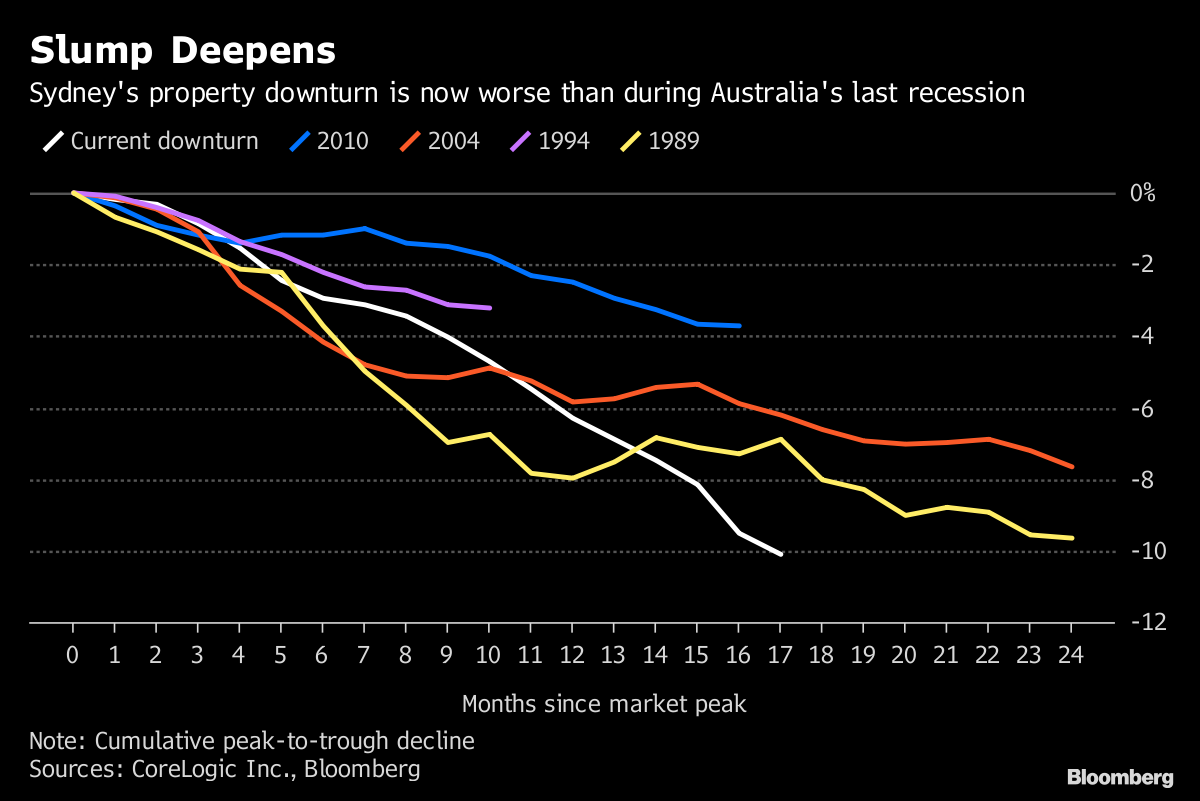
Given the rise and run of the most recent boom, further downside is likely for Australian property prices this cycle. This is a healthy and needed correction to help restore affordability in shelter.

That said, the downside to date has only retraced prices to 2016 levels, as shown here.
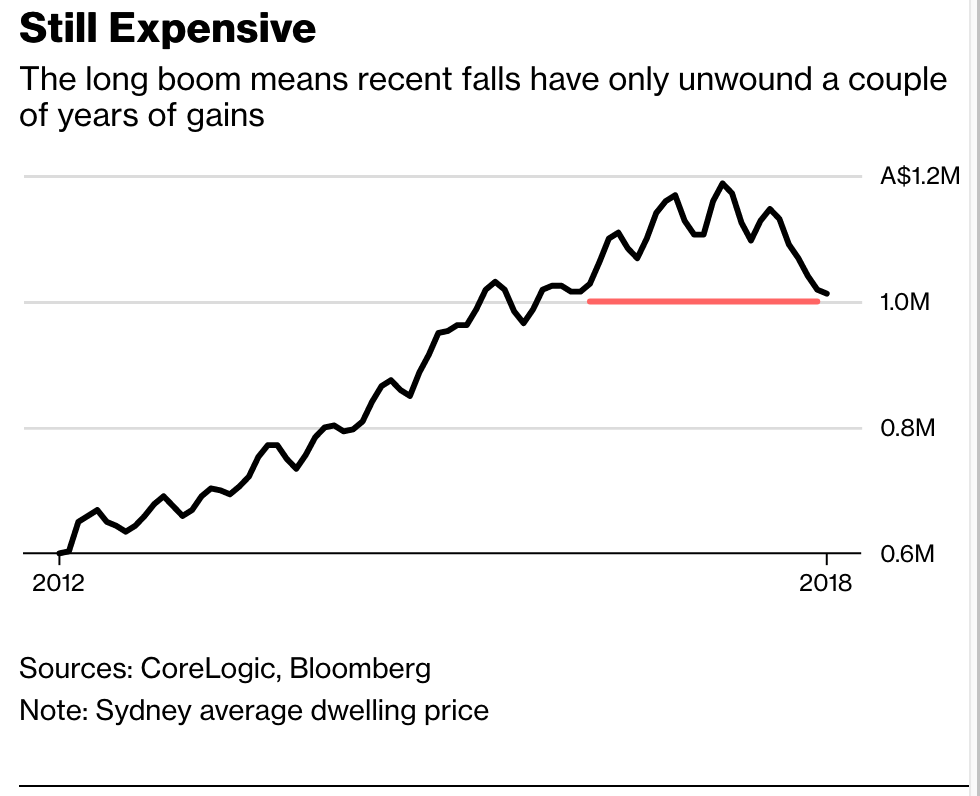
Further retracement is likely and necessary but threatens the highly levered owners, lenders and investors presently exposed in the space.  It’s also a broad negative for the larger Australian economy, which, like Canada, became precariously dependent on the realty sector and debt-enabled related spending since 2008.  See:  Australian house prices fall most since global financial crisis.

Higher-end properties have the most price to lose in this process, as credit growth recedes and an aging population looks to raise cash and reduce living expenses.

What’s causing the property bust?  The levered boom before it, of course. This segment discusses recent numbers further.  Here is a direct video link.
Posted in Main Page | Comments Off on Australian property boom mean reverting

Bubble 3.0

The below segment is a worthwhile discussion of the interconnection between central bank repressed interest rates and the simulateous rise in real estate and financial assets over the last decade, leading to the first ever ‘everything bubble’ globally.  Naturally, what went up together is now coming down together, and it’s important to note that recoveries after credit-driven property busts tend to take years, not months. Here is a direct video link.

I have no idea how or whether David Hay and his management firm are expressing his cautious view in their investment strategy or asset allocation.

The reality is that even the few commentators and managers who do acknowledge or warn that loss cycles are underway, rarely recommend or take meaningful protective measures for capital at risk. Believe it or not.  This is why few individuals or managers protect principle and preserve liquidity, and most end-up liquidating into weakness rather than buying during clearance sales.

Posted in Main Page | Comments Off on Bubble 3.0

Musk, history and energy efficiency

As Elon Musk was interviewed on 60 Minutes last night, it was disappointing to see how little prep work the show producers had done on Tesla, its mission and founder.

Musk does not pretend to be perfect or ideal.  He has made mistakes and will make more, no doubt.  He has also attempted more and accomplished more, to date, than most people have ever even imagined.

At a great personal expenditure of his time and life-force, Musk’s electric vehicle vision and auto company single-handled embarrassed a stubbornly backward-looking auto industry into the future of sustainable transportation.  This included giving away Tesla patents to help competitors catch up to his lead.  Now as each company is finally racing to roll out their EV offerings, no matter what else happens, Musk has secured a place in human history as a key catalyst for needed evolution.

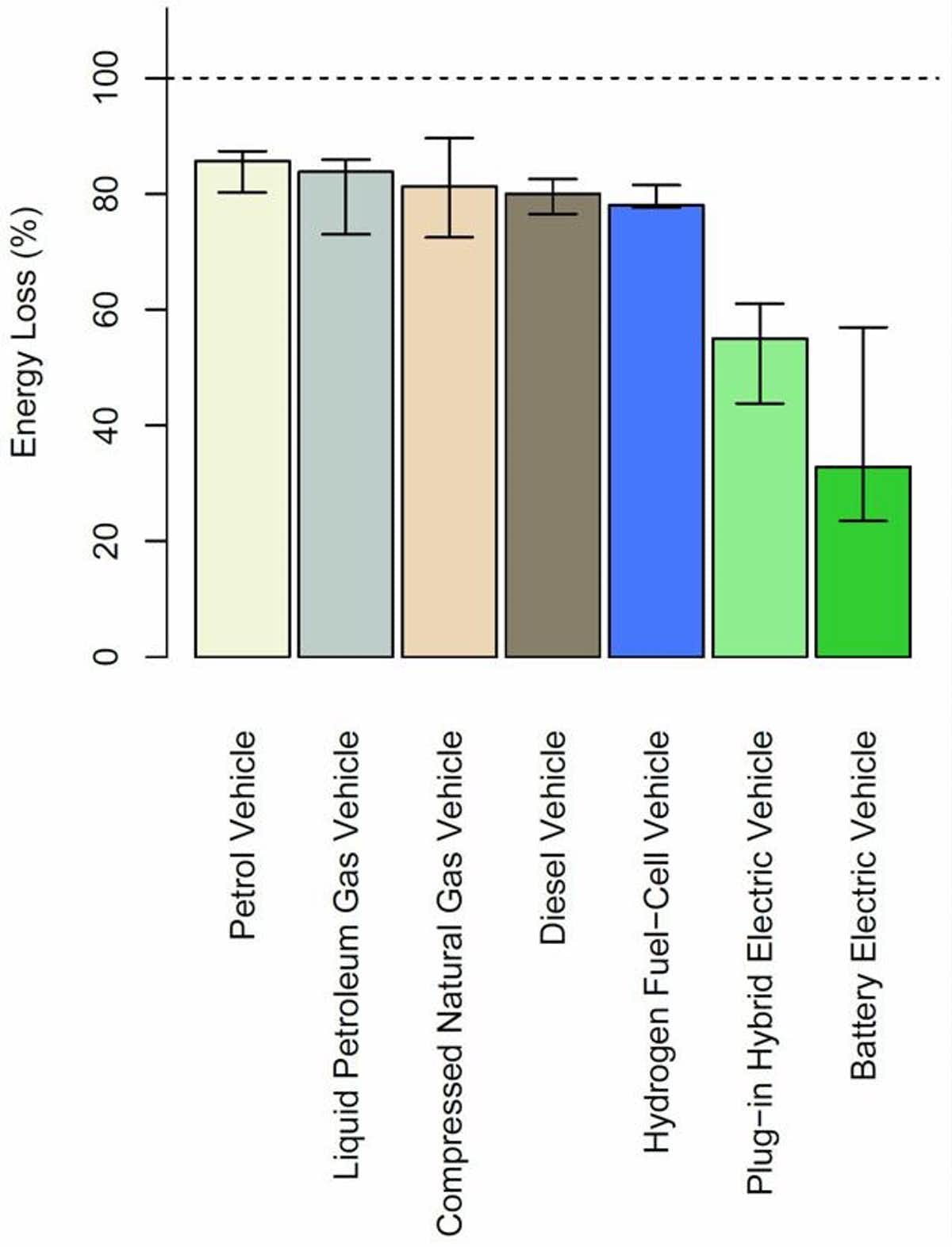
At the same time, a recent paper published in the Air Quality and Climate Change Journal examines the energy efficiency of electric and hydrogen vehicles and finds that battery electric vehicles have significantly lower energy losses compared with other vehicle technologies and that the well-to-wheel losses of hydrogen cell vehicles were almost as high as fossil fuel vehicles as shown in their chart on the left.   See  Why battery-powered vehicles stack up better than hydrogen:

“Low energy efficiency is already a major problem for petrol and diesel vehicles. Typically, only 20% of the overall energy is actually used to power these vehicles. The other 80% is lost through oil extraction, refinement, transport, evaporation, and engine heat. This low energy efficiency is the primary reason why fossil fuel vehicles are emissions-intensive and relatively expensive to run.”

Posted in Main Page | Comments Off on Musk, history and energy efficiency