Diesel-gate fraud still in motion

Overnight there is news that German prosecutors conducted a large-scale raid on several premises of Volkswagen’s sports car maker Porsche, as part of an investigation connected to the diesel-emission scandal.

While reports say that authorities are probing three employees of the luxury car maker on suspicion of fraud and false advertising, the truth is that collusion and perpetration of this fraud was endorsed from top corporate executives and European governments themselves.  And we, trusting (naive) customers and air-breathers on earth, are all victims.

If you have not yet watched the deisel-gate expose by Netflix’s new series Dirty Money, you should.  It is episode one.  And it should make you mad.

From the creators of Enron and Going Clear comes an all-new Netflix Original Documentary Series exposing the greed, corruption, and crime spreading through our global economy. Here is a direct video link.

Posted in Main Page | Comments Off on Diesel-gate fraud still in motion

On slowing growth, a flattening yield curve and bear market losses

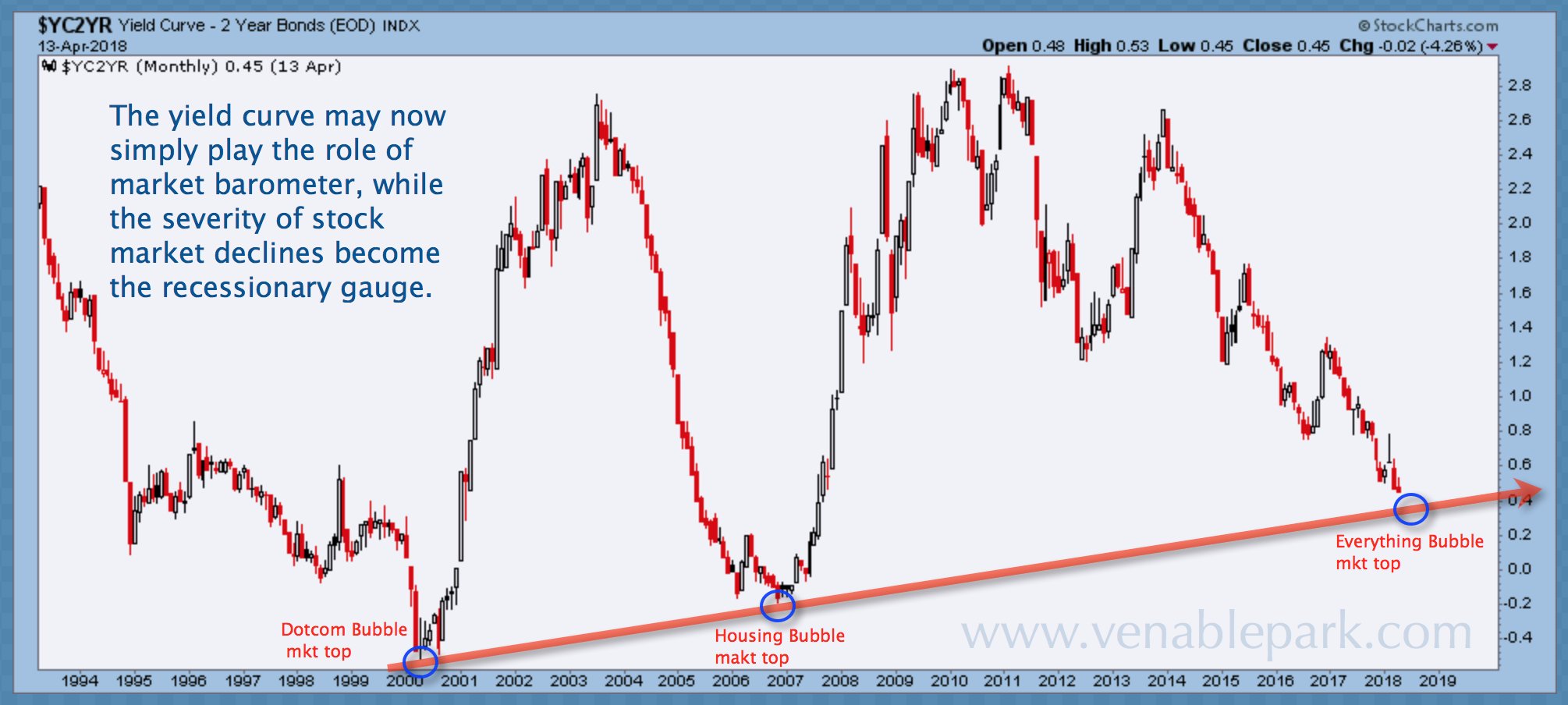
It’s important to understand that yield curve inversion and bear markets typically begin 9 to 12 months before any recession is officially proclaimed in backward looking data.  Here is my partner Cory Venable’s chart showing the inversion points in the past two cycles, and where we are today.

In the last cycle, the US yield curve inverted in early 2007 as the US housing market decline was already underway.  The S&P 500 peaked in October of that year, but it was not until 13 months later on December 1, 2008 that NBER and mainstream commentators declared that a recession had begun in December of 2007. By the time of that announcement, the stock and corporate bond market had already fallen 47% and pundits were insisting, as usual, that no one could have seen the losses coming.  Moves in the yield curve offer a valuable heads up for risk management.

Bloomberg has a habit of posting just a 2 or 3 minute clip of full guest interviews, which often miss the meat of the matter.  Komal Sri-Kumar had many relevant observations this morning in his hour long appearance. In this 3 minute clip that was posted, he discusses how the 10 and 2 year treasury yield curve is moving toward zero, and how one more Fed hike (on May 2nd?) could be enough to invert the curve.

Komal Sri-Kumar, president and founder at Sri-Kumar Global Strategies, discusses Federal Reserve policy and recessionary warnings from the flattening yield curve.

Here is a direct video link.

Posted in Main Page | Comments Off on On slowing growth, a flattening yield curve and bear market losses

Synchronized global slowdown on crushing debt and falling free cash flow

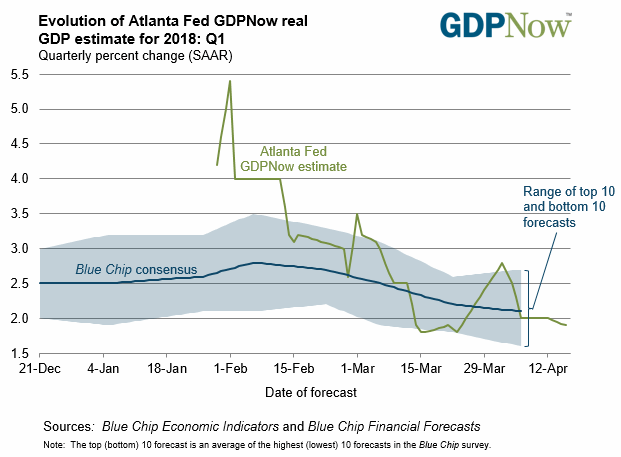
The Atlanta Fed is out today with its latest mark down in the US GDP growth estimate for Q1 2018:

The GDPNow model estimate for real GDP growth (seasonally adjusted annual rate) in the first quarter of 2018 is 1.9 percent on April 16, down from 2.0 percent on April 10. The nowcast for first-quarter real personal consumption expenditures growth declined from 1.1 percent to 0.9 percent after this morning’s retail sales release from the U.S. Census Bureau.

Here is their chart.
Economic growth is slowing, not just in the US, but worldwide.  Despite China’s officially proclaimed 6.8% growth rate in the first quarter today, Capital Economics estimates that it was closer to 4.8%, down from around 6% six months ago.

As explained in the latest Q1 2018 Hoisington Quarterly Review, unprecedented debt abuse over the past 8 years is now compounding an economic slowdown globally, while rendering the economy increasingly immune to the efficacy of monetary stimulants in truncating the coming recession.  Here’s why:

The fact that there is such a long lag between policy change and economic impact is critical in analyzing the circumstances today. For instance, suppose the Fed is able to identify the next recession on day one. Also, suppose that on the first day of the recession the Fed drops the federal funds rate to zero. Due to the economy’s extreme over-indebtedness, along with long monetary policy lags, a minimum of one and half years could elapse before even a slight economic recovery is experienced. But, recovering from the next recession, the lag could be much longer since interest rates are so close to the zero bound and indebtedness continues to rise to record levels. Both will interfere with the potency of the liquidity effect. Thus, despite a rapid Fed response, a long recession could ensue.

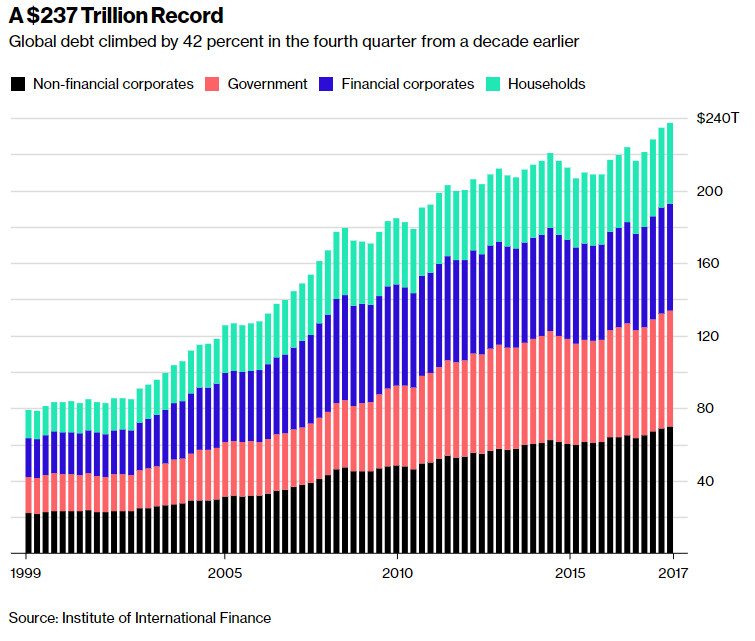
Where savings is present consumption denied, debt is future consumption denied. And here is an updated portrait of the debt now weighing on the world’s future consumption.

Posted in Main Page | Comments Off on Synchronized global slowdown on crushing debt and falling free cash flow