The real math of equity allocations

Secular bears are born from extended periods of indiscriminate buying and speculation that drive prices paid for securities to irrational multiples of real world items like revenues, cyclically adjusted earnings, tangible assets and wages. And then they mean revert.

Bulls say buying and holding at any price is smart investing, because ‘over the long-run’ market cycles spend more time and points going up than down. This misses the math of the matter utterly.

It is not the duration of the upcycle that is definitive of net returns, but rather exposure to the intermittent loss cycles.

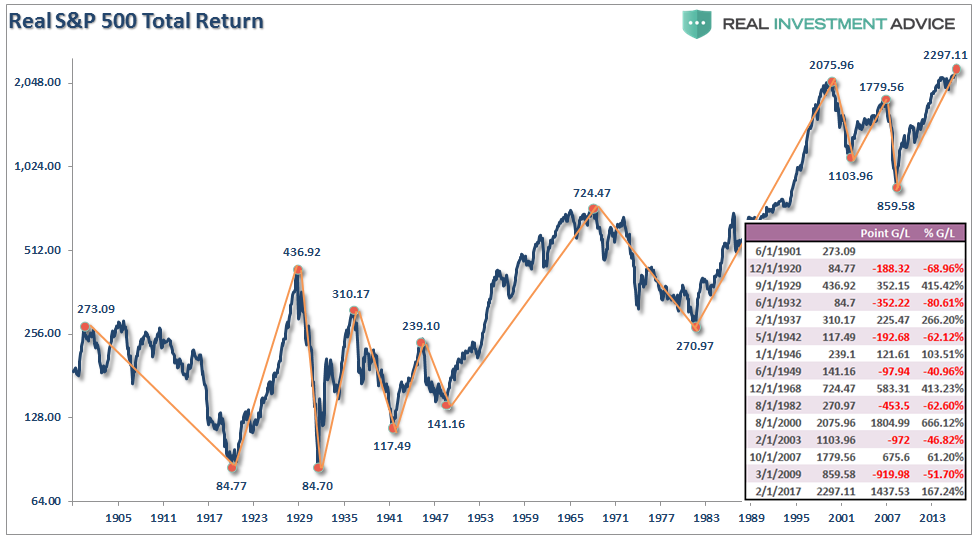
The inset table on the far right of the below chart from Lance Roberts shows the bull and bear periods for the S&P 500 since 1900–both in terms of index points and the percentage gained and lost each time.   As shown in the chart itself, the shorter recurring bear cycles take back most and sometimes all of the real gains clocked during the longer bull upcycle.

In addition, and most importantly, since bull markets increase confidence and risk-taking as they go, capital tends to get pushed in most near tops and least near bottoms, making the cyclical mean reversion periods much more capital destructive than even this chart would suggest.
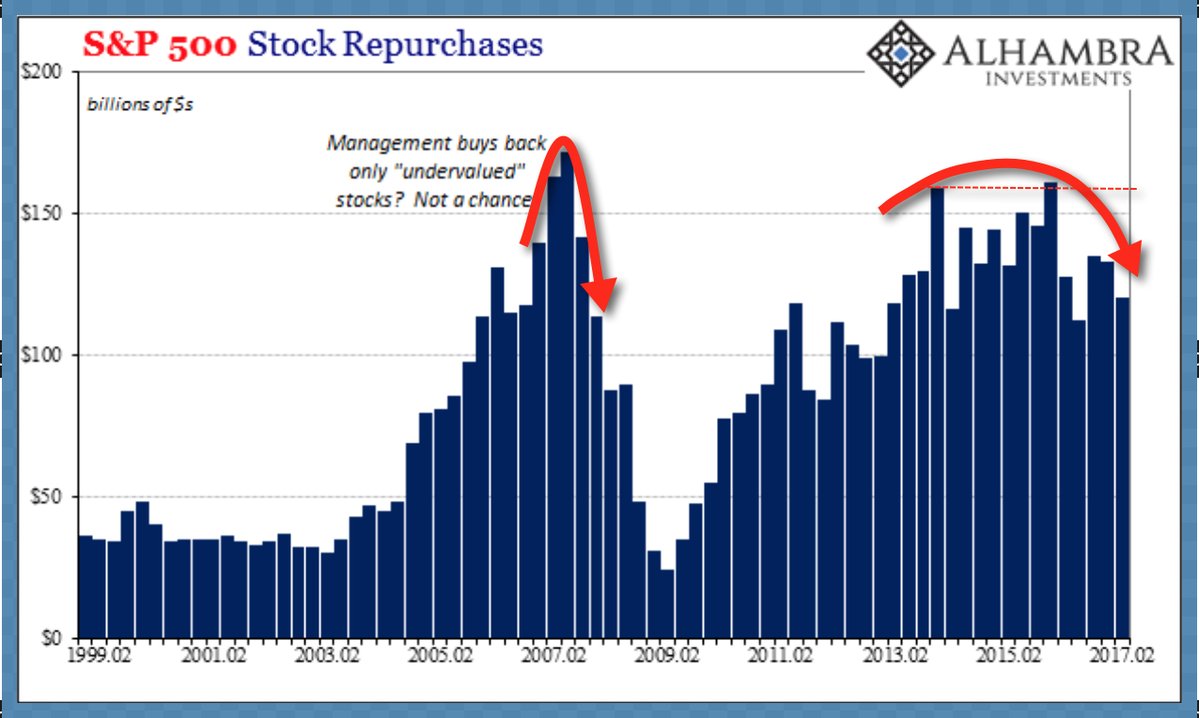
The same goes for corporate management teams and their so called “active” shareholders, that infamously waste good money buying back badly over-valued stocks each market peak, as shown here since 1999.
As people amass more and more of their life savings, and have less and less time to grow back losses, the extent to which they are protected from the downcycles becomes the most defining element of real life investment outcomes. This is especially the case during secular bear periods, where the recurring cyclical declines tend to be twice as deep and long as during periods starting from low valuations (ie., secular bulls like 1982-2000).

Yes, the current upcycle is one of the 3rd longest in market history in terms of years, but a decline of 50% from here would still wipe out all the apparent capital gains since about 1996.  And given the extremity of present valuations, holders will be lucky if they ‘just lose half’ this time.

The long-always crowd can mock risk-conscious managers all they like, but mean-reversion and the math of loss rule secular bears, and hubristic hares and those following their advice, don’t win over full market cycles.

“Reality is that which, when you stop believing in it, doesn’t go away.”Philip K. Dick, author

Posted in Main Page | Comments Off on The real math of equity allocations

The way humans get electricity is changing forever

The experience curve is driving evolution.

Here is a direct video link.

Also see  The World’s tiniest power market will leverage big data to sell solar:

In mid-December, National Grid Plc will flip the switch on an automated trading system that pays hospitals and research facilities at the Buffalo Niagara Medical Campus to sell electricity from their onsite solar panels, batteries or other generators to doctors’ offices and businesses — the first power market ever designed within a single utility service area.

The micro-market is an example of the Uber-effect, applying big data to better monetize small assets. The same technology could be used to help homeowners sell electricity from rooftop solar panels to their neighbors, and it may be a key part of New York Governor Andrew Cuomo’s plan to get half the state’s power from renewable sources by 2030.

Posted in Main Page | Comments Off on The way humans get electricity is changing forever

Canada in for a rough patch even if rates stay low for a long time

The Loonie is tumbling and Canadian bonds rallying as the Bank of Canada backs away from its rate hiking plans in ‘surprise’ over the slowing Canadian economy.

Meanwhile a new report from the National Energy Board brings good news for the planet (that is bad for Canadian GDP in the short and medium run). See: Canada’s demand for fossil fuels will max out in 2 years: NEB

The National Energy Board says Canada’s addiction to fossil fuels will peak in two years…The board’s annual energy futures report for the first time says with climate change policies and growth in clean energy, Canada’s consumption of fossil fuels to run cars and heat homes will max out before 2020, start to decline slightly and then flatline over the next two decades.  Here is a direct video link.

At the same time, the NEB says it thinks (hopes) that falling domestic oil demand will be offset by increasing oil exports, and thus not hurt Canadian GDP. This is unlikely.

In reality, it’s not just domestic demand that will peak much sooner than previously estimated.  The trend towards higher efficiency, renewable energy and electric transportation, is global and only just getting started.  In addition, new oil production technologies are enabling increased supply in most countries, including our historical oil export buyers.

Canada and other countries need to transition to products and services needed for the next phase of human evolution.  We can, but to do so we will have to let go of status quo thinking and a fixation with sunk costs and antiquated business models.

This day was always coming, but unfortunately Canada is woefully unprepared for the drop in income and the capital investment intensification needed.

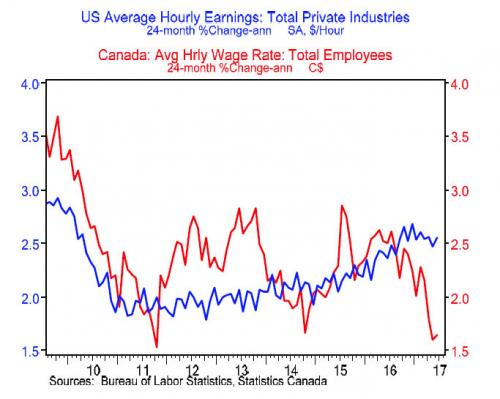
As shown on the left, average wage growth (in red) has been declining through recent economic growth while spending has continued on credit.

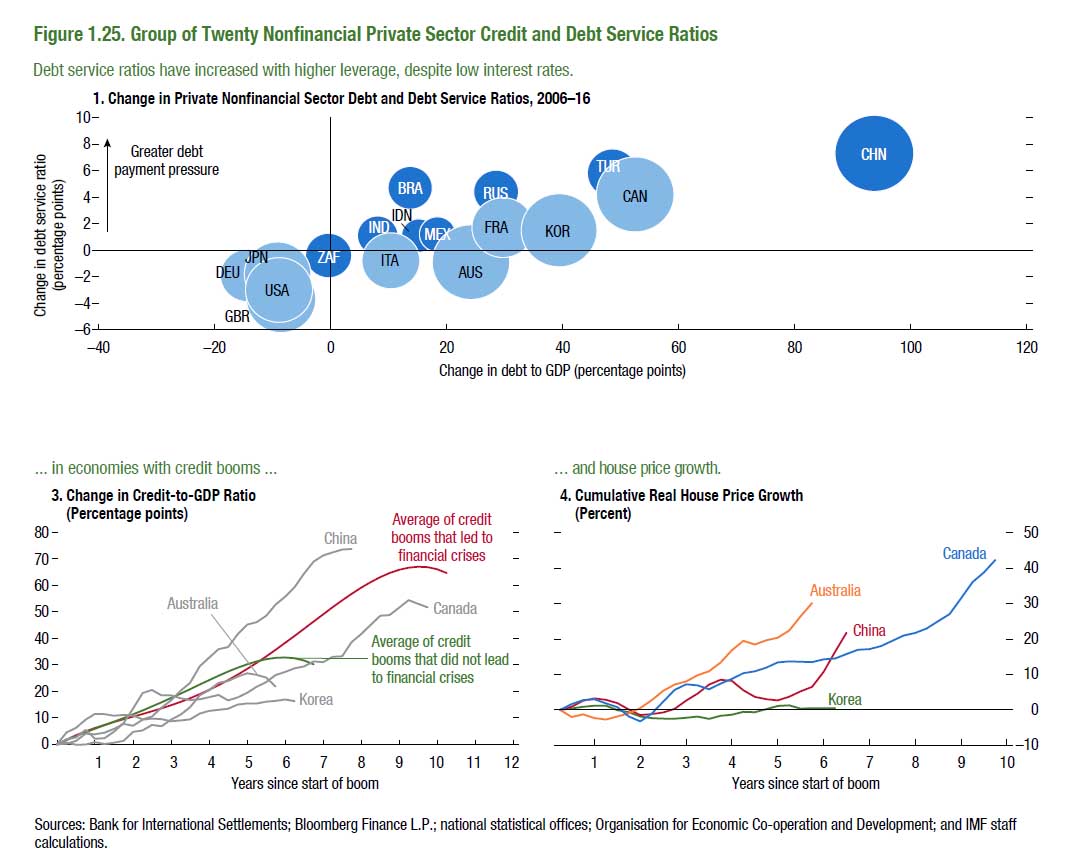
Not only have we not saved for this rainy day, to the contrary, as shown in the charts below, of all the G20 countries, the Great White North has seen the largest leap in debt relative to our GDP, second only to China.  Worse, we have grotesquely over-valued, now widely unaffordable housing to show for all our debt–surpassing even Australia and China.


The Bank of Canada, may well stop hiking rates here, but that won’t fix these issues. High indebtedness and low savings along with flat and falling incomes, will make it hard for Canadians to maintain spending and the investment now needed for the country’s future, even if interest rates stay low for years.  This is the bed we have made over two decades of bad financial choices.  Best to admit mistakes and get to work now on the clean up phase.

Posted in Main Page | Comments Off on Canada in for a rough patch even if rates stay low for a long time