
GTA home prices in bear market (even before BOC’s hike today)

Asset prices that roar up have a time-tested tendency to crash down.  Case in point, a decline of 20% in greater Toronto average home prices over the four months between April and the end of August, was enough to wipe out nearly all of the preceding 40% jump year over year to April 2017, even as the average home increase remained 3% positive year over year.  Still, already the math of paying too much on over-valued housing has been sending negative ripple effects through Canadian households, and the mean reversion here is likely only started.  See: The math of paying too much, for some perspective.

Worthwhile noting is that the price and spending declines to the end of August, took place before the Bank of Canada’s brave (or willfully blind?) .25 rate hike this morning that will serve to elevate consumer carrying costs and pinch debtor cash flows, all while helping to reduce demand for our exports (on stronger loonie).

Lower shelter costs are necessary and inevitable to restore affordability among the available pool of buyers, but unfortunately elevated household debts endure and grow on interest costs while the asset prices fall.  Hence the balance sheet destruction that ensues.  This is the rock and hard place that years of central bank largess has wrought.

The average selling price across the Greater Toronto Area in August was $732,292. That was three per cent above year-ago levels, but 20.5 per cent below the April high of $920,791. A price decline of 20 per cent from a peak is commonly referred to as a bear market.

It marked the fourth straight month of sequential price declines as would-be buyers moved to the sidelines waiting to see how the provincial government’s so-called Fair Housing Plan, built on taxing foreign speculators and 15 other measures, would shake out. Here is a direct video link.

Posted in Main Page | Comments Off on GTA home prices in bear market (even before BOC’s hike today)

The lure of ‘winning’ makes savers easy prey

Funneling our savings into lottery tickets and Ponzi-like financial markets doesn’t make us investors, it makes us the dumb-money cash flow for a few controlling operators and skimmers.

Those with savings to lose must understand the dishonest, unethical games being played all around us today, and not allow ourselves to be lulled into harm’s way under the guise of ‘investing’.  Financial bubbles, like the present one, do lasting harm when savers mistakenly follow the lead of a price-indiscriminate sales force into rigged gambling operations.

A year after becoming a full-fledged exchange platform, IEX Group Inc., CEO Brad Katsuyama, explains a market environment fraught with conflicts of interest and high-frequency traders, equipped with lightning-fast computers, seeking to ring up profits at the expense of average investors.  Here is a direct video link.


Posted in Main Page | Comments Off on The lure of ‘winning’ makes savers easy prey

Rising sea temperatures fueling record storms

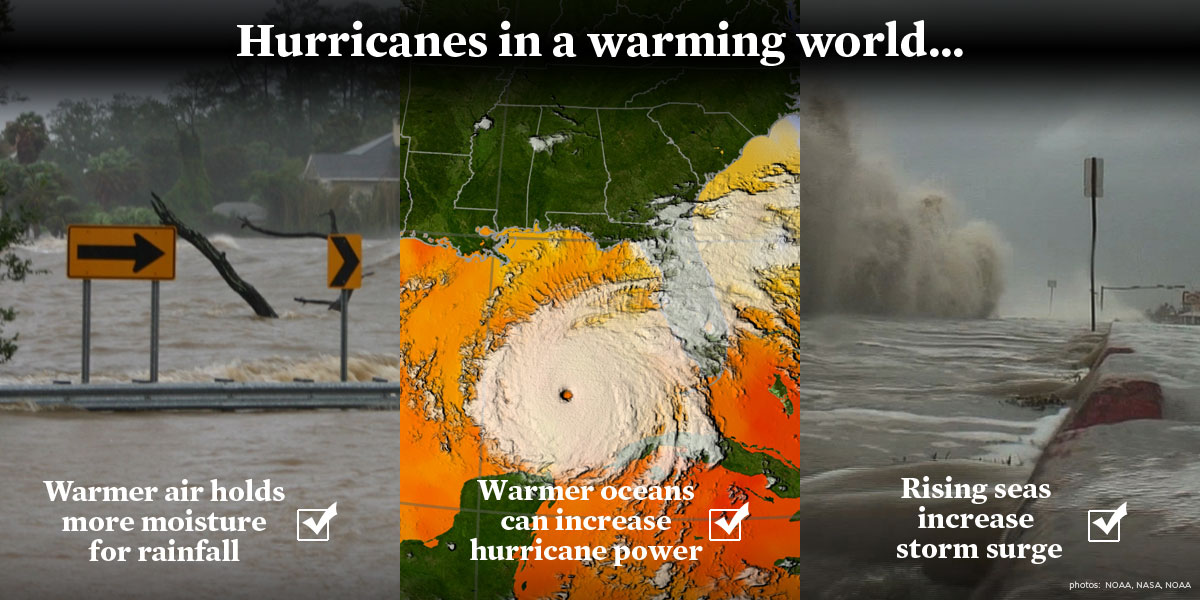
A just-released statement from the National Hurricane Center confirms that Hurricane Irma is the strongest hurricane in the Atlantic basin outside of the Caribbean Sea and the Gulf of Mexico in their records, and tied for second place as the strongest ever in the Atlantic.  What is the fuel feeding record storms?  Warming surface waters accelerated by human activities on earth.

Sure, you can order government scientists to stop using the words climate change, you can pass laws banning the discussion in school curriculum, but that doesn’t change this reality.  See:  Catastrophic Intensity:  Why is hurricane Irma gaining strength so quickly?

Warm surface waters produce heat and water vapor. Hurricanes feed on and intensify from both, and the amount of rain they ultimately dump can be increased by both the higher availability of water vapor from the warm water and the fact that a warmer atmosphere can hold more of that available moisture (more on this here). Therefore, a trend of both increased intensity and rainfall associated with hurricanes can be expected, and in fact recent studies are in agreement with that (see here and here).

The waters off the coast of Texas when Harvey intensified from a category 2 to a category 4 hurricane were 2.7-7.2°F above average. The sea surface temperature where Irma was located as of the morning of 9/5 appears to be at least 2.7°F above average, which may have had a role in it turning into a category 5.

There is so much opportunity to learn, evolve and improve here.  We have the technology to rebuild and upgrade to smarter energy and infrastructure systems that will better protect against mounting disaster risks as well as start lowering temperatures and reduce environmental harm for the future.  Or not, and continue to suffer the bankrupting , life-destroying consequences.  The choices are ours to make.

Posted in Main Page | Comments Off on Rising sea temperatures fueling record storms




